Getty Museum
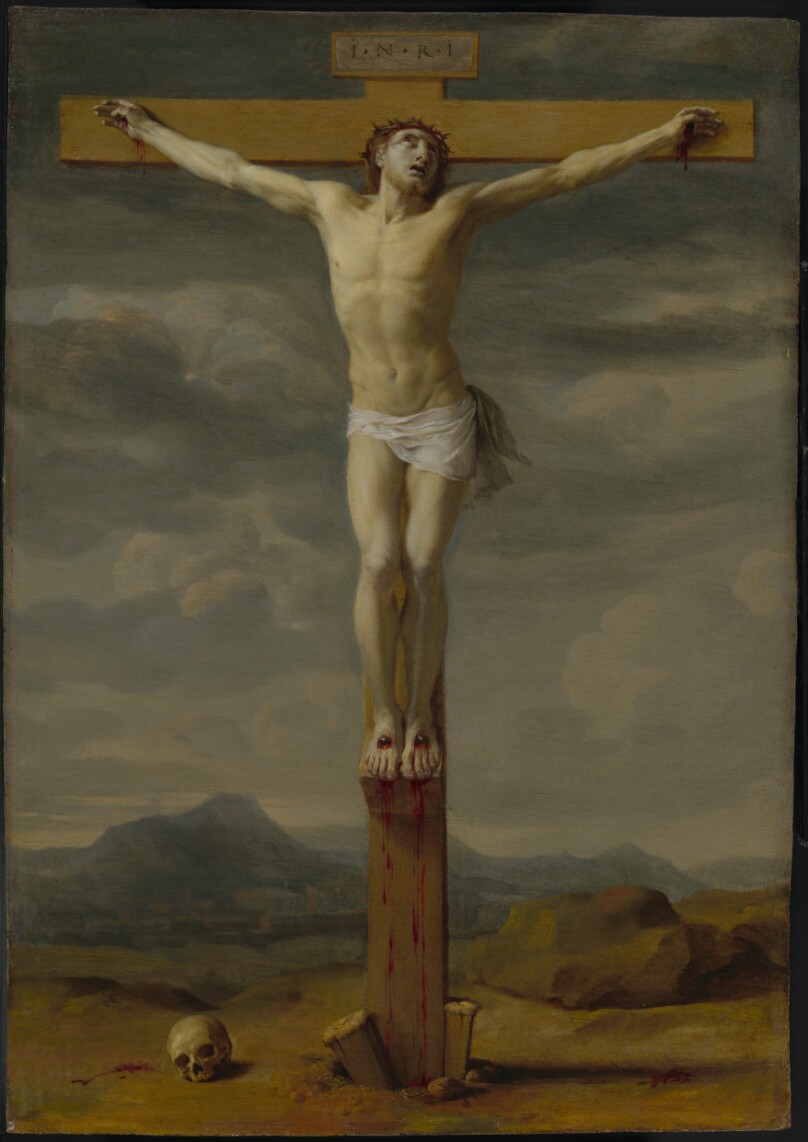
Crucifixion
Creator
Eustache Le SueurFrench Artist · 1616–1655
All works by this person →Eustache Le Sueur's father, a woodworker and sculptor, placed his son Eustache in Simon Vouet's studio when he was about sixteen. Unlike many of his peers, Le Sueur never went to Rome, instead finding his classicizing influence in Vouet's Baroque style. Primarily a painter of religious subjects for churches in Paris and its environs, he was said to have little use for immoral excesses and to have
More on Getty ULAN- Date
- about 1650–1655
- Medium
- Oil on copper
- Culture
- French
- Department
- Paintings
- Institution
- Getty Museum
- Object ID
- e4fba845-af42-43a4-ab3a-c692a3a069b2
From the Getty Museum record
Le Sueur depicts Christ on the cross, still alive, alone in a rocky and mountainous landscape. Following an older tradition in art, he is represented attached to the cross with four nails. As he hangs dying, blood trickles from his feet and hands onto the cross and the rock of Golgotha, symbolizing the Christian belief that his death cleansed the original sin of Adam, whose skull is displayed below. There is a sense of absolute stillness, broken only by the suggestion that the open-mouthed Christ is pronouncing his last words: “My God, my God, why have you forsaken me?” (Matthew 27:46; Mark 15:34). The relatively small size, the delicacy of the brushwork, and the precious support on copper indicate that the painting was intended for private devotion.
The authoritative record is held by Getty Museum. LinkedCulture surfaces this object and its connections; it does not alter institutional metadata.
Get printable QR codesHide QR codes
Open QR codes for this object page and the museum record. They stay collapsed until needed.
Related across collections
Semantically similar works from Getty Museum and other institutions.