Getty Museum
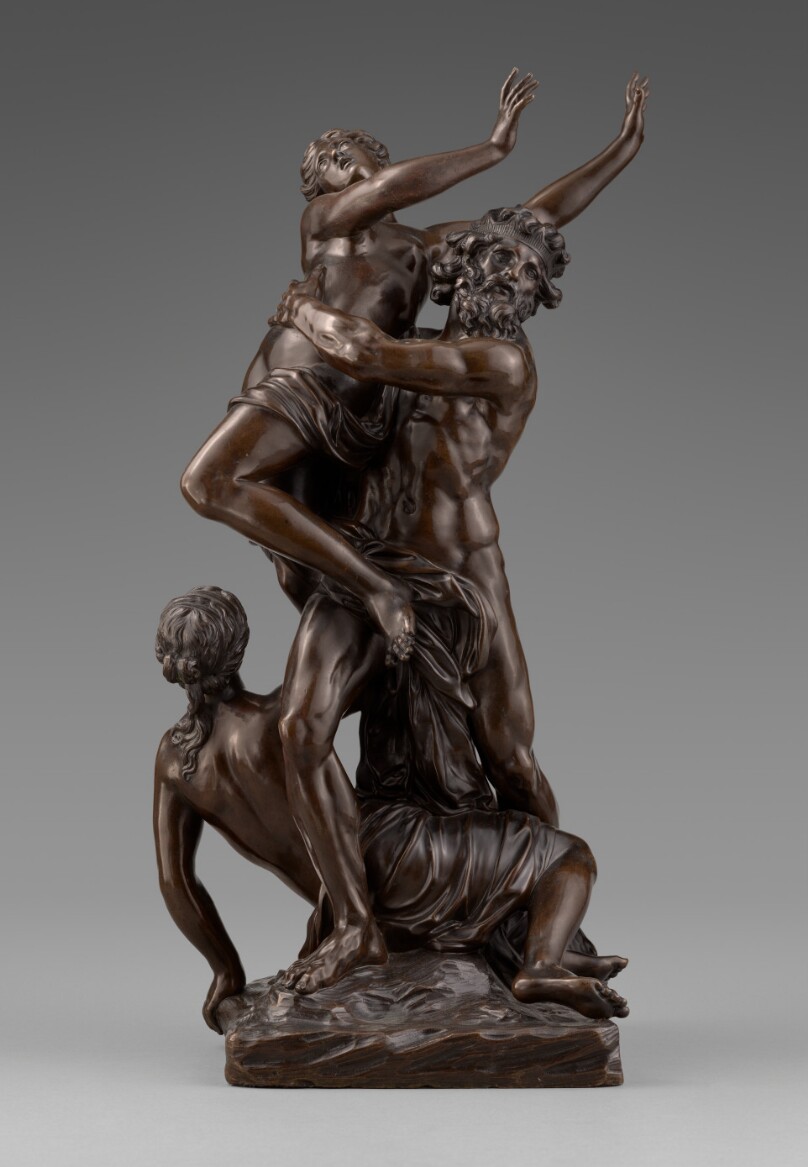
Pluto Abducting Proserpine
Creator
François GirardonFrench Artist · 1628–1715
All works by this person →François Girardon dominated sculptural production for Louis XIV's myriad building projects between 1670 and 1700. Initially working under master planner Charles Le Brun's direction, Girardon eventually managed his own large sculptural projects. He rose to great fame until, in his old age, he was overshadowed by Jules Hardouin Mansart. The son of a founder, Girardon early on attracted the notice of
More on Getty ULAN- Date
- probably cast in late 18th century
- Medium
- Bronze
- Culture
- French
- Department
- Sculpture
- Institution
- Getty Museum
- Object ID
- ed11fb0e-adb6-416a-bc95-1112b00daa6a
From the Getty Museum record
Pluto, god of the Underworld, seizes Proserpine, daughter of the agricultural goddess Ceres; one of her servants, fallen to the ground, tries unsuccessfully to stop him. According to Ovid's *Metamorphoses* , Pluto was watching Proserpine pick flowers in a meadow when he was struck by one of Cupid's arrows. Pluto carried Proserpine down to his kingdom on a chariot drawn by black horses. According to Greek mythology, Pluto allowed Proserpine to return to earth each spring for four months, thus explaining the change of the seasons. This bronze is a copy after a larger preparatory model, also in the Museum's collection, by Louis XIV's preeminent sculptor, François Girardon. Louis XIV commissioned Girardon to create one of four monumental marble groups intended to decorate the corners of Charles Le Brun's never-completed garden at Versailles, the Parterre d'Eau. Each group of three figures symbolized one of the four elements: earth, air, water, and fire. Pluto's association with Hell made him an apt symbol of fire.
The authoritative record is held by Getty Museum. LinkedCulture surfaces this object and its connections; it does not alter institutional metadata.
Get printable QR codesHide QR codes
Open QR codes for this object page and the museum record. They stay collapsed until needed.
Related across collections
Semantically similar works from Getty Museum and other institutions.