Getty Museum
Romulus and Remus
- Date
- about 1390–1400
- Medium
- Tempera colors, colored washes, gold leaf, and ink
- Culture
- French
- Department
- Manuscripts
- Institution
- Getty Museum
- Object ID
- f4c3bf1f-b02e-4637-8947-3d6b8297c5e0
From the Getty Museum record
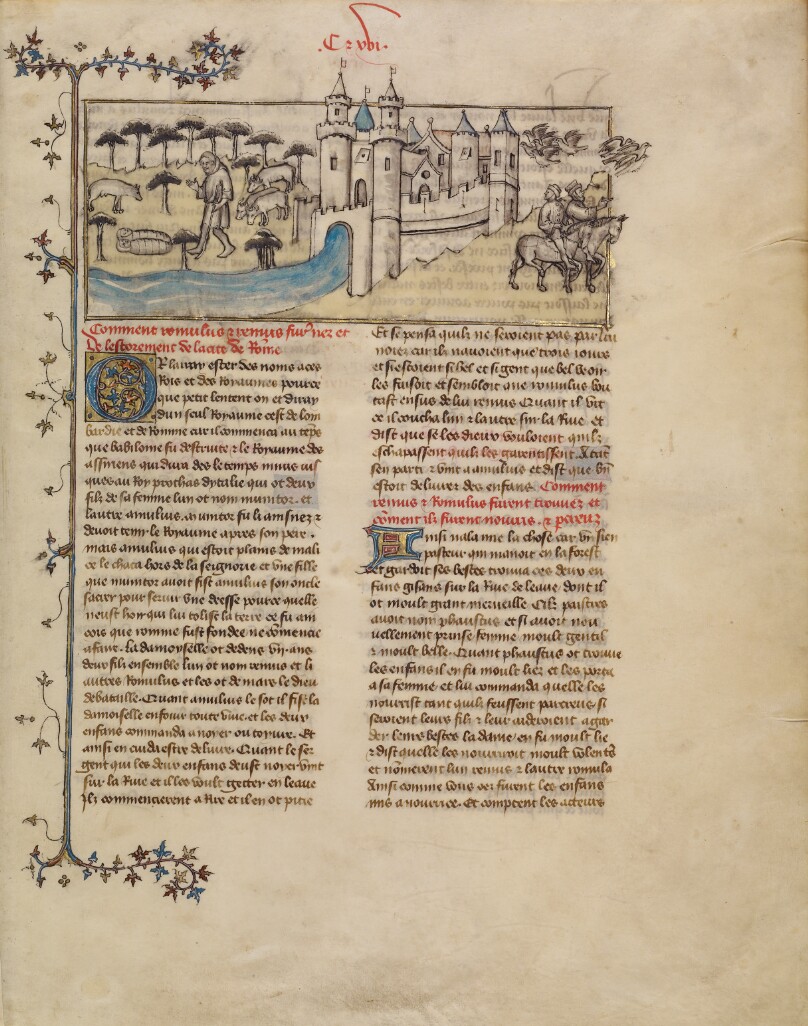
According to Roman legend, Rhea, daughter of the king of Alba Longa, bore the war god Mars twin sons named Romulus and Remus. To prevent the infant twins from claiming the throne, a man who had deposed her father as king ordered the infants drowned in the river Tiber. The basket in which they were placed, however, safely floated down the river and landed at the future site of Rome. There a she-wolf, an animal sacred to Mars, took care of them until a herdsman named Faustulus discovered them. In the miniature, the tightly swaddled twins lie by the side of the Tiber. The she-wolf hovers protectively over them at the left, while Faustulus approaches from the right. The great city of Rome, which the twins will eventually found, stands in splendor in the middle of the miniature, while two men, perhaps Romulus and Remus as adults, hunt with their hawks to the far right.
The authoritative record is held by Getty Museum. LinkedCulture surfaces this object and its connections; it does not alter institutional metadata.
Get printable QR codesHide QR codes
Open QR codes for this object page and the museum record. They stay collapsed until needed.
Related across collections
Semantically similar works from Getty Museum and other institutions.