Getty Museum
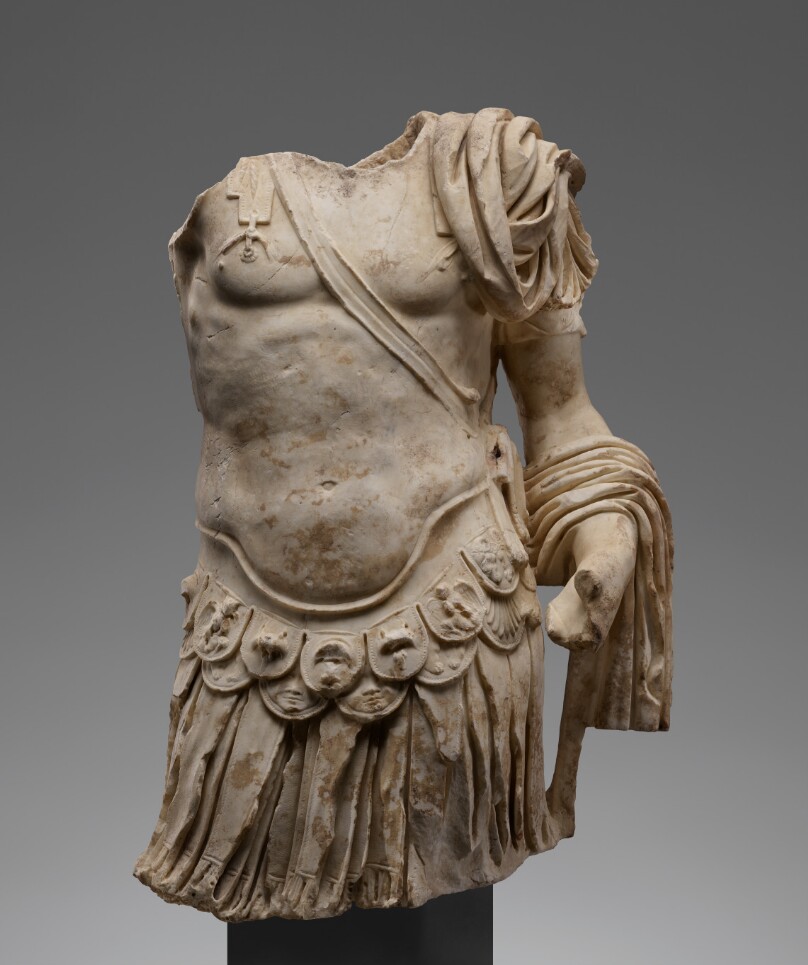
Torso of a Cuirassed Statue
Creator
UnknownAll works by this person →More on Getty ULAN- Date
- A.D. 81–96
- Medium
- Marble
- Culture
- Roman
- Department
- Sculpture
- Institution
- Getty Museum
- Object ID
- fbe3ae29-d5fa-40f5-b3c9-e51969bafbb8
From the Getty Museum record
Only the torso and one arm survive of an over life-size portrait statue of man wearing full military parade armor. Such cuirassed statues were a popular form of sculpture used to honor emperors, their male relatives, victorious generals, and military heroes. On most cuirassed statues, the breastplate is very elaborate with symbolic and allegorical relief decoration, which emphasized the emperor's power. This example is unusual because the breastplate is a basic rendition of the human musculature and is not decorated. This lack of ornament probably indicates that the statue did not represent the emperor or his family but a general. The pteryges, or tabs on the bottom of the breastplate, however, are decorated. They show a number of motifs, including palmettes, rosettes, gorgon heads, lion and lynx heads, ram heads, and most significantly, an eagle clutching the underbelly of a hare. The use of this hare motif, as well as the general pose and style of the carving of the statue, indicate that it dates to the Flavian dynasty, specifically in the early rule of the emperor Domitian. The statue probably commemorated a general, possibly C. Velius Rufus, from one of Domitian's wars in northern Europe.
The authoritative record is held by Getty Museum. LinkedCulture surfaces this object and its connections; it does not alter institutional metadata.
Get printable QR codesHide QR codes
Open QR codes for this object page and the museum record. They stay collapsed until needed.
Related across collections
Semantically similar works from Getty Museum and other institutions.