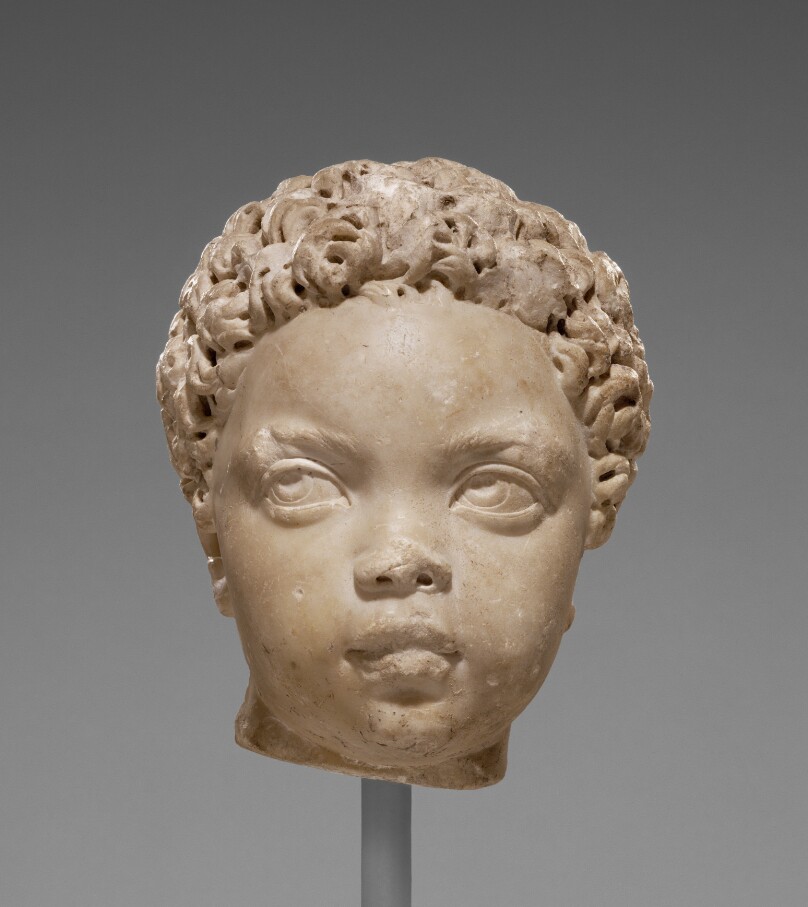
Getty Museum
Portrait of a Child
Creator
UnknownAll works by this person →More on Getty ULAN- Date
- A.D. 150–200
- Medium
- Marble
- Culture
- Roman
- Department
- Sculpture
- Institution
- Getty Museum
- Object ID
- fffc7f59-9ddb-41f1-a52a-e1bfd41ab85e
From the Getty Museum record
This child, probably a boy of early toddler age, is among the most sensitive portraits of very young children known in Roman art. Broken at the neck, the head would have sat on a full-length statue or a bust. Several features of this portrait are characteristic of Roman sculpture in the Antonine period (A.D. 138-192), such as the interest in observing personality, depicting movement, and contrasting textures such as the polished skin and the impressionistic rendering of the hair. The boy’s tight curls and some of his facial features have led some modern viewers to categorize him as a Black African, but given the lack of historical evidence (e.g., an inscription naming him) and non-physical markers of identity (such as clothing), the child’s ethnicity remains uncertain. The type and style of his portrait, however, are distinctly Roman. In fact, the hairstyle and the way the artist executed it, drilling hundreds of small holes into and between the curls, are common features of Antonine sculpture. Rather than being ethnic or racial indicators, the high spherical forehead, large eyes, and small, flattened nose are equally characteristic for the appearance of many infants and toddlers. Carved in white marble like most other stone sculptures, the boy’s appearance would have been enhanced by polychromy. As witnessed by mummy portraits on panel (e.g., [74.AP.11](https://www.getty.edu/art/collection/objects/7140/unknown-maker-mummy-portrait-of-a-bearded-man-romano-egyptian-about-ad-150-170/) and [73.AP.94](https://www.getty.edu/art/collection/objects/7081/unknown-maker-mummy-portrait-of-a-bearded-man-romano-egyptian-ad-140-160/)), paint provided artists the means to differentiate skin tone and other individual traits. No added color has yet been found on this portrait, but if detected, such evidence could inform the question of the child’s ethnic identity. The trend of capturing the nature of young age in sculpted portraits is linked to a novel practice of the Antonines, the imperial dynasty that ruled Rome during the mid- and late second century AD. At regular intervals they issued official portraits of young princes, such as Marcus Aurelius and Commodus, who were designated successors to the throne. These images were widely disseminated and imitated in portraits of private individuals like this boy.
The authoritative record is held by Getty Museum. LinkedCulture surfaces this object and its connections; it does not alter institutional metadata.
Get printable QR codesHide QR codes
Open QR codes for this object page and the museum record. They stay collapsed until needed.
Related across collections
Semantically similar works from Getty Museum and other institutions.
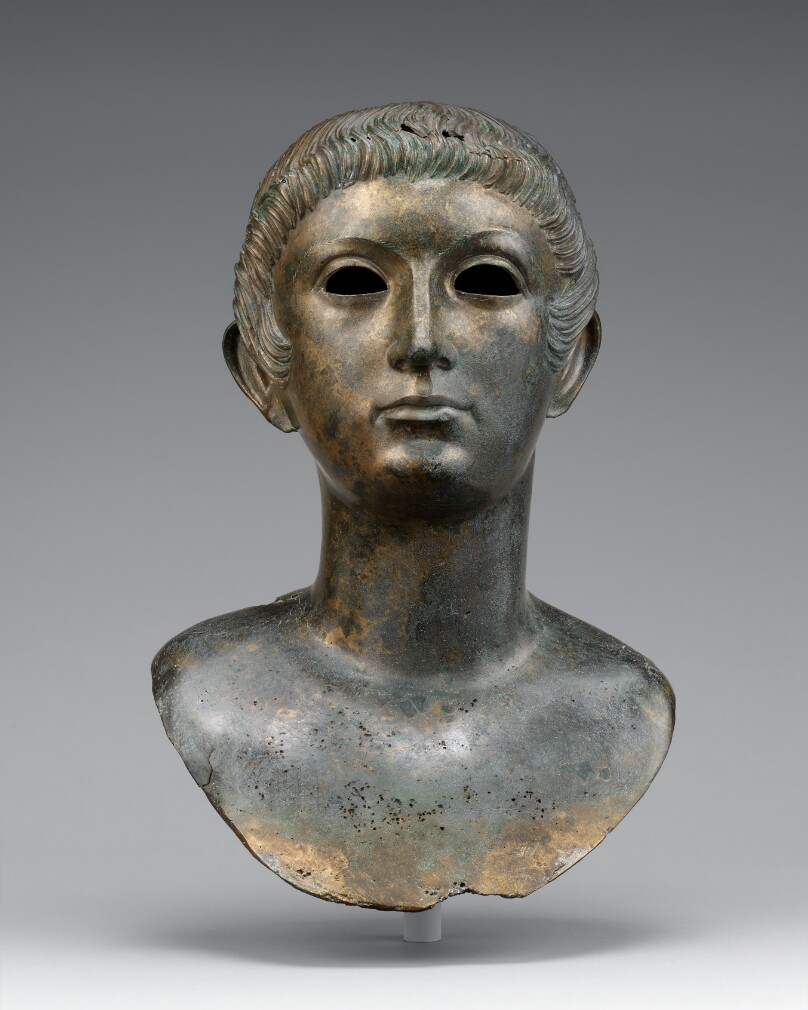
Portrait Bust of a Youth
Getty Museum
#5698f42d-fe4e-4d49-b5b5-eaf6d02daa10
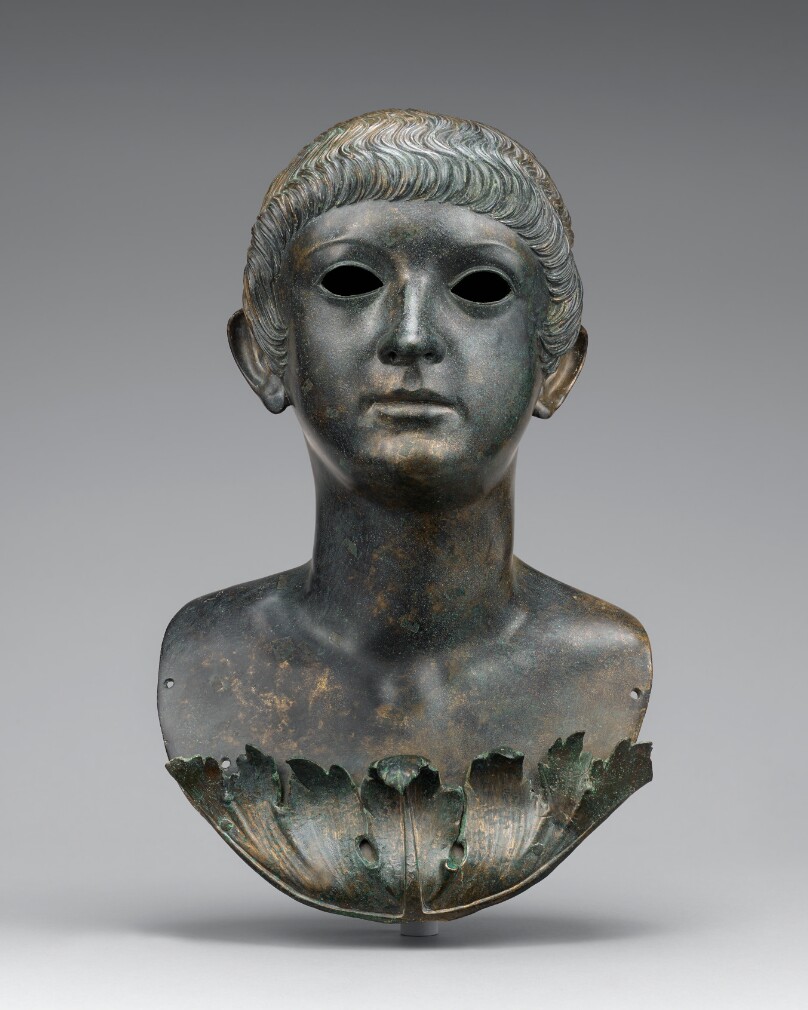
Portrait Bust of a Youth
Getty Museum
#9fd426b7-7401-459b-8804-34cba065c466
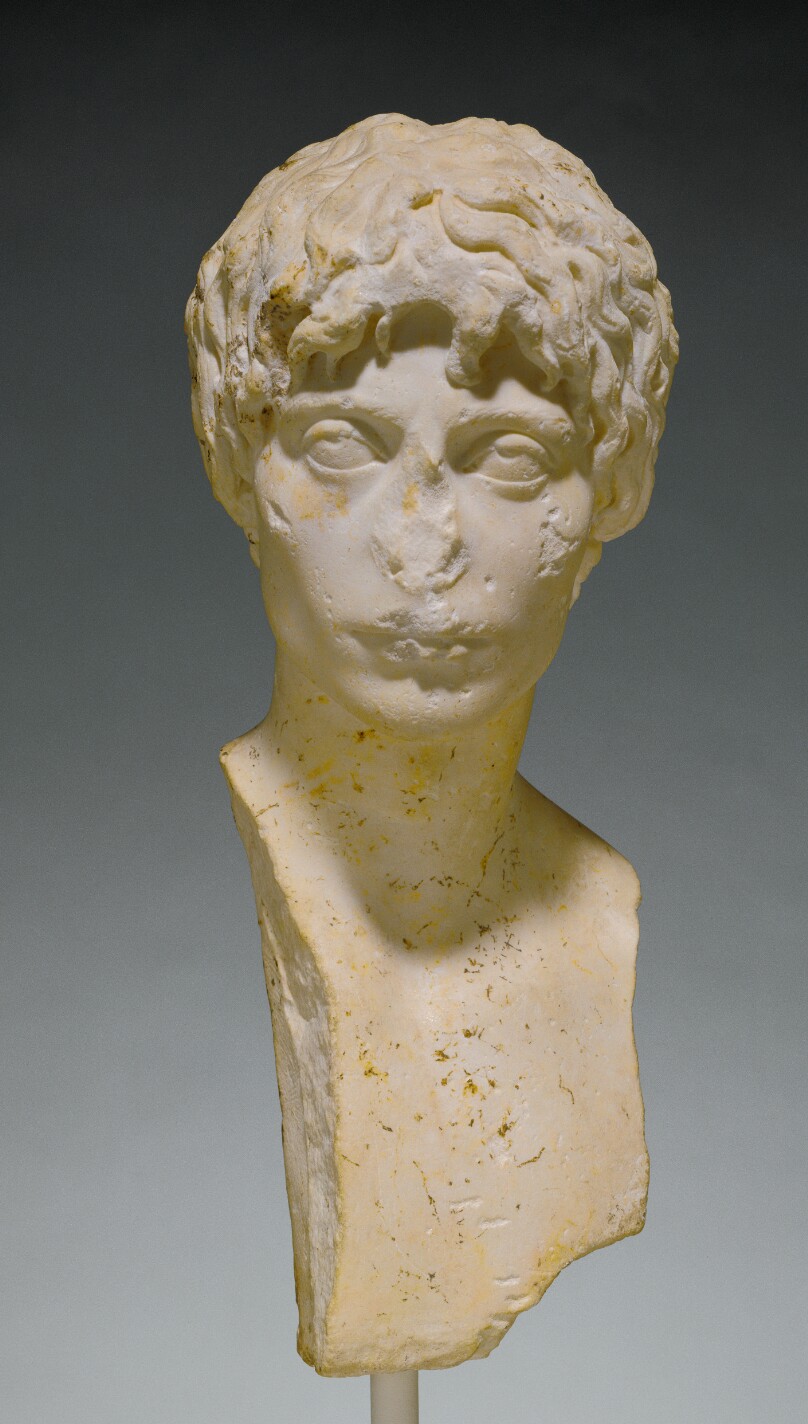
Portrait Bust of a Roman Adolescent
Getty Museum
#8f7ca01f-813f-478a-b204-4a037ba3b3c3
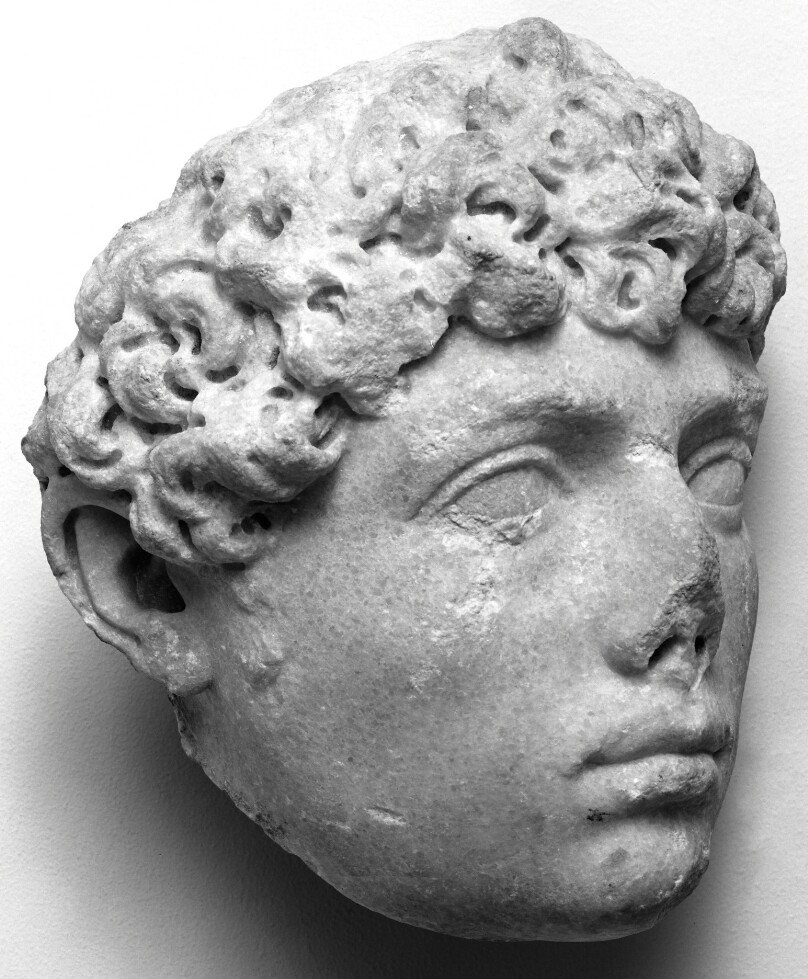
Relief Portrait of an Antonine Prince
Getty Museum
#bbe33d7e-9f44-4ca5-a9c0-e714c503492d
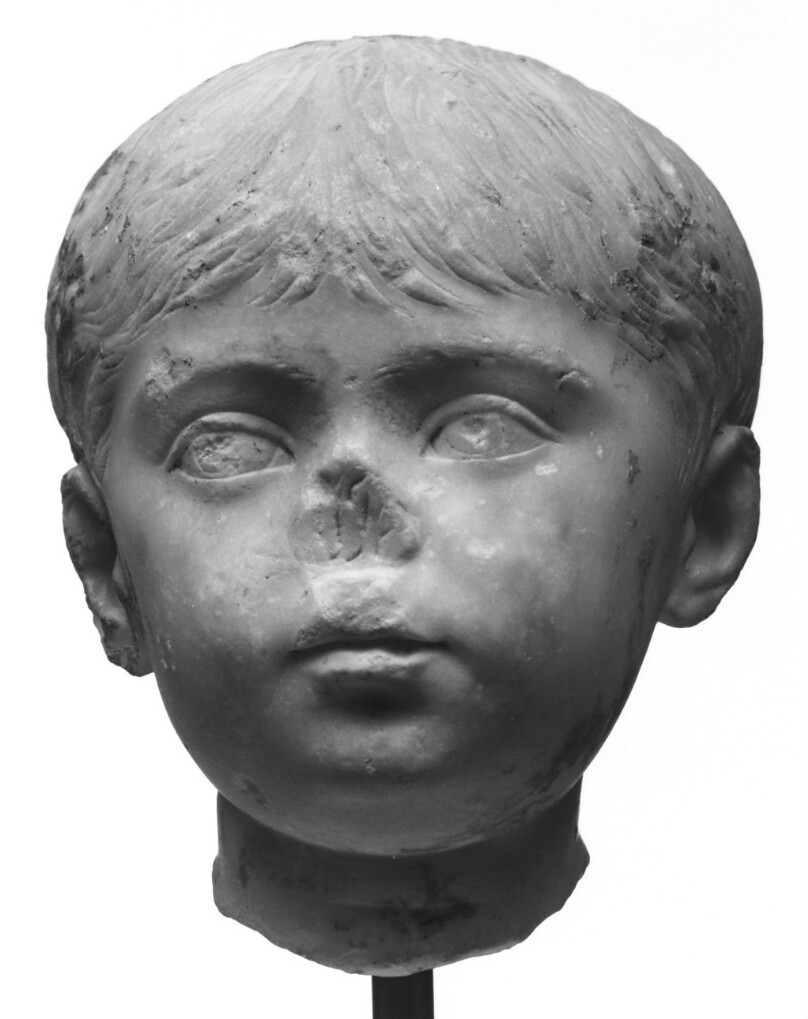
Head of a Roman Boy
Getty Museum
#51780113-aa92-42b6-92be-f9b5d58f5d79
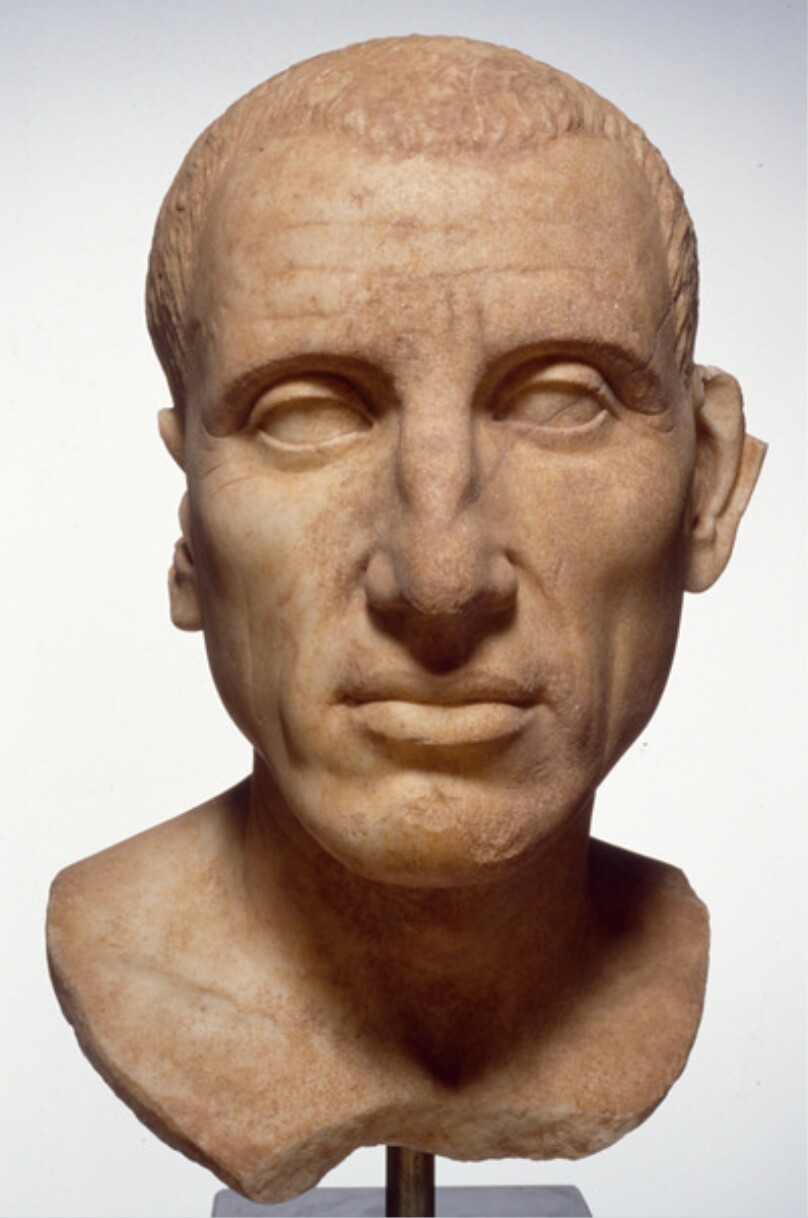
Portrait Bust of a Man
Getty Museum
#715186bb-82b0-4bcf-9abb-92a18da316a2
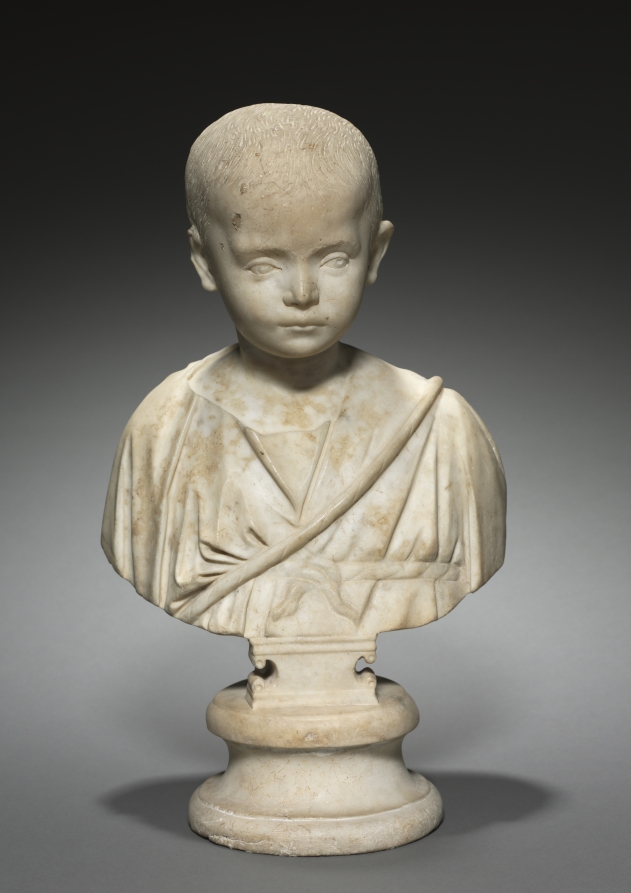
Portrait Bust of a Girl
Cleveland Museum of Art
#128299
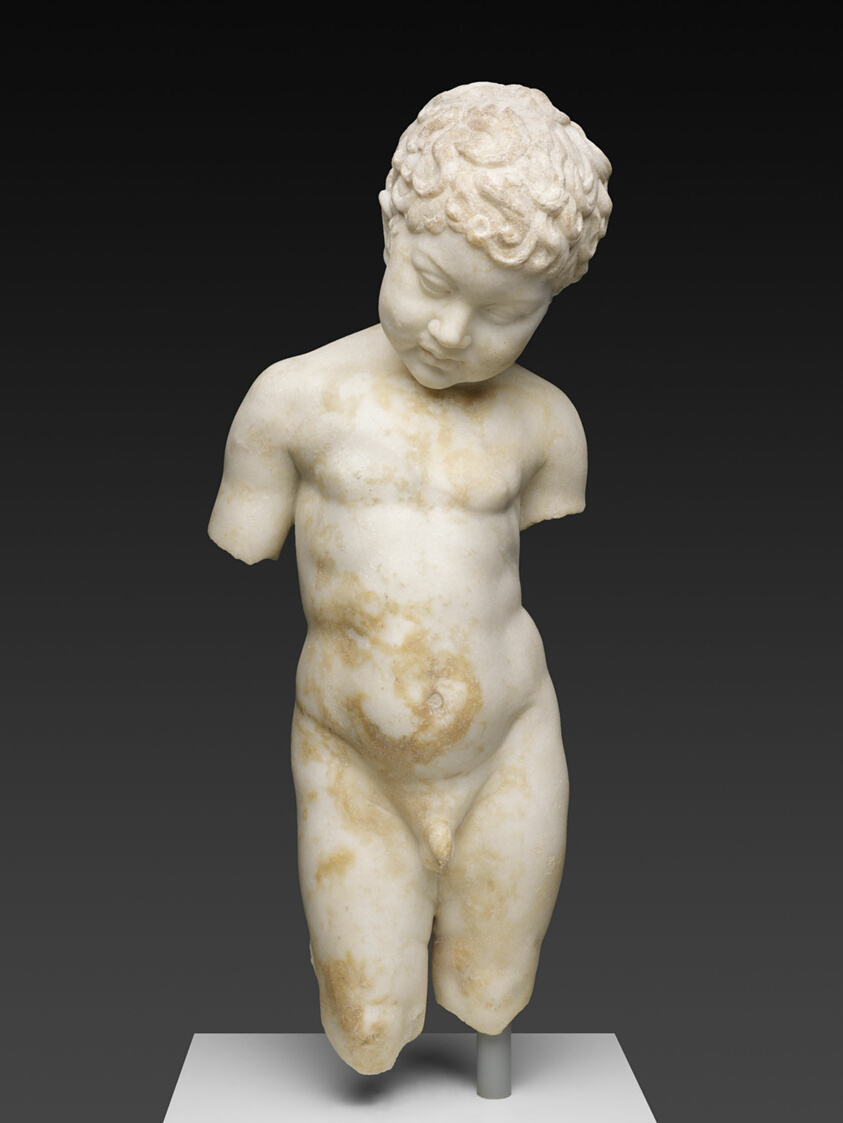
Statue of a Young Boy
Art Institute of Chicago
#51503
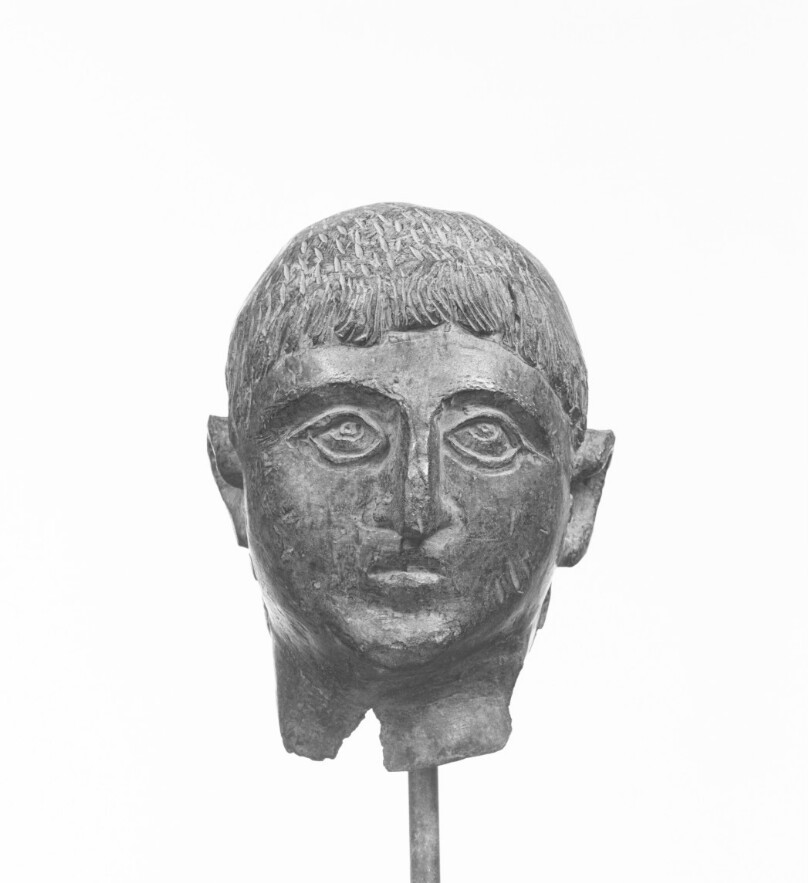
Head of a Youth
Getty Museum
#c93e2359-8407-457f-a338-396d54b14aab
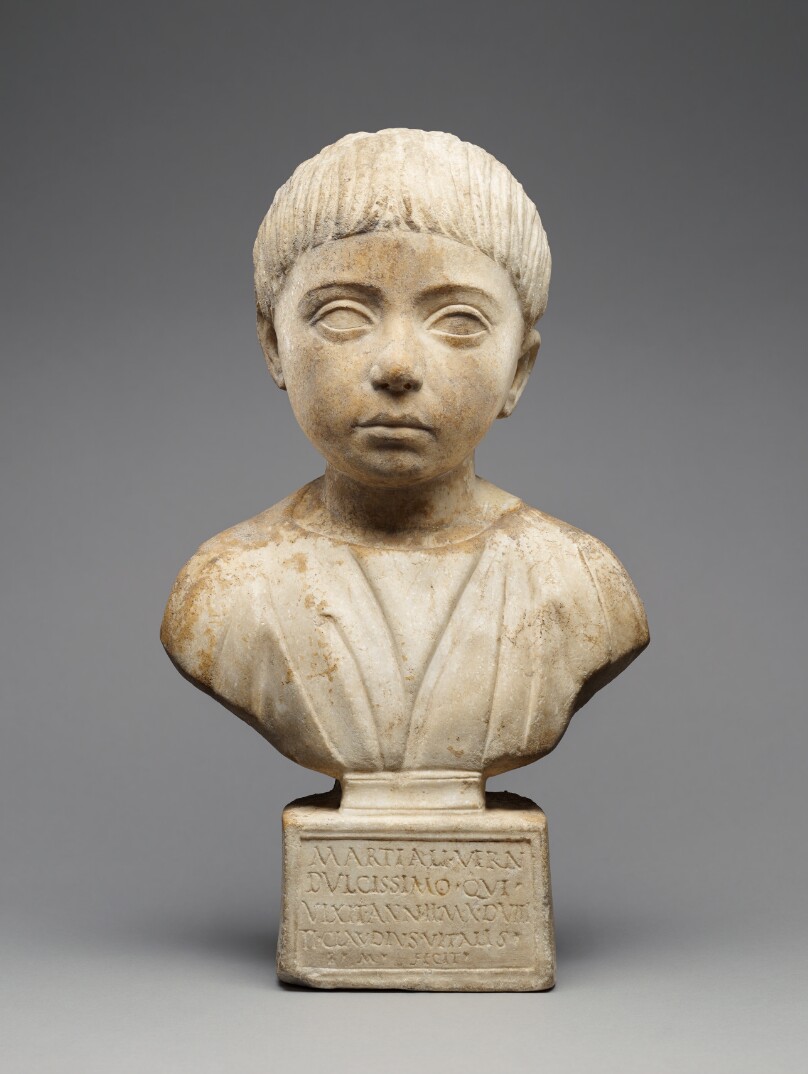
Portrait Bust with Inscription
Getty Museum
#aa8ab259-1906-463c-b284-43b1ae8a32a5
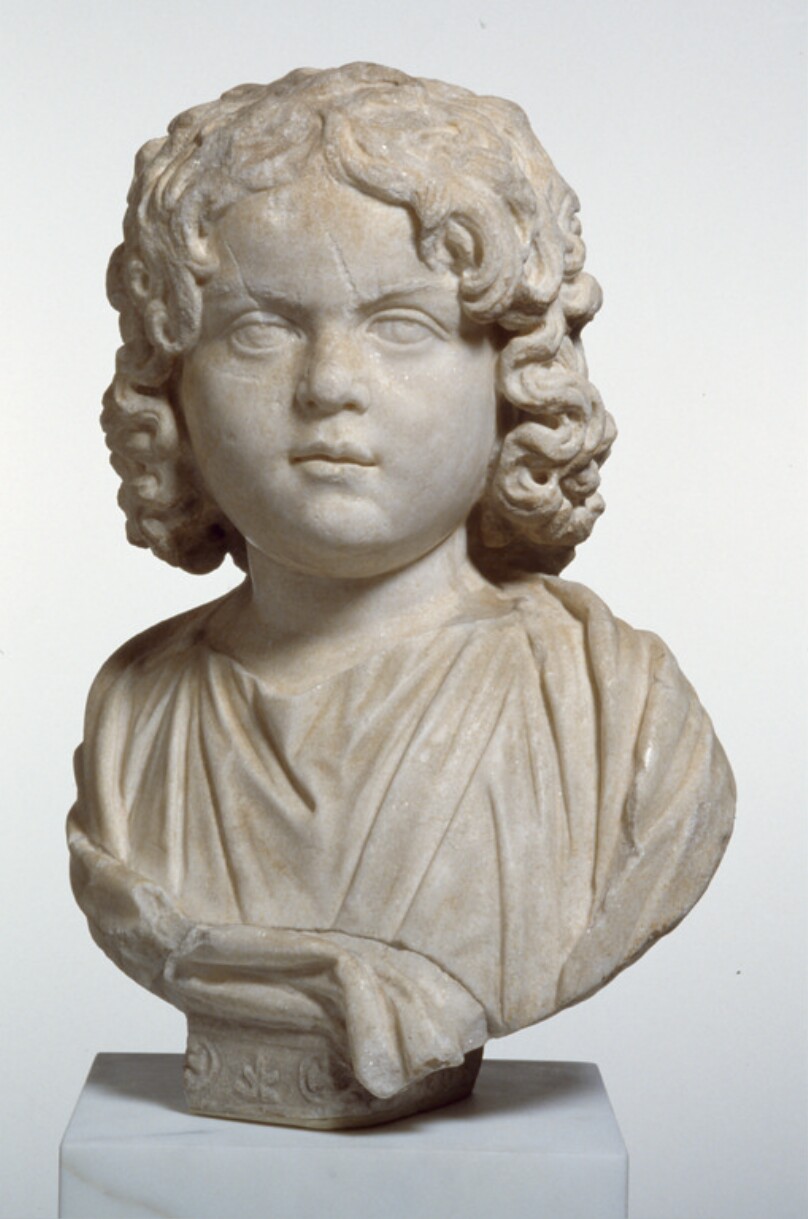
Bust of a Girl
Getty Museum
#88665c77-a3b9-4dc7-88cf-274f6e530443
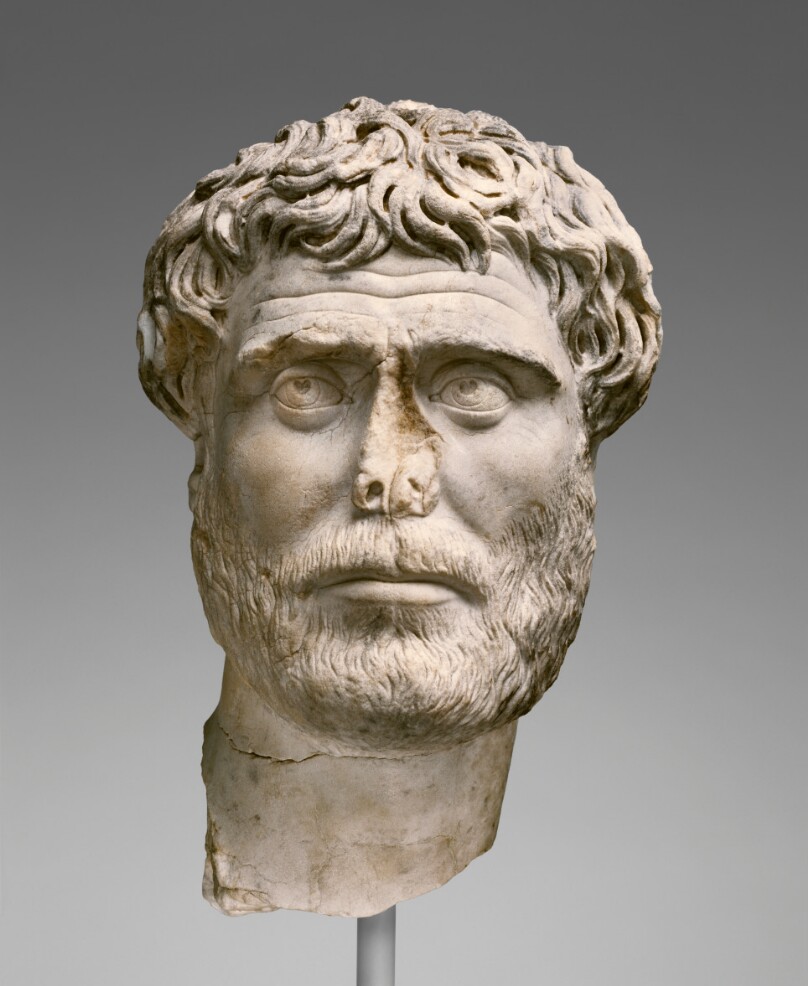
Portrait of a Bearded Man
Getty Museum
#c771c8a7-42fd-4d16-a51f-797fb4b835e8