Minneapolis Institute of Art
The Beheading of John the Baptist
Rembrandt van RijnLinkedCulture matchlcp-d6807541bb3d
- Date
- 1640
- Medium
- Etching
- Department
- European Art
- Institution
- Minneapolis Institute of Art
- Object ID
- 146823
From LinkedCulture
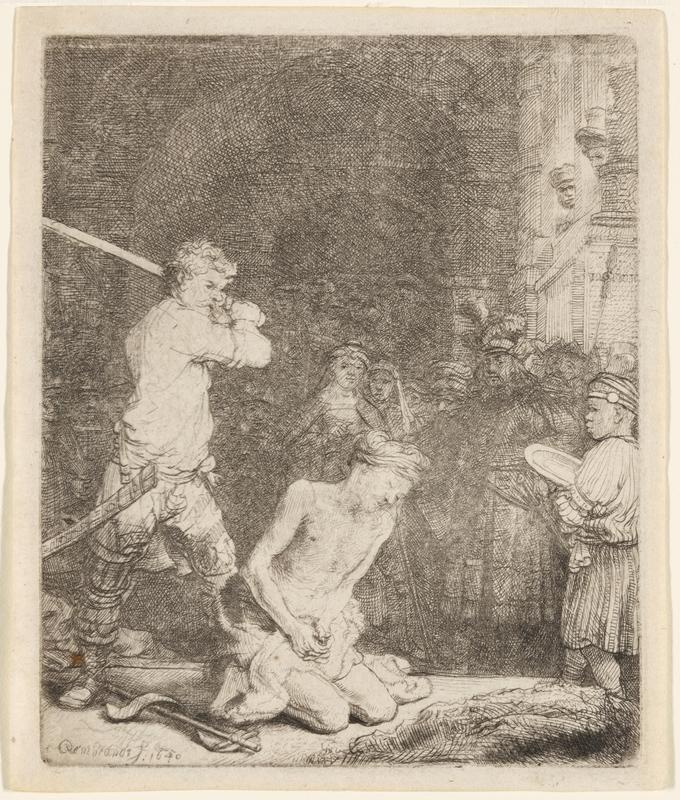
This 1640 etching by Rembrandt captures not the moment of death, but the last instant it could still be prevented. The executioner's sword is raised, his sleeves rolled up, his gaze fixed on the bare-chested John kneeling in prayer below him - hands clasped, head bowed, eyes closed. To the right, a young boy already holds the charger waiting for John's head. Rembrandt's genius was moral, not graphic: he forces the viewer to sit inside that unbearable pause before the irreversible.
Written by LinkedCulture for its video on this object. Machine-generated (claude-sonnet-4-6), not yet reviewed by a person. It is not part of the museum’s record.
From the Minneapolis Institute of Art record
The Beheading of John the Baptist portrays the events told in the Gospel of Mathew (14:3-1). Rather than concentrating on the gory decapition or the presentation of John's bloody head, Rembrandt chose the moment when the executioner has raised his sword and turned his body, ready to swing, a moment when John anticipated his fate. It was a moment when the act did not have to occur, when the executioner cold have relented, when Herod--who looks on frm the shadows--could have have called a halt to the madness. The executioner has tossed off his coat and rolled up his sleeves, ready to do his job. He trains his gaze on the vulnerable John, who kneels facing away from him. John is bare from the waist up. His camelskin cloak is wrapped around his loins. His cruciform staff lies on the ground, with the scroll proclaiming the Messiah's arrival still attached. With eyes closed and head lowered, he clasps his hands in prayer. At right, an African boy holds the charger that will soon bear John's head. Immediately above John we can make out two women. Though the biblical account does not place them at the site of the execution, they are probably Herodias and Salome, who set the tragic events in motion. Netherlands, Europe
The authoritative record is held by Minneapolis Institute of Art. LinkedCulture surfaces this object and its connections; it does not alter institutional metadata.
Get printable QR codesHide QR codes
Open QR codes for this object page and the museum record. They stay collapsed until needed.
Provenance & credit
As published by the source institution. Coverage varies — not every institution's open-data feed includes ownership history.
- Credit line
- Gift of Ray and Carol J. Bergeson
Related across collections
Semantically similar works from Minneapolis Institute of Art and other institutions.