![Fall [right from the set Rice Farming in the Four Seasons]](https://3.api.artsmia.org/800/96540.jpg)
Minneapolis Institute of Art
Fall [right from the set Rice Farming in the Four Seasons]
Attributed to Kano SanrakuLinkedCulture matchlcp-343865a1d313
- Date
- 1620s
- Medium
- Sliding door (fusuma), ink, light color, and gold on paper
- Department
- Asian Art
- Institution
- Minneapolis Institute of Art
- Object ID
- 96540
From the Minneapolis Institute of Art record
These sliding door panels originally formed the four walls of a small reception chamber at Daikakuji, a Buddhist temple in northwest Kyoto that also served as the palace for Japan’s emperor. The panels form a continuous panorama from wall to wall and present various activities associated with rice cultivation: plowing, transplanting the rice, irrigating, threshing, and grinding. The didactic theme is derived from Chinese painting; agriculture, according to Confucian teachings, is the basis of a well-ordered society. Accordingly, when Japanese rulers adopted Confucianism as their ruling ideology, they also commissioned paintings that reflected social stability, morality, and government values. Although unsigned, these paintings were likely produced by Kano Sanraku. As head of the Kyoto branch of the influential Kano school, Sanraku counted several prominent aristocratic families and Buddhist monasteries, including Daikakuji, as key patrons. Asia
The authoritative record is held by Minneapolis Institute of Art. LinkedCulture surfaces this object and its connections; it does not alter institutional metadata.
Get printable QR codesHide QR codes
Open QR codes for this object page and the museum record. They stay collapsed until needed.
Provenance & credit
As published by the source institution. Coverage varies — not every institution's open-data feed includes ownership history.
- Credit line
- The William Hood Dunwoody Fund and gift of funds from Louis W. Hill, Jr.
Part of LinkedCulture topics
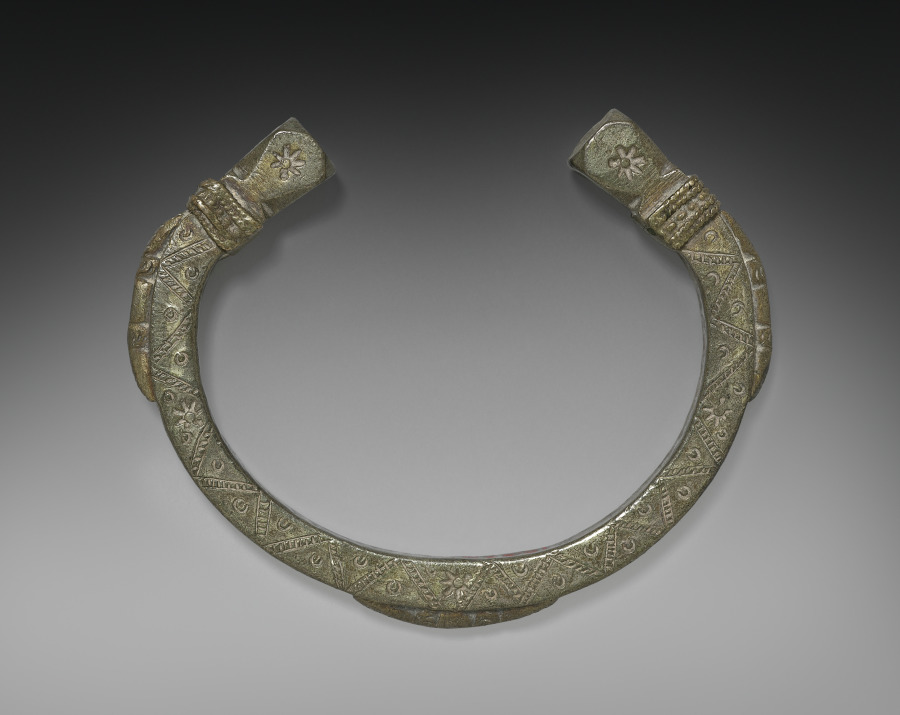 South Asian Arm Jewelry
These objects are all bracelets, wristlets, and armlets from Indian and Southeast Asian cultures, representing traditional personal adornment worn on the arms and wrists.
83 objects from 3 institutions
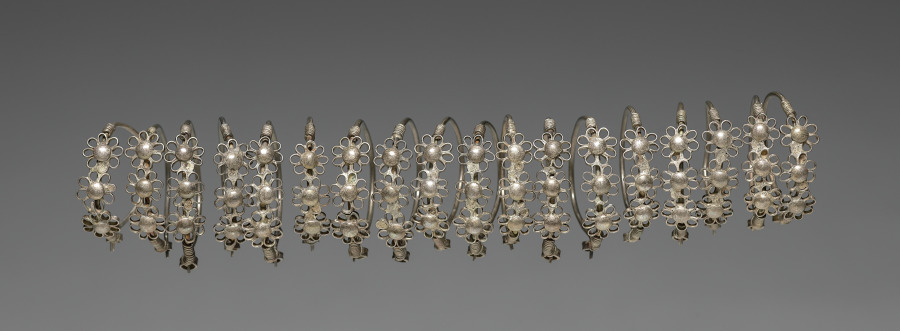 South Asian Traditional Jewelry
These objects represent traditional jewelry and personal adornment items primarily from India and Southeast Asia, showcasing the region's rich heritage of crafting ornamental pieces from precious metals and gemstones.
150 objects from 3 institutions
Related across collections
Semantically similar works from Minneapolis Institute of Art and other institutions.
![Fall [center right from the set Rice Farming in the Four Seasons]](https://2.api.artsmia.org/800/96539.jpg)
Fall [center right from the set Rice Farming in the Four Seasons]
Minneapolis Institute of Art
#96539
![Fall [center left from the set Rice Farming in the Four Seasons]](https://1.api.artsmia.org/800/96538.jpg)
Fall [center left from the set Rice Farming in the Four Seasons]
Minneapolis Institute of Art
#96538
![Fall [left from the set Rice Farming in the Four Seasons]](https://4.api.artsmia.org/800/95015.jpg)
Fall [left from the set Rice Farming in the Four Seasons]
Minneapolis Institute of Art
#95015
![Winter [right from the set Rice Farming in the Four Seasons]](https://1.api.artsmia.org/800/96531.jpg)
Winter [right from the set Rice Farming in the Four Seasons]
Minneapolis Institute of Art
#96531
![Winter [center left from the set Rice Farming in the Four Seasons]](https://6.api.artsmia.org/800/96529.jpg)
Winter [center left from the set Rice Farming in the Four Seasons]
Minneapolis Institute of Art
#96529
![Winter [center right from the set Rice Farming in the Four Seasons]](https://0.api.artsmia.org/800/96530.jpg)
Winter [center right from the set Rice Farming in the Four Seasons]
Minneapolis Institute of Art
#96530
![Winter [left from the set Rice Farming in the Four Seasons]](https://5.api.artsmia.org/800/22412.jpg)
Winter [left from the set Rice Farming in the Four Seasons]
Minneapolis Institute of Art
#22412
![Spring [center right from the set Rice Farming in the Four Seasons]](https://3.api.artsmia.org/800/96533.jpg)
Spring [center right from the set Rice Farming in the Four Seasons]
Minneapolis Institute of Art
#96533
![Spring [center left from the set Rice Farming in the Four Seasons]](https://2.api.artsmia.org/800/96532.jpg)
Spring [center left from the set Rice Farming in the Four Seasons]
Minneapolis Institute of Art
#96532
![Spring [right from the set Rice Farming in the Four Seasons]](https://4.api.artsmia.org/800/96534.jpg)
Spring [right from the set Rice Farming in the Four Seasons]
Minneapolis Institute of Art
#96534
![Spring [left from the set Rice Farming in the Four Seasons]](https://3.api.artsmia.org/800/95014.jpg)
Spring [left from the set Rice Farming in the Four Seasons]
Minneapolis Institute of Art
#95014
![Summer [center right from the set Rice Farming in the Four Seasons]](https://6.api.artsmia.org/800/96536.jpg)
Summer [center right from the set Rice Farming in the Four Seasons]
Minneapolis Institute of Art
#96536