Rijksmuseum
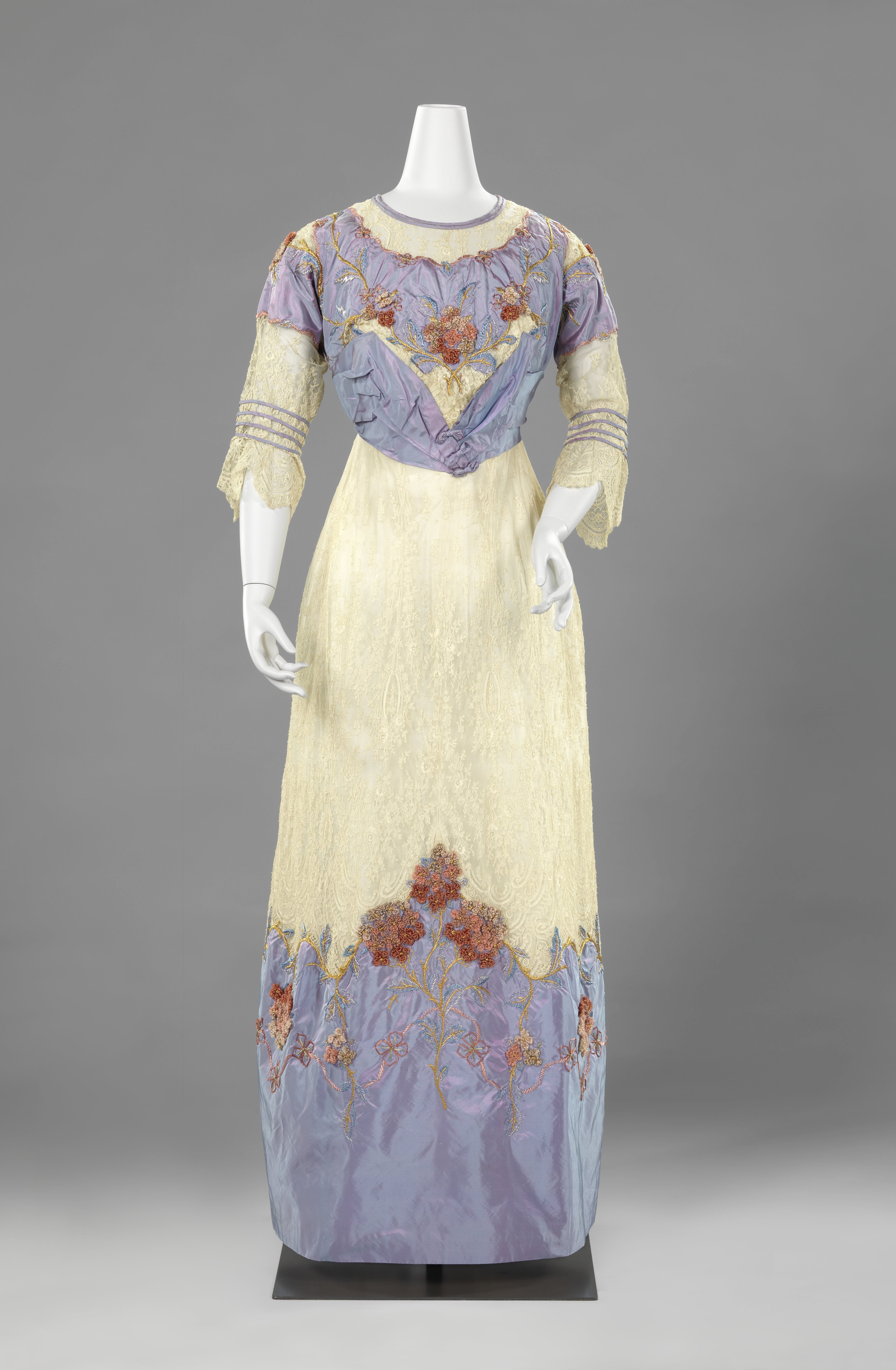
Gown (fourreau)
Creator
anonymousunknown creator of a work (do not use as value of P50; use "unknown value" instead)
All works by this person →More on Wikidata- Date
- c. 1910
- Medium
- metal thread, taffeta, cotton (textile), silk
- Institution
- Rijksmuseum
- Object ID
- BK-16406
From the Rijksmuseum record
Thanks to the designer Paul Poiret tubular dresses became fashionable from 1906. In French this slender silhouette is called fourreau, or sheath. The purple taffeta divides this dress into three parts and creates the illusion of short sleeves. All of this is typical for 1910, as are the voluminously rendered flowers. They are not embroidered flatly, but fashioned of tiny loops and knots.
The authoritative record is held by Rijksmuseum. LinkedCulture surfaces this object and its connections; it does not alter institutional metadata.
Get printable QR codesHide QR codes
Open QR codes for this object page and the museum record. They stay collapsed until needed.
Part of a LinkedCulture topic
 Embroidered Textiles
These objects are all skirts or skirt panels featuring elaborate embroidery work, primarily silk textiles from France and Europe dating to the 18th-19th centuries.
30 objects from 4 institutions
Related across collections
Semantically similar works from Rijksmuseum and other institutions.