Art Institute of Chicago
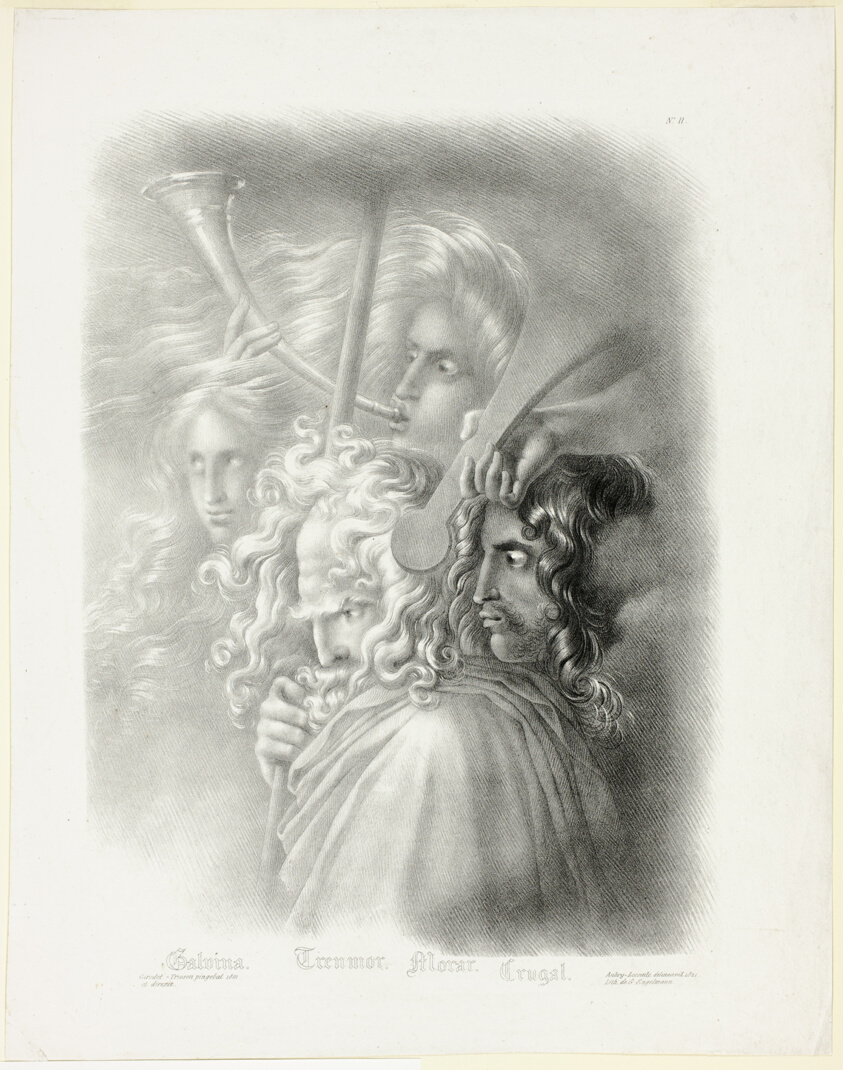
Galvina, from Collection of Study Heads
Hyacinth Aubry-Lecomte (French, 1787-1858)
- Date
- 1821
- Medium
- Lithograph in black on ivory wove paper
- Culture
- France
- Department
- Prints and Drawings
- Institution
- Art Institute of Chicago
Aubry-Lecomte, a student of Girodet, used the new art of lithography to reproduce the heightened facial expressions then prevalent in Romantic history painting. This evocative lithograph, shown at the Salon of 1822, is based on Girodet’s 1802 painting Ossian Receiving Napoleonic Officers (in the collection of Chateau du Malmaison). Galvina, shown at the left, is a tragic character from the fabricated epic poetry of the fictional Scottish bard Ossian, highly popular in the 18th century.
The authoritative record is held by Art Institute of Chicago. LinkedCulture surfaces this object and its connections; it does not alter institutional metadata.
Linked open data
Authority identifiers that link this record into the wider web of cultural data — stable references you can follow to the source.
- Object type
- AAT300041273
Related across collections
Semantically similar works from Art Institute of Chicago and other institutions.
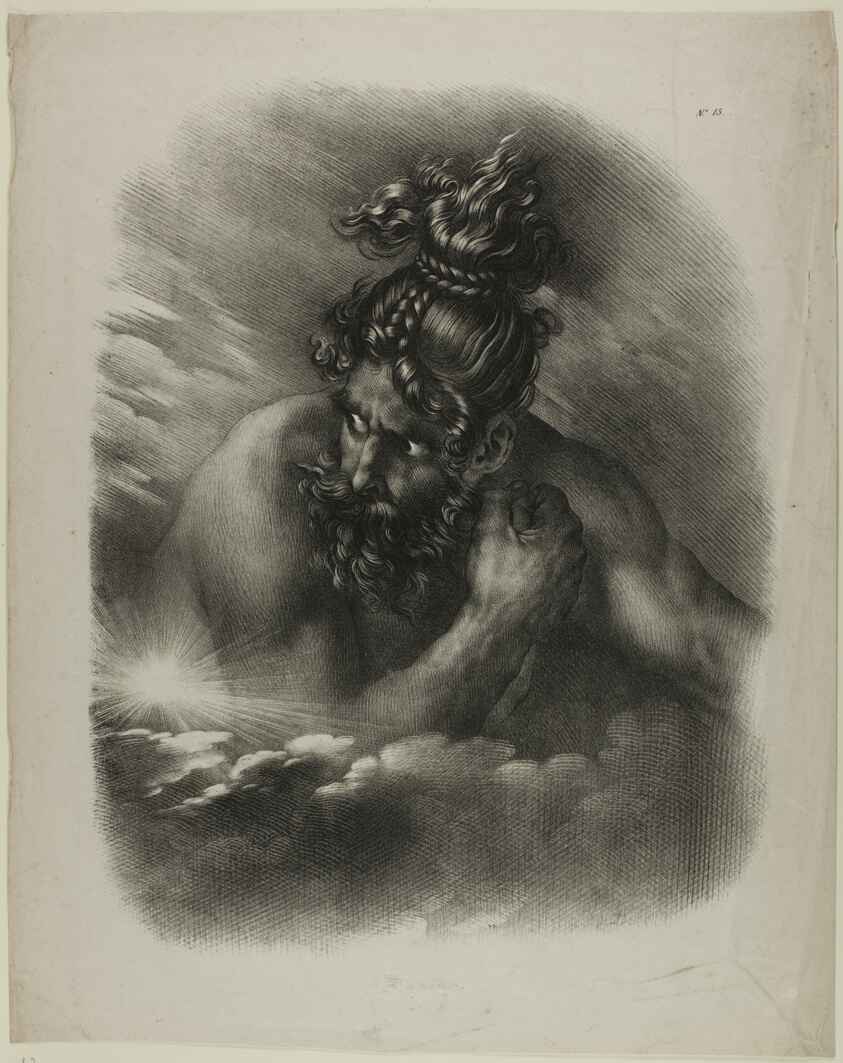
Swaran, after The Apotheosis of French Heroes Who Died for Their Country during the War for Liberty
Art Institute of Chicago
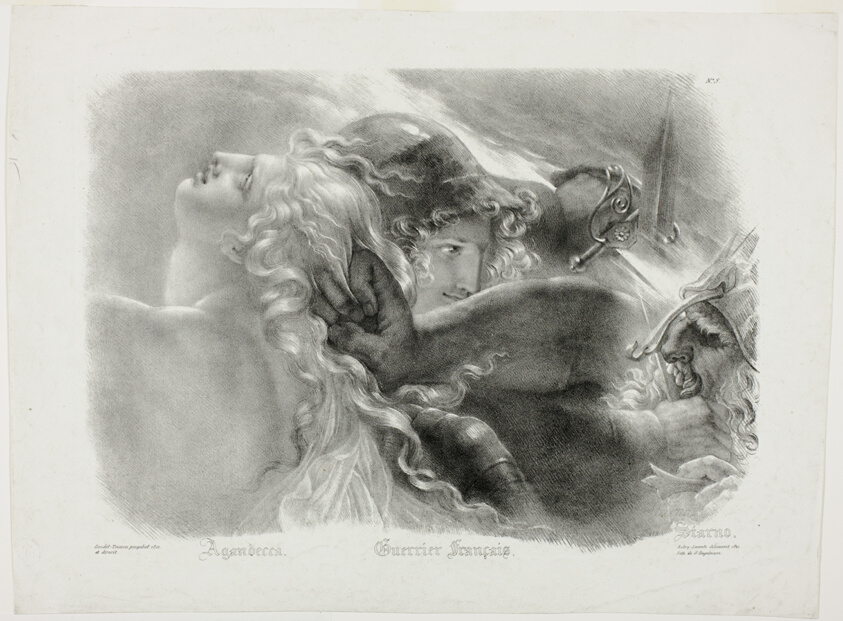
Agandecca, French Warrior, Starno, after The Apotheosis of French Heroes Who Died for Their Country during the War for Liberty
Art Institute of Chicago
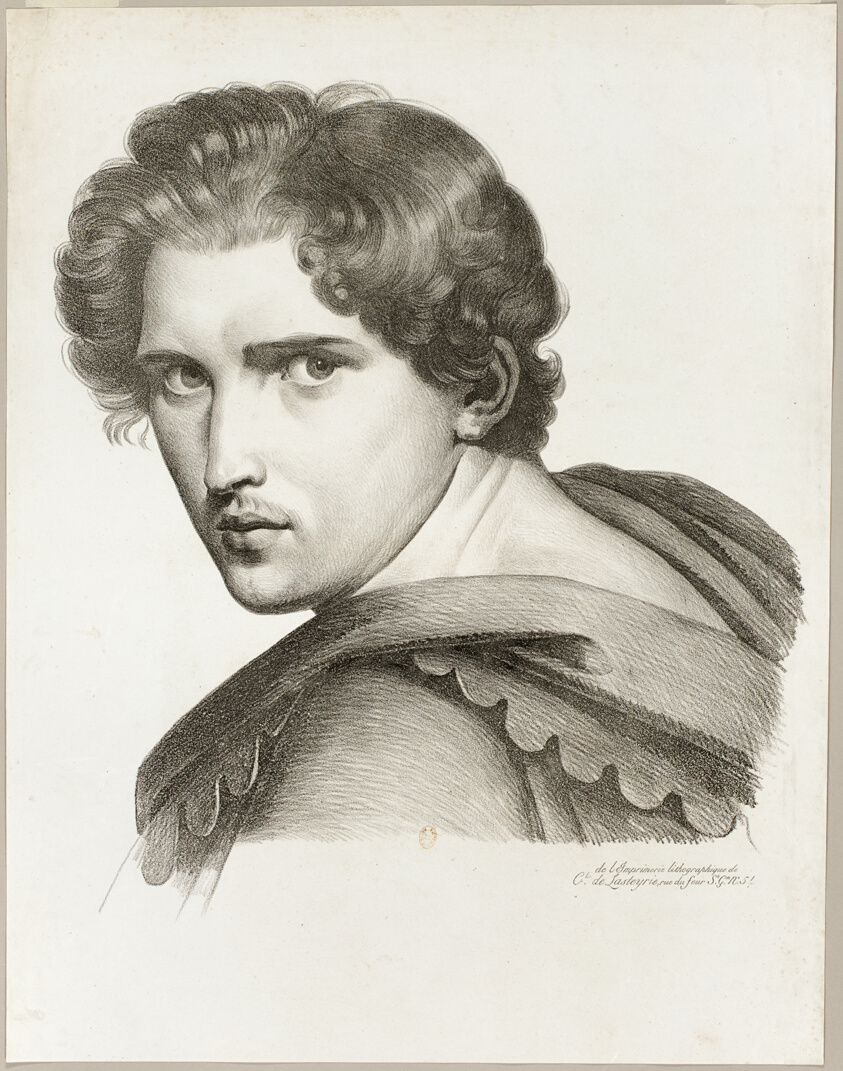
Expressive Head
Art Institute of Chicago
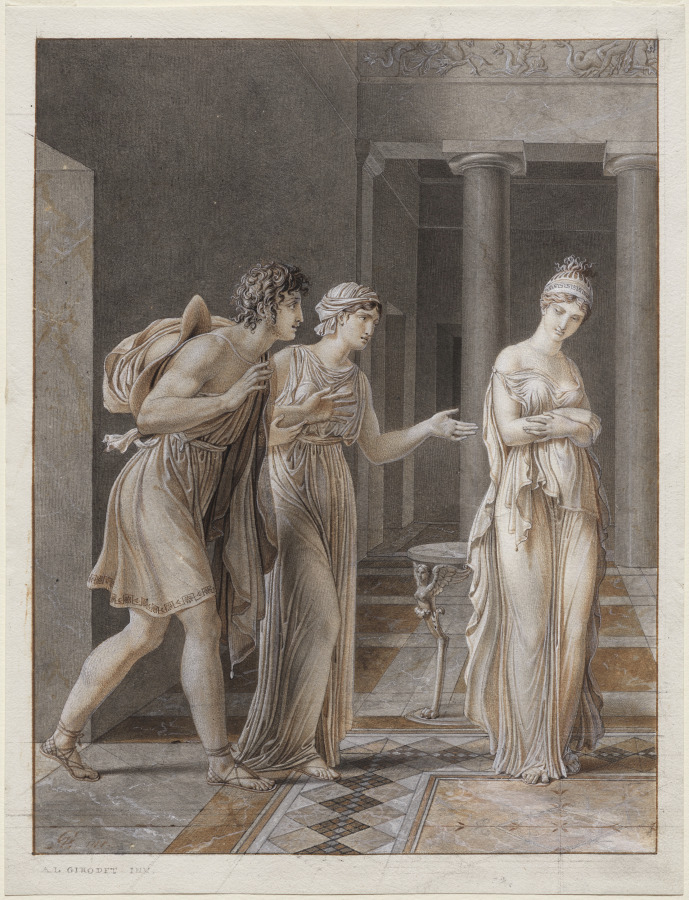
The Meeting of Orestes and Hermione
Cleveland Museum of Art
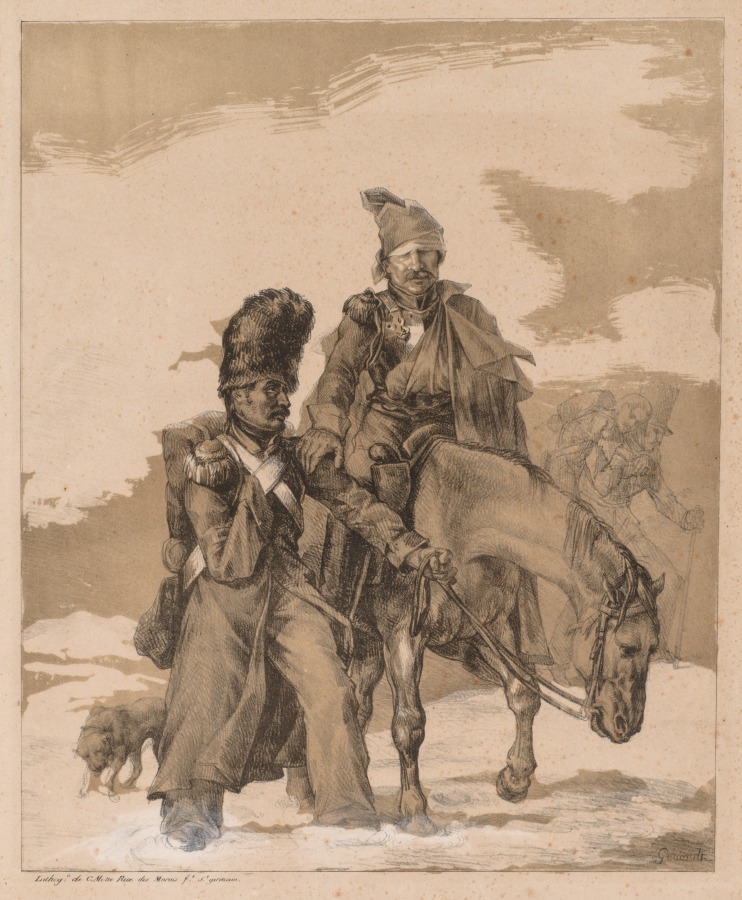
Return from Russia
Cleveland Museum of Art

Scene from the Italian Comedy (recto); Figure Study (verso)
Getty Museum

Head of a Mustachioed Man, Three-Quarter View
Minneapolis Institute of Art
A propos d'un amoureux. / 9.
Musée Carnavalet, Histoire de Paris
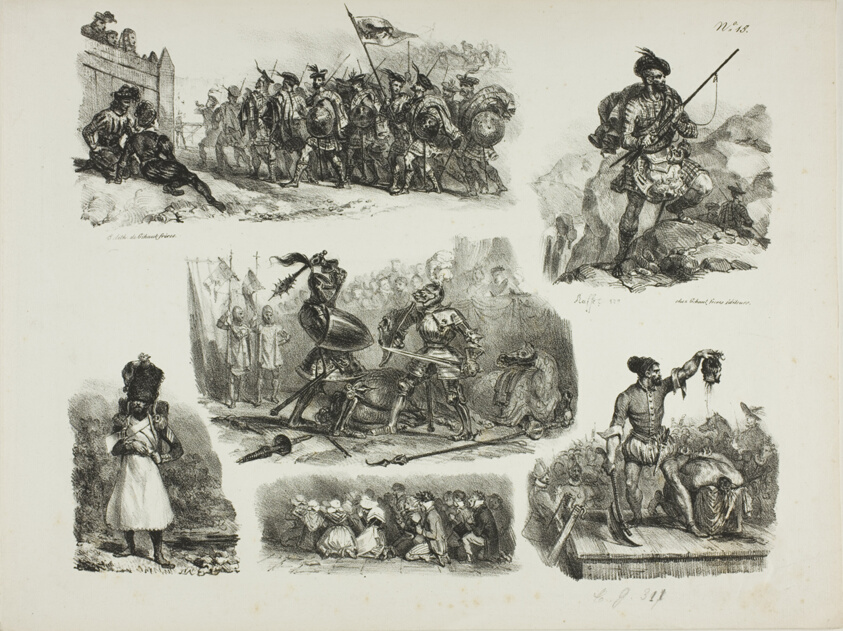
Sheet of Sketches
Art Institute of Chicago
Theatre Scene (recto); Lingerie Boutique and Conversation (verso)
Cleveland Museum of Art
Revolt of Pavia
Art Institute of Chicago

Malheureuse! tu feras la honte de ton sexe et le desespoir du mien!...
Musée Carnavalet, Histoire de Paris