Art Institute of Chicago
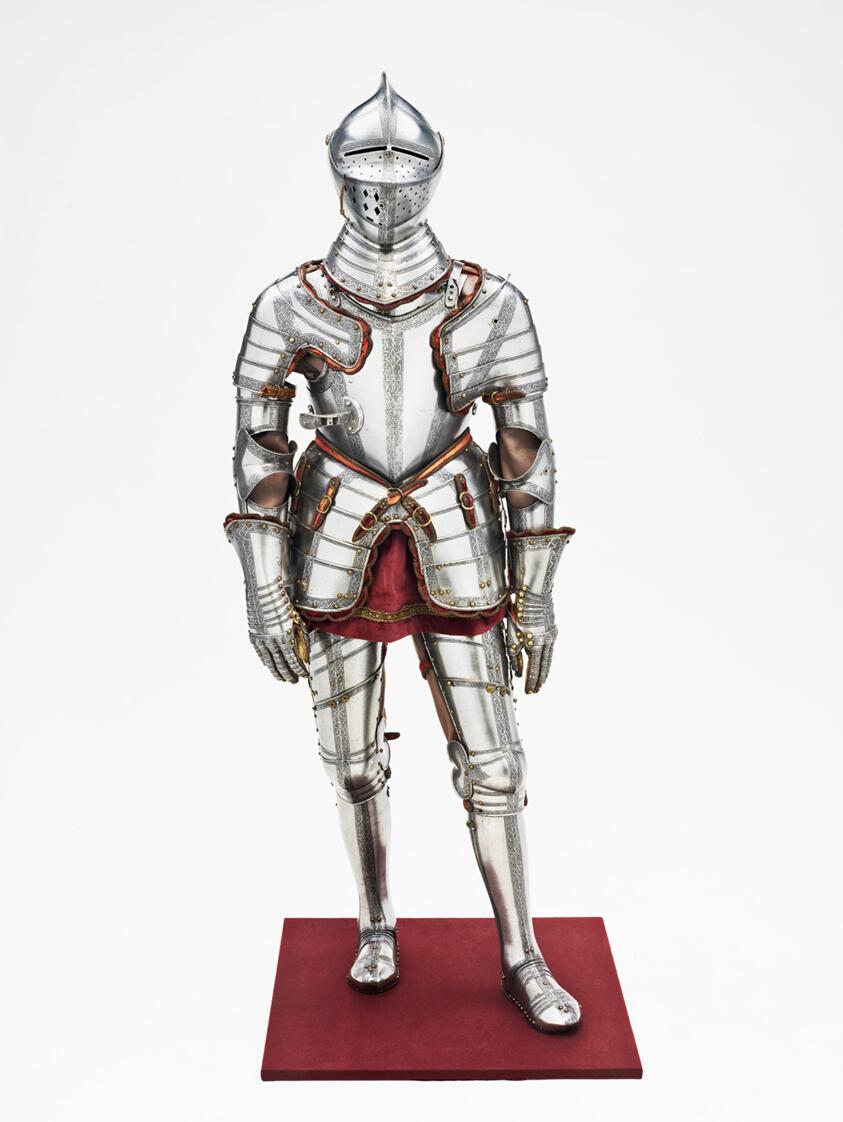
Armor for the Field and Tourney
South German or Austrian (Probably Innsbruck)LinkedCulture matchlcp-b3c09594a6f5
- Date
- 1560/70
- Medium
- Steel, brass, traces of gilding, leather, and velvet textile
- Culture
- Innsbruck
- Department
- Applied Arts of Europe
- Institution
- Art Institute of Chicago
- Object ID
- 106201
From the Art Institute of Chicago record
This Augsburg armor is rare in that all of the pieces are original and belong to the same garniture. The elements have alternate polished areas and etched bands enclosing strap work and arabesque grounds; the etched bands were originally gilded, but only traces of the gilding remain. This is a complete armor for a mounted knight or a high-ranking heavy cavalryman who was fully suited in plate armor, including a close helmet, neck defense (gorget), shoulder and arm defenses (pauldrons, vambraces, and gauntlets), cuirass with tassets and lance rest, and leg defenses (cuisses with poleyns, and greaves with sabatons). When the etched bands retained the original gilding, it would have been visually striking.
The authoritative record is held by Art Institute of Chicago. LinkedCulture surfaces this object and its connections; it does not alter institutional metadata.
Get printable QR codesHide QR codes
Open QR codes for this object page and the museum record. They stay collapsed until needed.
Provenance & credit
As published by the source institution. Coverage varies — not every institution's open-data feed includes ownership history.
- Credit line
- George F. Harding Collection
Linked open data
Authority identifiers that link this record into the wider web of cultural data — stable references you can follow to the source.
- Object type
- AAT300209266
Part of a LinkedCulture topic
 European Renaissance Armor Components
These objects are all pieces of defensive armor and military equipment from 15th-17th century Europe, primarily from major armoring centers like Italy, Germany, and France.
500 objects from 4 institutions
Related across collections
Semantically similar works from Art Institute of Chicago and other institutions.