Art Institute of Chicago
Adam
Auguste Rodin (French, 1840–1917)LinkedCulture matchlcp-5fadac0041a2
- Date
- Modeled 1881, cast c. 1924
- Medium
- Bronze with dark brown patina
- Culture
- France
- Department
- Painting and Sculpture of Europe
- Institution
- Art Institute of Chicago
- Object ID
- 11320
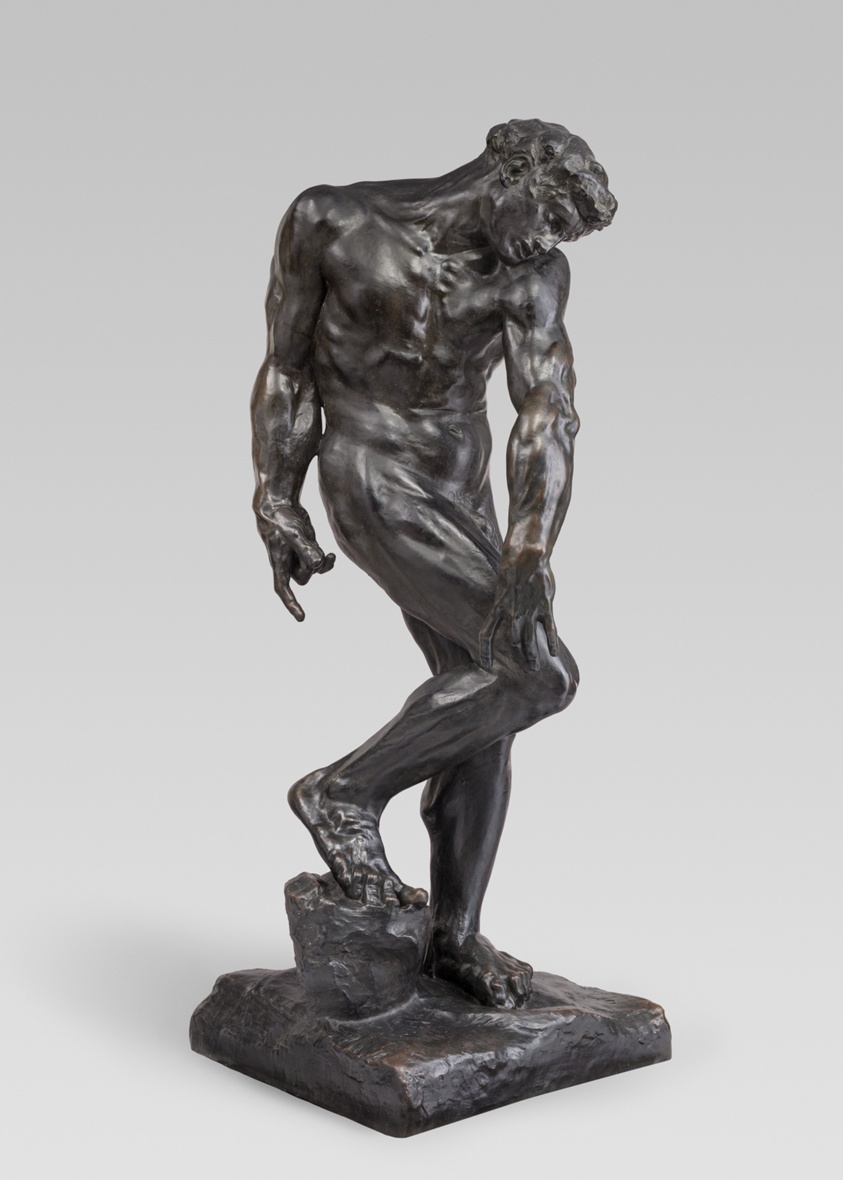
Auguste Rodin’s powerfully expressive figure of Adam was originally intended to be paired with a sculpture of Eve, flanking a sculptured bronze portal commissioned by the French government for the Musée de Arts Décoratifs, Paris. For this monumental undertaking, which he entitled The Gates of Hell , Rodin turned to past Italian masters. Michelangelo’s Creation of Adam fresco on the ceiling of the Sistine Chapel in Rome (1508–12) inspired the pose of Rodin’s subject. Rodin rotated Michelangelo’s reclining Adam and transferred the frescoed figure’s gesture of receiving life from God to the sculpture’s right arm. The exaggerated turn of Adam’s left arm comes from Michelangelo’s sculpture of the dead Christ in his Pietà (1548–55; Museo del Duomo, Florence). Rodin chose the portal’s theme from Dante’s fourteenth-century epic poem Inferno ; here Adam’s agonized body strikingly conveys the sufferings caused by original sin. Although the museum building was never constructed and the portal was not completed as originally conceived, Rodin explored the expressive potential of the human body as few artists before him had dared. As independent statues, Adam and Eve are among the commission’s numerous progeny. Not until 1938 was the gate cast in bronze and placed at the entrance to the grounds of the Musée Rodin, Paris.
The authoritative record is held by Art Institute of Chicago. LinkedCulture surfaces this object and its connections; it does not alter institutional metadata.
Get printable QR codesHide QR codes
Open QR codes for this object page and the museum record. They stay collapsed until needed.
Provenance & credit
As published by the source institution. Coverage varies — not every institution's open-data feed includes ownership history.
- Credit line
- Gift of Robert Allerton
Linked open data
Authority identifiers that link this record into the wider web of cultural data — stable references you can follow to the source.
- Object type
- AAT300301253
Related across collections
Semantically similar works from Art Institute of Chicago and other institutions.