Art Institute of Chicago
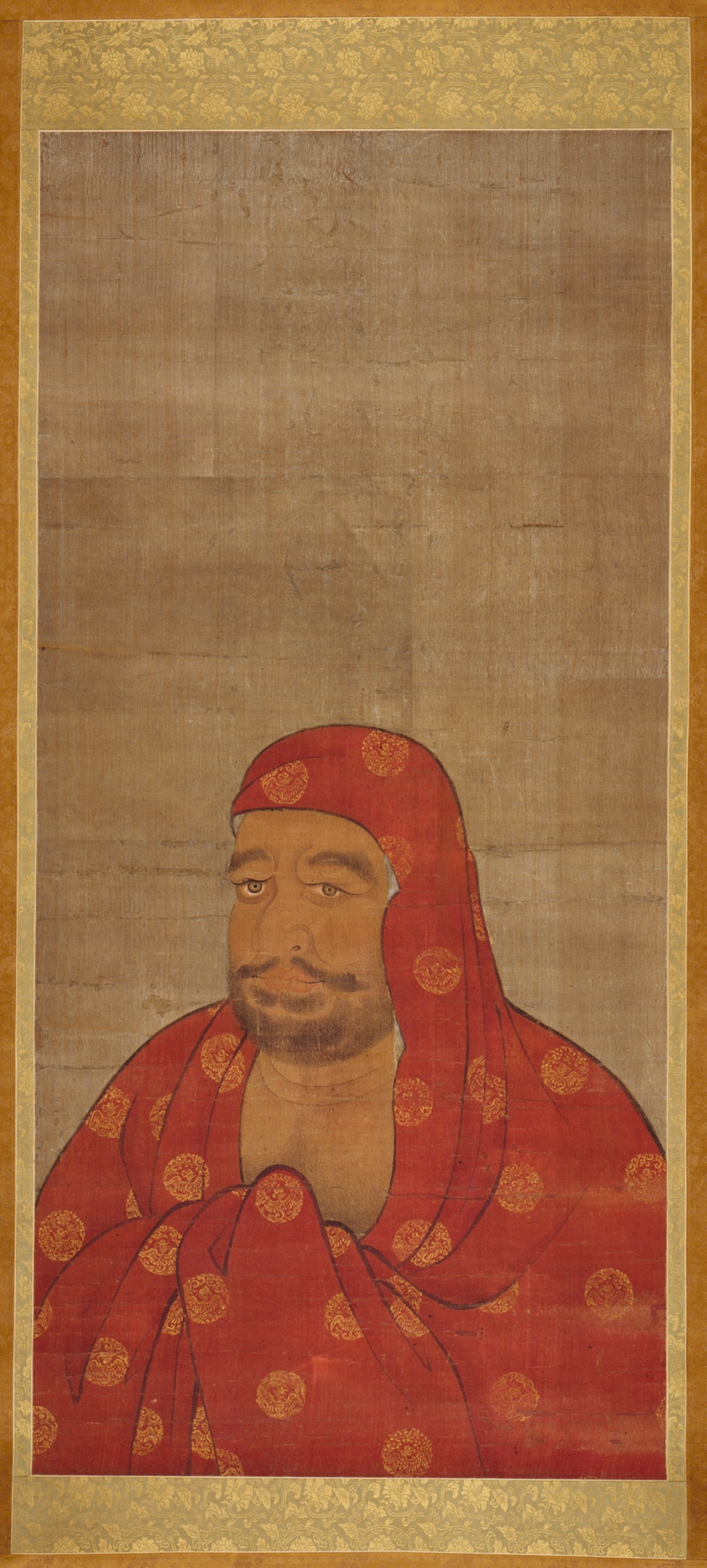
Daruma
Artist unknownLinkedCulture matchlcp-720adf61c688
- Date
- c. 1550
- Medium
- Hanging scroll; ink, colors, and gold on silk
- Culture
- Japan
- Department
- Arts of Asia
- Institution
- Art Institute of Chicago
- Object ID
- 117201
From the Art Institute of Chicago record
Zen rose to prominence in Japan in the 13th century, after receiving support from the ruling Kamakura shogunate. In this sect of Buddhism, images of patriarchs were especially revered because the relationships between masters and disciples are of primary importance to the transmission of Zen teachings. Zen’s semilegendary founder, Daruma (A.D. c. 470–c. 543), came from southern India and crossed the Yangzi River in China, where he meditated in a cave at the Shaolin monastery for nine years. In this Japanese painting, his facial features are Indian, and his head is covered as befits a southern Indian monk. According to an inscription on the back of this painting, it was originally in the possession of Shorinji temple in Okayama prefecture.
The authoritative record is held by Art Institute of Chicago. LinkedCulture surfaces this object and its connections; it does not alter institutional metadata.
Get printable QR codesHide QR codes
Open QR codes for this object page and the museum record. They stay collapsed until needed.
Provenance & credit
As published by the source institution. Coverage varies — not every institution's open-data feed includes ownership history.
- Credit line
- Russell Tyson, Samuel M. Nickerson endowments
Linked open data
Authority identifiers that link this record into the wider web of cultural data — stable references you can follow to the source.
- Object type
- AAT300033618
Related across collections
Semantically similar works from Art Institute of Chicago and other institutions.