Art Institute of Chicago
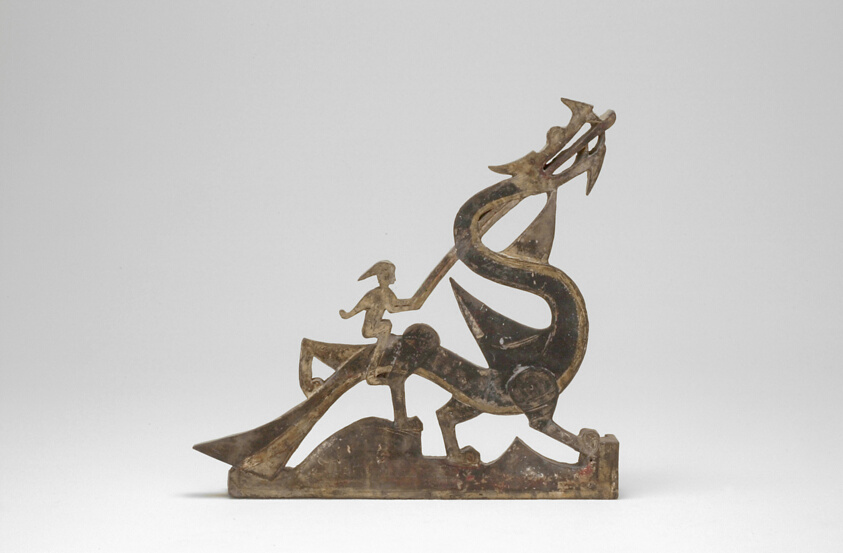
Immortals Riding Dragons: Section of a Tomb Pediment
China; probably from Henan provinceLinkedCulture matchlcp-ddee46aa9dab
- Date
- Han dynasty (206 BCE–220 CE), 1st century
- Medium
- Gray earthenware with traces of slip and polychrome pigments
- Culture
- China
- Department
- Arts of Asia
- Institution
- Art Institute of Chicago
- Object ID
- 133709
From the Art Institute of Chicago record
These triangular sculptures originally fit under the pitched roof of a burial chamber constructed of clay bricks. The position of similar panels discovered intact suggests that they originally formed two ends of a pediment that divided a chamber in half. The panels are carved and painted to depict winged figures mounted on dragons striding over hills or waves. In Han mythology, such beings are described as immortals (xian). Having achieved eternal life, these immortals were endowed with the power to fly and roamed freely about the universe. The depiction of these remarkable beings in tombs reflects a widespread belief that the soul of the deceased could leave its earth-bound existence, ascend to heaven, and become an immortal. The ascent of the soul to the realm of the immortals is a major theme in Han art.
The authoritative record is held by Art Institute of Chicago. LinkedCulture surfaces this object and its connections; it does not alter institutional metadata.
Get printable QR codesHide QR codes
Open QR codes for this object page and the museum record. They stay collapsed until needed.
Provenance & credit
As published by the source institution. Coverage varies — not every institution's open-data feed includes ownership history.
- Credit line
- Gift of Mrs. Gordon Palmer
Linked open data
Authority identifiers that link this record into the wider web of cultural data — stable references you can follow to the source.
- Object type
- AAT300190691
Related across collections
Semantically similar works from Art Institute of Chicago and other institutions.