Art Institute of Chicago
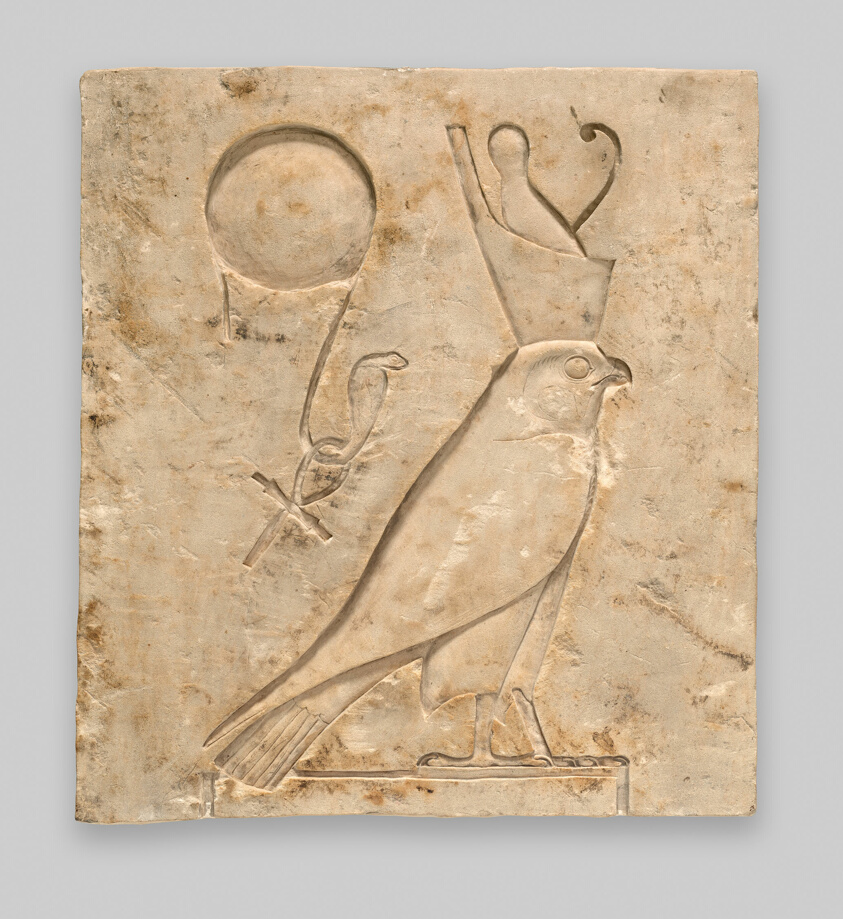
Relief Plaque Depicting the God Horus as a Falcon
EgyptianLinkedCulture matchlcp-b3f2759025d0
- Date
- Late Period–Ptolemaic Period (664–30 BCE)
- Medium
- Limestone
- Culture
- Egypt
- Department
- Arts of Africa
- Institution
- Art Institute of Chicago
- Object ID
- 136453
From the Art Institute of Chicago record
Horus, shown as a falcon or a falcon-headed man, was one of the most important gods of the Egyptian pantheon. First appearing about 3000 B.C. Horus continued to be revered through the Ptolemaic and Roman periods. Each Egyptian king was considered to be the “Living Horus on Earth.” The king would often wear a double crown, which symbolized rule over both Northern and Southern Egypt. Here Horus is shown wearing such a crown,confirming the king’s shared identity with the god. Behind Horus is the disk of the sun, protected by a uraeus, a snake symbolizing royalty, from which hangs an ankh, the sign for life.
The authoritative record is held by Art Institute of Chicago. LinkedCulture surfaces this object and its connections; it does not alter institutional metadata.
Get printable QR codesHide QR codes
Open QR codes for this object page and the museum record. They stay collapsed until needed.
Provenance & credit
As published by the source institution. Coverage varies — not every institution's open-data feed includes ownership history.
- Credit line
- Museum Purchase Fund
- Provenance
- Maurice Nahman (1868-1948), Cairo; sold to the Art Institute of Chicago through James Henry Breasted as agent, 1920.
Linked open data
Authority identifiers that link this record into the wider web of cultural data — stable references you can follow to the source.
- Object type
- AAT300190691
Related across collections
Semantically similar works from Art Institute of Chicago and other institutions.