Art Institute of Chicago
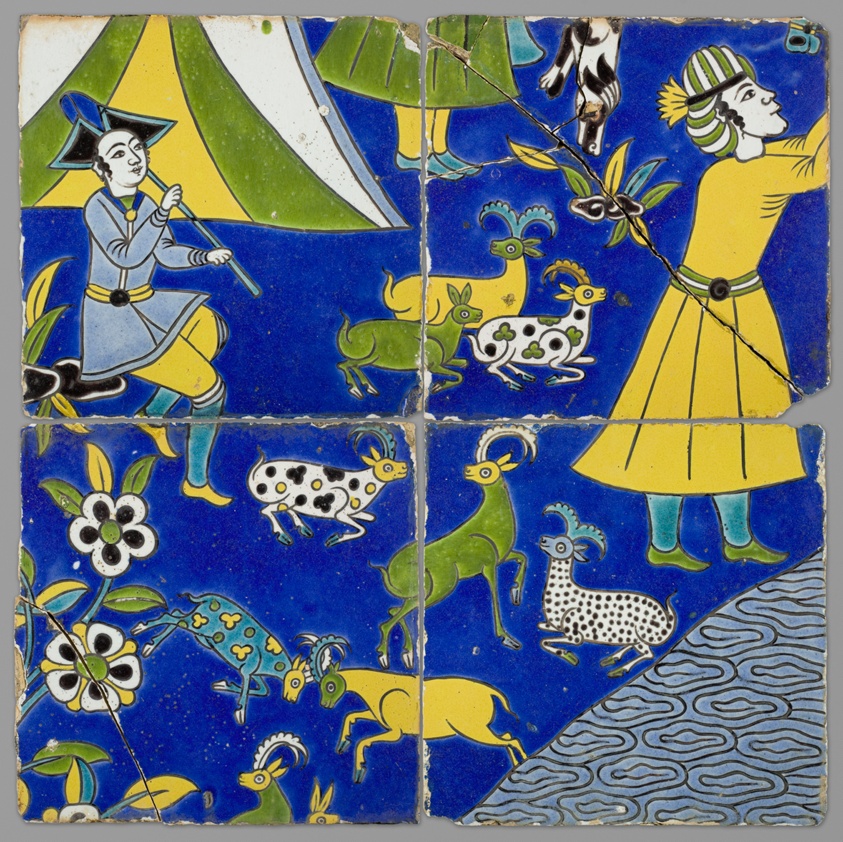
Four Tiles with a Figural Scene
IranLinkedCulture matchlcp-ee0faa853516
- Date
- Safavid dynasty (1501–1722), 17th century
- Medium
- Fritware with polychrom overglaze decoration
- Culture
- Iran
- Department
- Arts of Asia
- Institution
- Art Institute of Chicago
- Object ID
- 137226
From the Art Institute of Chicago record
The practice of decorating tiles with bright colors outlined in black was known as cuerda seca, which translates as “dry cord” from Spanish. Cuerda seca developed in the Islamic lands of Spain, Iran, and Central Asia at the end of the 14th century and remained popular in these regions for several centuries. The black line between colors allowed for carefully distinguished forms that otherwise might have been muddles during the firing process.These tiles are a section of a larger scene depicting the life of the epic Persian hero Bahram Gur. Here, gazelles festively play along the bank of a river as young man plays the flute and another presumably bridles a horse, of which only the nose is visible. Similar figures appear in different sets of tiles, evidence of the use of pattern books or stock images for similar scenes. The tales of Bahram Gur were popular subjects for both smaller decorative objects and long epic books, such as the lavishly decorated Khamsa of Nizami , a 16th-century manuscript created for the Mughal Emperor Akbar.
The authoritative record is held by Art Institute of Chicago. LinkedCulture surfaces this object and its connections; it does not alter institutional metadata.
Get printable QR codesHide QR codes
Open QR codes for this object page and the museum record. They stay collapsed until needed.
Provenance & credit
As published by the source institution. Coverage varies — not every institution's open-data feed includes ownership history.
- Credit line
- Mary Jane Gunsaulus Collection
Linked open data
Authority identifiers that link this record into the wider web of cultural data — stable references you can follow to the source.
- Object type
- AAT300190691
Part of a LinkedCulture topic
 Islamic Architectural Ceramics
These objects are all ceramic tiles and architectural elements from Islamic cultures across the Middle East, Central Asia, and North Africa, featuring techniques like fritware, luster painting, and underglaze decoration
60 objects from 5 institutions
Related across collections
Semantically similar works from Art Institute of Chicago and other institutions.