Art Institute of Chicago
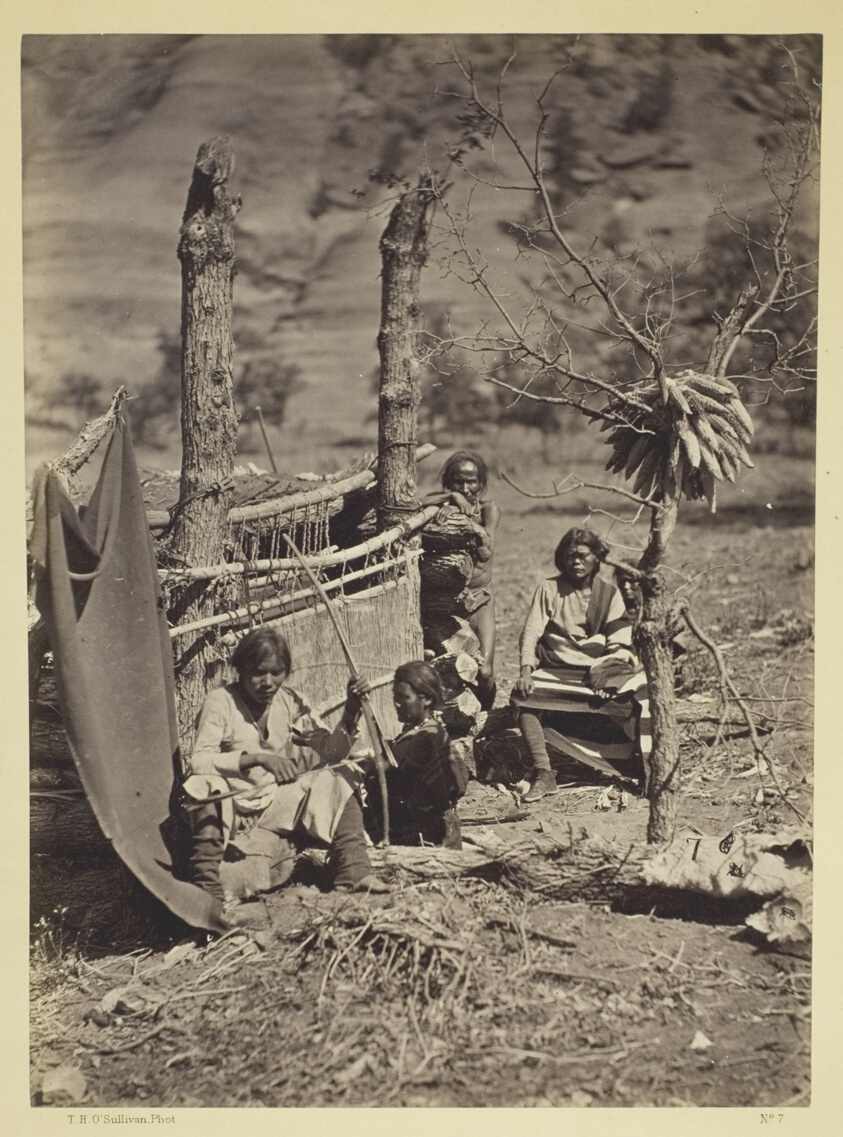
Aboriginal Life Among the Navajoe Indians, Near Old Fort Defiance, N.M.
Timothy O'SullivanLinkedCulture matchlcp-f778926c861a
- Date
- 1873
- Medium
- Albumen print, from the album "Geographical & Geological Explorations & Surveys West of the 100th Meridian," vol. 1
- Culture
- United States
- Department
- Photography and Media
- Institution
- Art Institute of Chicago
- Object ID
- 140432
From the Art Institute of Chicago record
An 1868 treaty, signed at gunpoint, allowed the Navajo back onto ancestral lands in Arizona after 20 years of raids and slaughter capped by the genocidal “Long Walk” east to captivity in New Mexico. This richly hued picture shows labor clearly—drying ears of corn and a double loom are in brilliant focus—while the laborers appear blurred and idle. But these four Navajo men still seem stubbornly present. The one half-hidden at the back, and the one who turns his face away, may be actively resisting portrayal. Such presence and tacit resistance both run counter to romanticized images of the Navajo as actively dangerous or disappearing—images that already were fast becoming clichés. See also: Robin Kelsey, Archive Style (2007); James C. Faris, Navajo and Photography (1996)
The authoritative record is held by Art Institute of Chicago. LinkedCulture surfaces this object and its connections; it does not alter institutional metadata.
Get printable QR codesHide QR codes
Open QR codes for this object page and the museum record. They stay collapsed until needed.
Provenance & credit
As published by the source institution. Coverage varies — not every institution's open-data feed includes ownership history.
- Credit line
- Photography Gallery Fund
Linked open data
Authority identifiers that link this record into the wider web of cultural data — stable references you can follow to the source.
- Object type
- AAT300046300
Related across collections
Semantically similar works from Art Institute of Chicago and other institutions.