Art Institute of Chicago
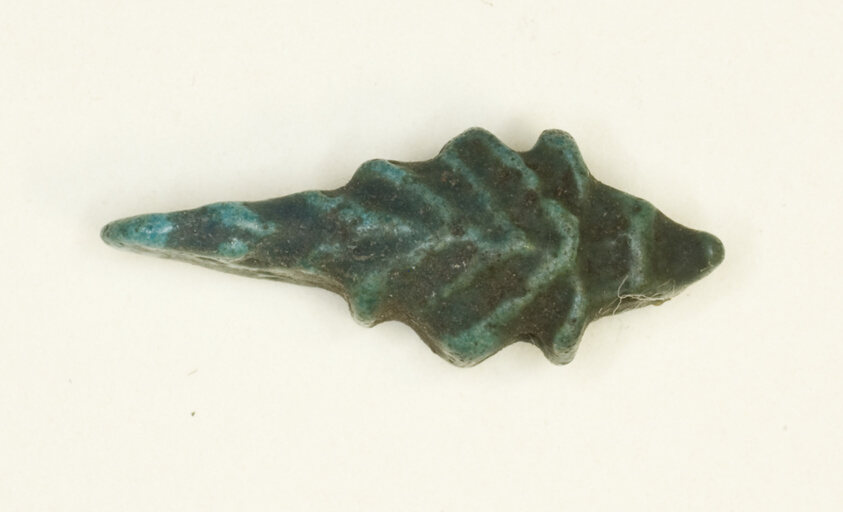
Amulet of a Crocodile
EgyptianLinkedCulture matchlcp-b3f2759025d0
- Date
- New Kingdom–Third Intermediate Period (?) (about 1550–664 BCE)
- Medium
- Faience
- Culture
- Egypt
- Department
- Arts of Africa
- Institution
- Art Institute of Chicago
- Object ID
- 140683
From the Art Institute of Chicago record
This amulet likely depicts a crocodile from a bird’s-eye view, a change from the more common profile perspective used for depictions of animals within ancient Egyptian art. Ancient Egyptians had several terms for small objects like this, which we call “amulets.” Worn by the living and the dead, these charms were meant to bring protection, health, and good luck, ensuring the bearer’s well-being in both life and the afterlife. The crocodiles that previously lived on the banks of the Nile River in Egypt posed a serious threat to nearby livestock and travelers along the river. Ancient Egyptians believed that wearing images of dangerous animals could enable an individual to harness some of their power and counteract their risk; artisans pierced this amulet with a small hole so that it could be strung like a bead and worn. Ancient Egyptians also worshipped crocodiles as a physical manifestation of Sobek, a god of the primeval waters, and represented him with the animal’s features. People revered Sobek as a deity of the earliest forces of creation. He represented both the danger and the life-giving aspects of the water.
The authoritative record is held by Art Institute of Chicago. LinkedCulture surfaces this object and its connections; it does not alter institutional metadata.
Get printable QR codesHide QR codes
Open QR codes for this object page and the museum record. They stay collapsed until needed.
Provenance & credit
As published by the source institution. Coverage varies — not every institution's open-data feed includes ownership history.
- Credit line
- Gift of Charles L. Hutchinson
- Provenance
- Reverend Chauncey Murch (1859-1907), Luxor, Egypt; sold to the Art Institute of Chicago, 1894; price reimbursed by Henry H. Getty and Charles L. Hutchinson, 1894.
Linked open data
Authority identifiers that link this record into the wider web of cultural data — stable references you can follow to the source.
- Object type
- AAT300209261
Related across collections
Semantically similar works from Art Institute of Chicago and other institutions.