Art Institute of Chicago
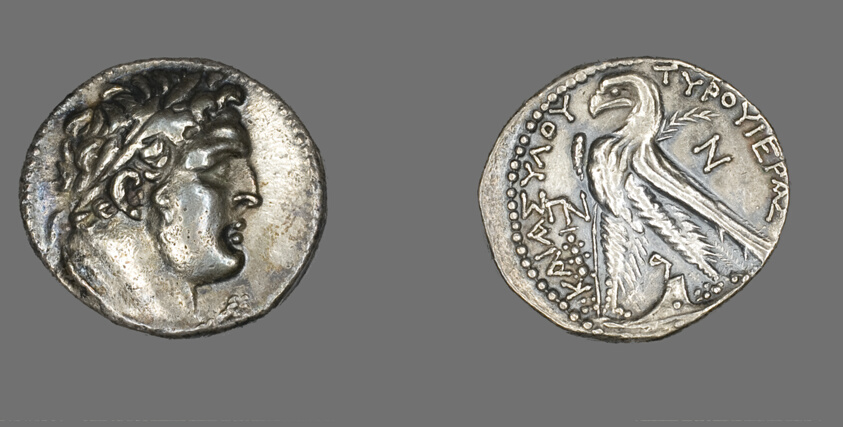
Tetradrachm (Coin) Depicting Head of Herakles
Greek, minted in Tyre, PhoeniciaLinkedCulture matchlcp-522a7cdf11f8
- Date
- 74-73 BCE
- Medium
- Silver
- Culture
- Tyre
- Department
- Arts of Greece, Rome, and Byzantium
- Institution
- Art Institute of Chicago
- Object ID
- 141574
From the Art Institute of Chicago record
Herakles was the consummate hero. Temples across Greece and South Italy were dedicated to him, the son of Zeus, and Romans, who knew him as Hercules, celebrated him as a role model. With brute force, determination, and just enough cleverness, Herakles completed his famous Twelve Labors to become immortal. Herakles is readily identifiable by his knobby club and lion’s skin. The latter refers to his First Labor, in which he killed a magical beast who was ravaging the town of Nemea. The lion’s invincible hide made him immune to weapons, so Herakles strangled him and took his pelt. As Greeks and then Romans swept through Phoenicia (modern Lebanon), deities were assimilated into the local pantheon. The city of Tyre issued this coin showing its god Melqart in the form of Herakles, identified by the tiny knotted lion’s paws under his chin.
The authoritative record is held by Art Institute of Chicago. LinkedCulture surfaces this object and its connections; it does not alter institutional metadata.
Get printable QR codesHide QR codes
Open QR codes for this object page and the museum record. They stay collapsed until needed.
Provenance & credit
As published by the source institution. Coverage varies — not every institution's open-data feed includes ownership history.
- Credit line
- Gift of William F. Dunham
- Provenance
- William F. Dunham (1857-1936), Chicago; given to the Art Institute of Chicago, 1920.
Linked open data
Authority identifiers that link this record into the wider web of cultural data — stable references you can follow to the source.
- Object type
- AAT300037334
Related across collections
Semantically similar works from Art Institute of Chicago and other institutions.