Art Institute of Chicago
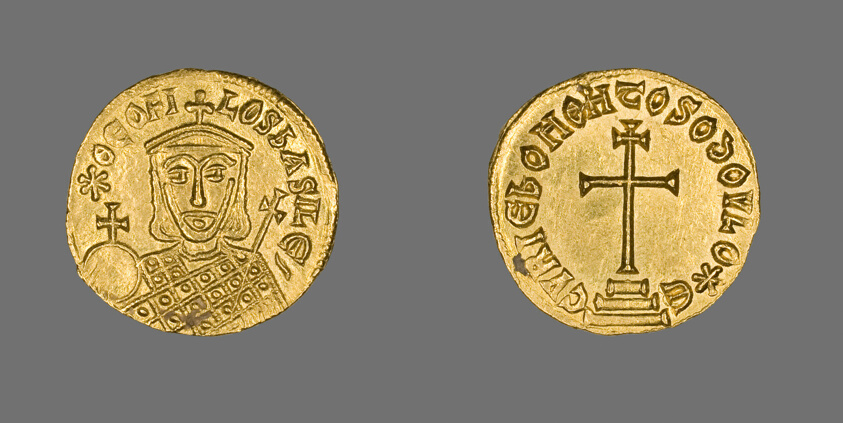
Solidus (Coin) of Theophilus
Byzantine, minted in ConstantinopleLinkedCulture matchlcp-6c5c620f14da
- Date
- 829-831
- Medium
- Gold
- Culture
- Byzantine Empire
- Department
- Arts of Greece, Rome, and Byzantium
- Institution
- Art Institute of Chicago
- Object ID
- 142685
From the Art Institute of Chicago record
As powerful vehicles for propaganda, Byzantine coins also emphasized the close relationship between earthly monarchs and the heavenly realm, as does this solidus of Theophilus (r. 829-842). A bust-length portrait of the emperor appears on the obverse; he wears a crown and is garbed in the imperial loros, a heavily jeweled stole for festive occasions. In his hands are a globe and a scepter, both of which are surmounted by crosses. The patriarchal cross above three steps that appears on the reverse is meant to represent a large cross that was erected in the fourth century on the site of Christ's crucifixion in Jerusalem. This motif of a cross and steps was first used on the coins of Tiberius II (r. 578-82), and its increasing popularity reflected the progressive Christianizing of imperial iconography, in which symbols such as the cross replaced earlier pagan elements like winged Victories. The imagery of Byzantine coins, as well as their use—or not—of religious imagery, reflects the different attitudes toward representation of divine figures as a result of the Iconoclastic (from the Greek eikon, or image, and klao, to break) Controversy, a fierce debate among Byzantine theologians over the appropriate role of images in religious worship that raged in Byzantium for over 100 years from about 730 to 843. Theophilus, the last imperial proponent of Iconoclasm, follows the examples of Heraclius (r. 610–41) and Leontius (r. 695–98) before him by linking his portrait on the front of this coin with a potent visual symbol of Christ, the monumental cross on four steps that had been erected at Jerusalem in the fourth century.
The authoritative record is held by Art Institute of Chicago. LinkedCulture surfaces this object and its connections; it does not alter institutional metadata.
Get printable QR codesHide QR codes
Open QR codes for this object page and the museum record. They stay collapsed until needed.
Provenance & credit
As published by the source institution. Coverage varies — not every institution's open-data feed includes ownership history.
- Credit line
- Gift of William F. Dunham
- Provenance
- William F. Dunham (1857-1936), Chicago; given to the Art Institute of Chicago, 1920.
Linked open data
Authority identifiers that link this record into the wider web of cultural data — stable references you can follow to the source.
- Object type
- AAT300037334
Related across collections
Semantically similar works from Art Institute of Chicago and other institutions.