Art Institute of Chicago
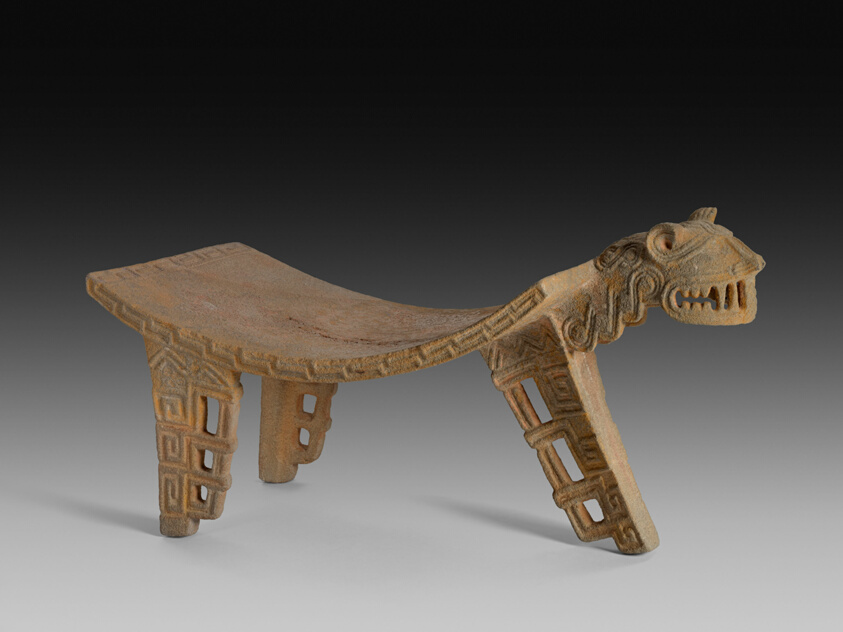
Ceremonial Grinding Table (Metate) in the Form of a Feline
Nicoya
- Date
- 500–1000
- Medium
- Volcanic stone
- Culture
- Nicoya
- Department
- Arts of the Americas
- Institution
- Art Institute of Chicago
In Central America, Mexico, and the southwestern United States, flat stone grinders (metates) were used to prepare cornmeal and corn dough for cooking. Sculptors in ancient Costa Rica developed elaborate metate forms as symbols of sustenance; large, finely carved examples often feature effigies as emblems of a ruler or religious official. Metates have been discovered in burials, where they served as biers for deceased leaders, but they were probably primarily intended as throne-like seats for chieftains, thereby linking rulers’ political power to their obligation to ensure abundant harvests to sustain their communities.
The authoritative record is held by Art Institute of Chicago. LinkedCulture surfaces this object and its connections; it does not alter institutional metadata.
Linked open data
Authority identifiers that link this record into the wider web of cultural data — stable references you can follow to the source.
- Object type
- AAT300301253
Related across collections
Semantically similar works from Art Institute of Chicago and other institutions.
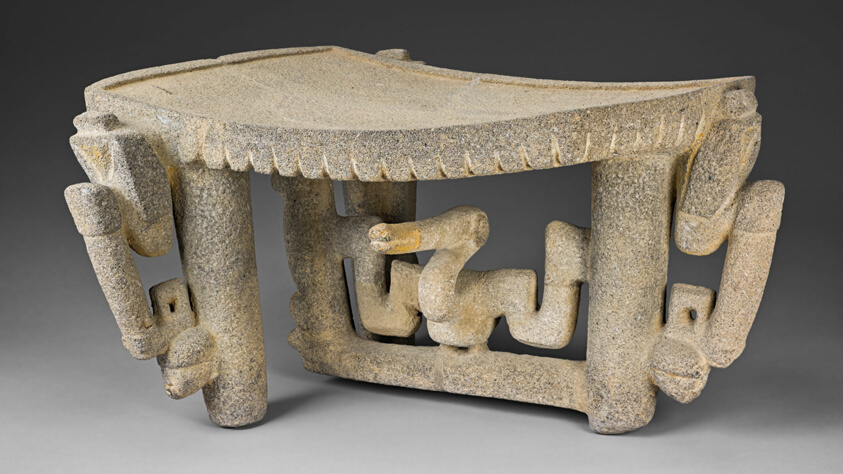
Ceremonial Grinding Table (Metate)
Art Institute of Chicago

Metate
Minneapolis Institute of Art
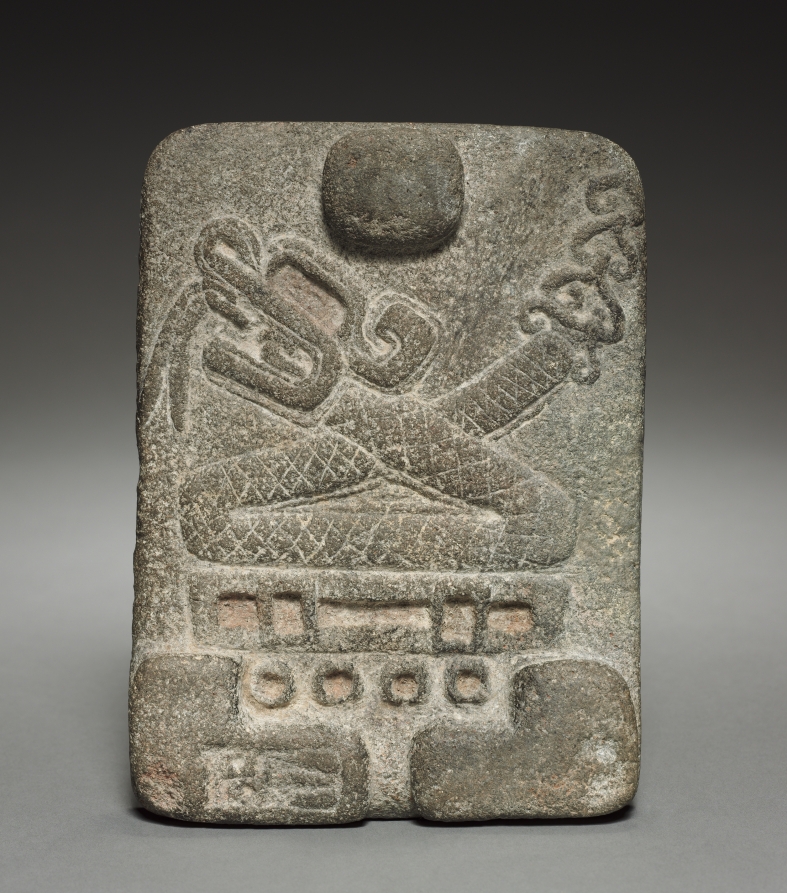
Miniature Metate
Cleveland Museum of Art
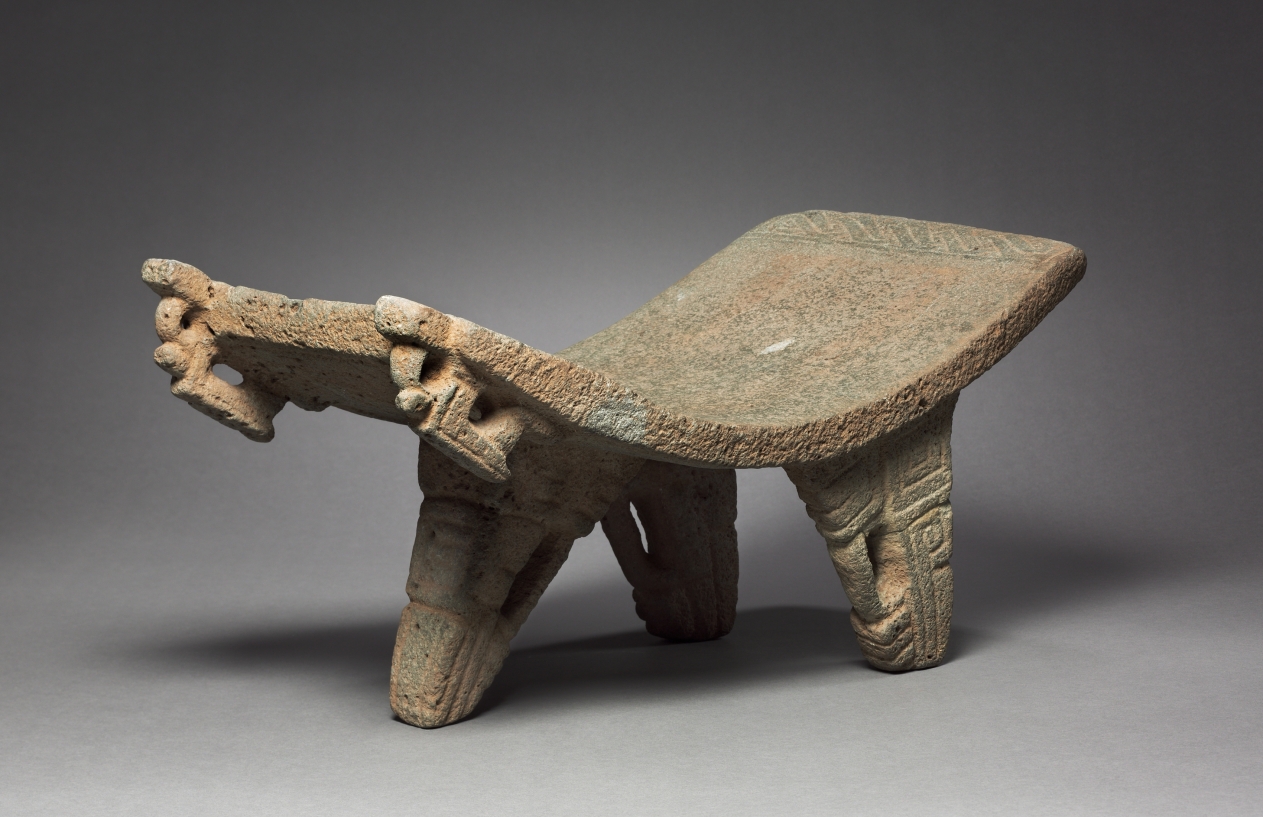
Metate
Cleveland Museum of Art
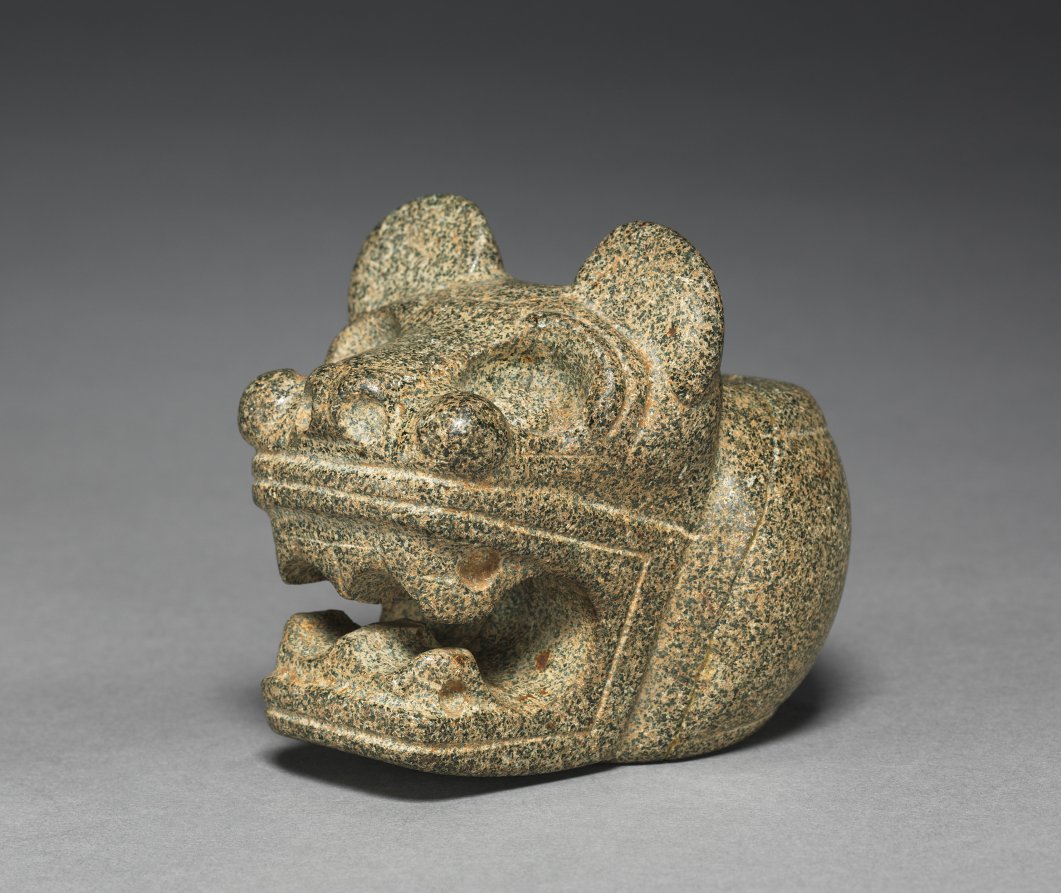
Ceremonial Mace (Club) Head: Feline (Jaguar?)
Cleveland Museum of Art
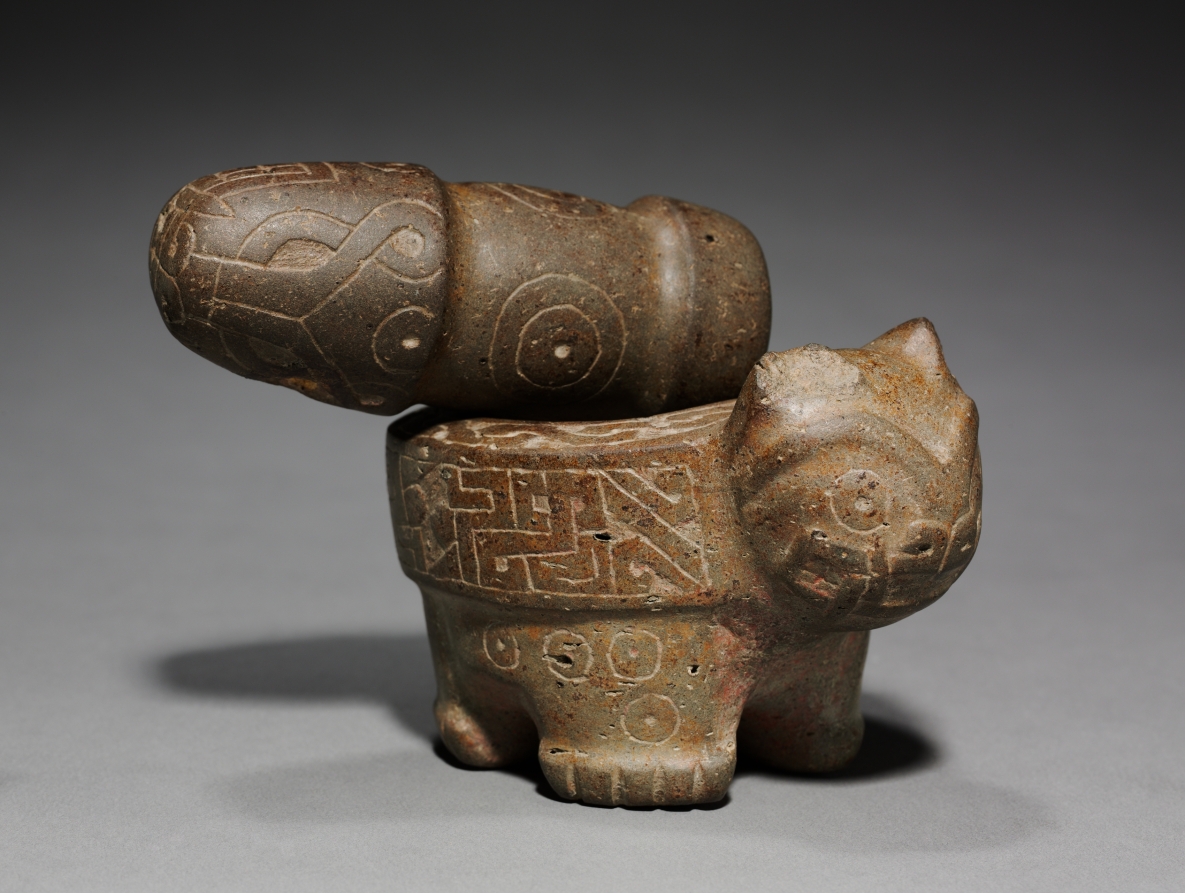
Feline Mortar and Pestle
Cleveland Museum of Art
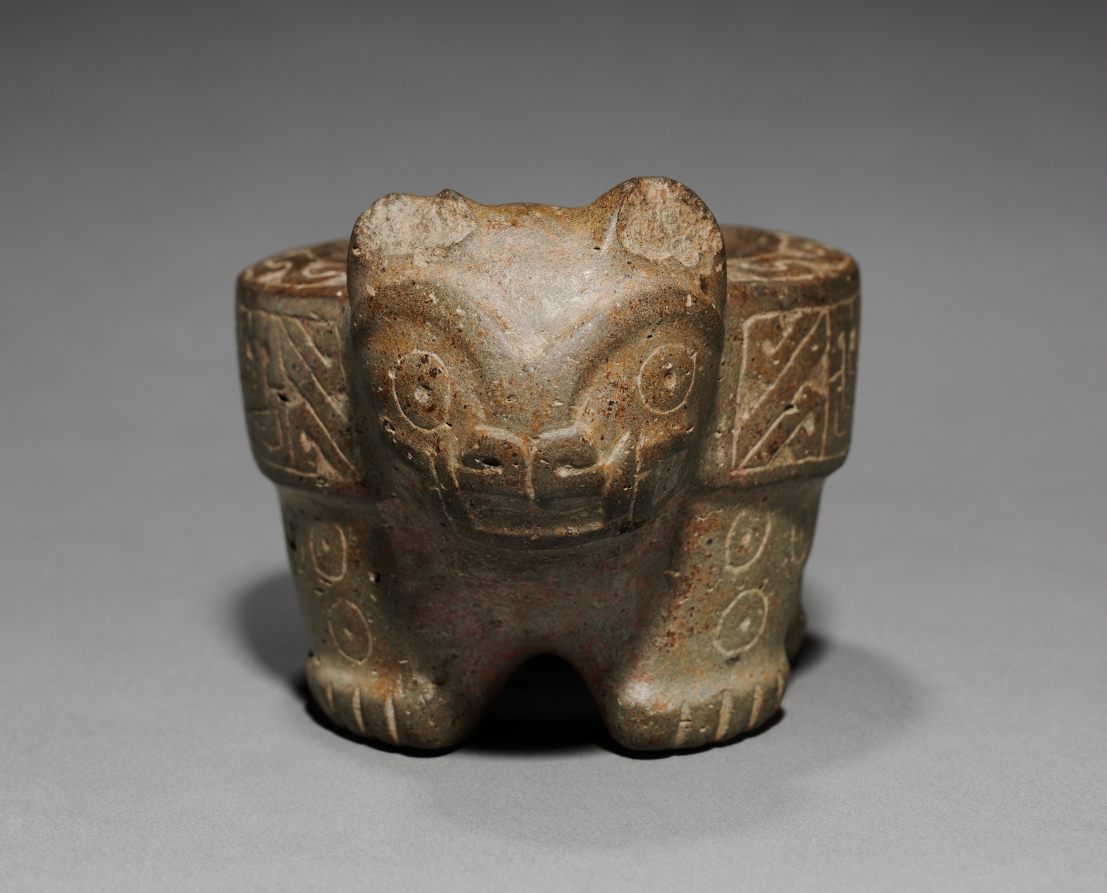
Feline Mortar
Cleveland Museum of Art
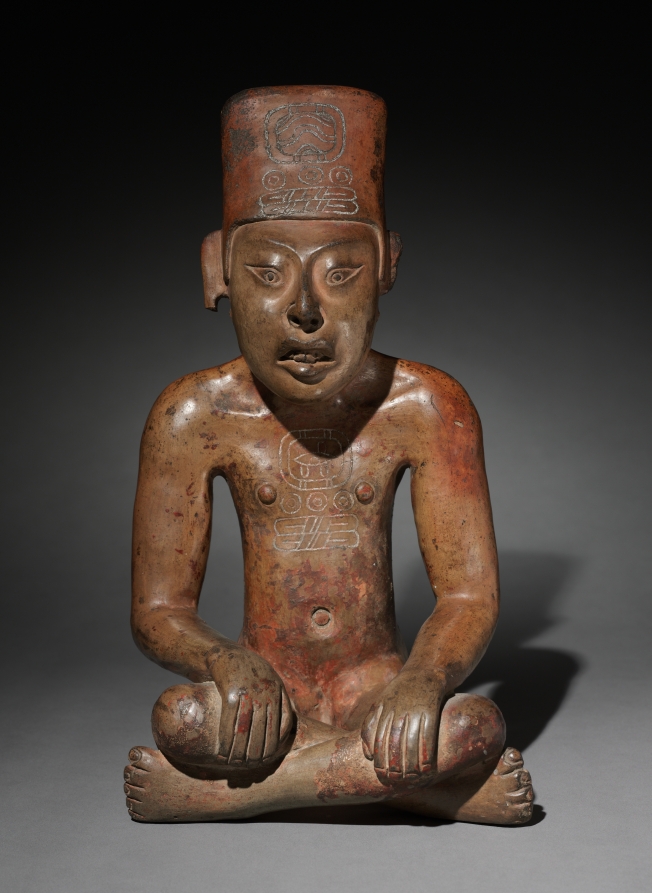
Seated Figure
Cleveland Museum of Art
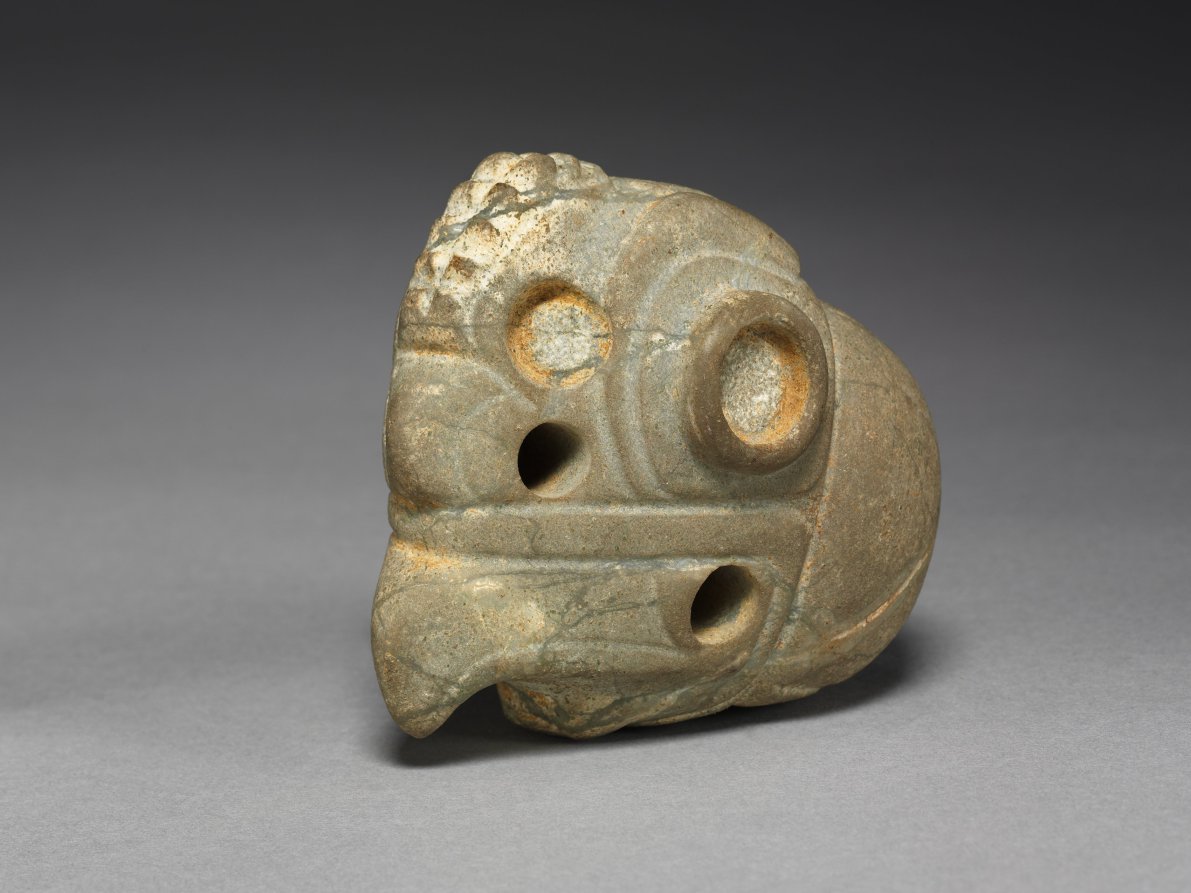
Ceremonial Mace (Club) Head: Bird (Male Curassow?)
Cleveland Museum of Art
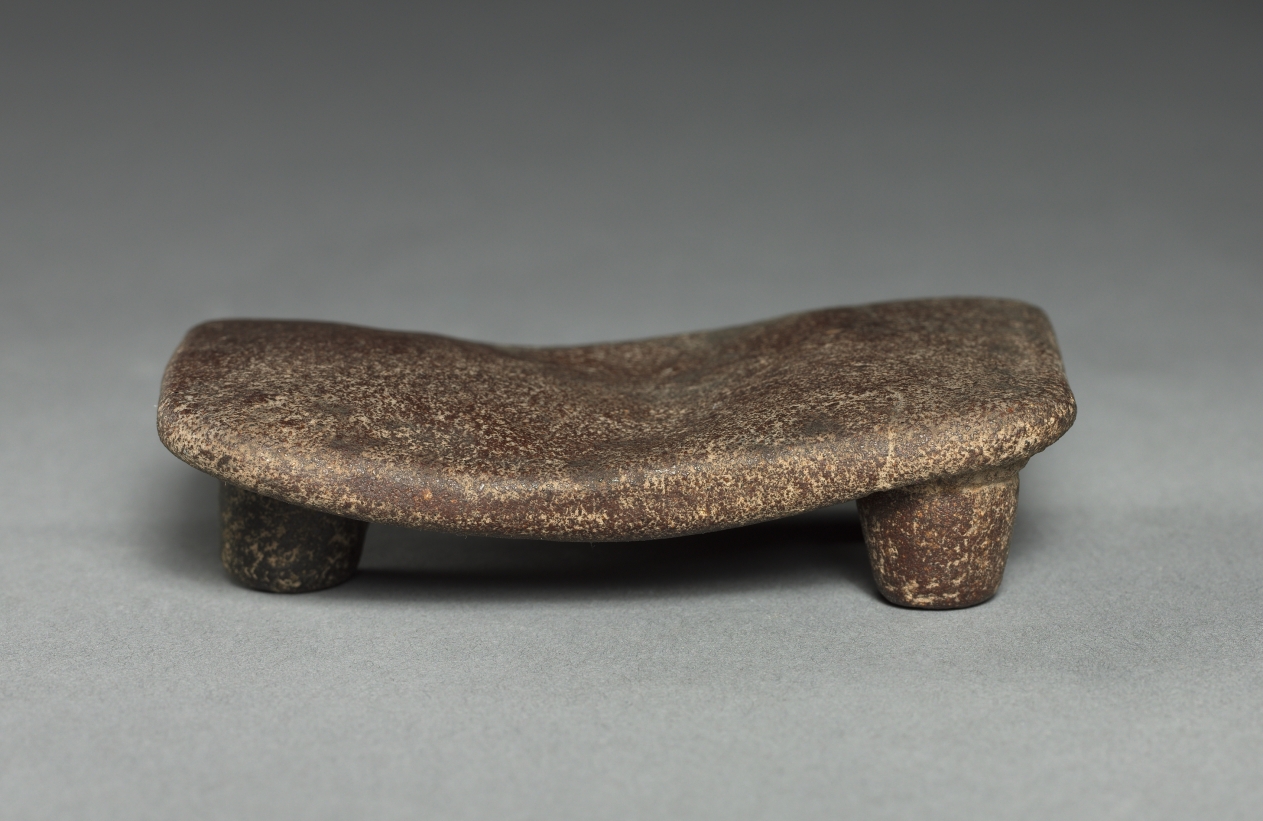
Toy Stone for Grinding Grain
Cleveland Museum of Art
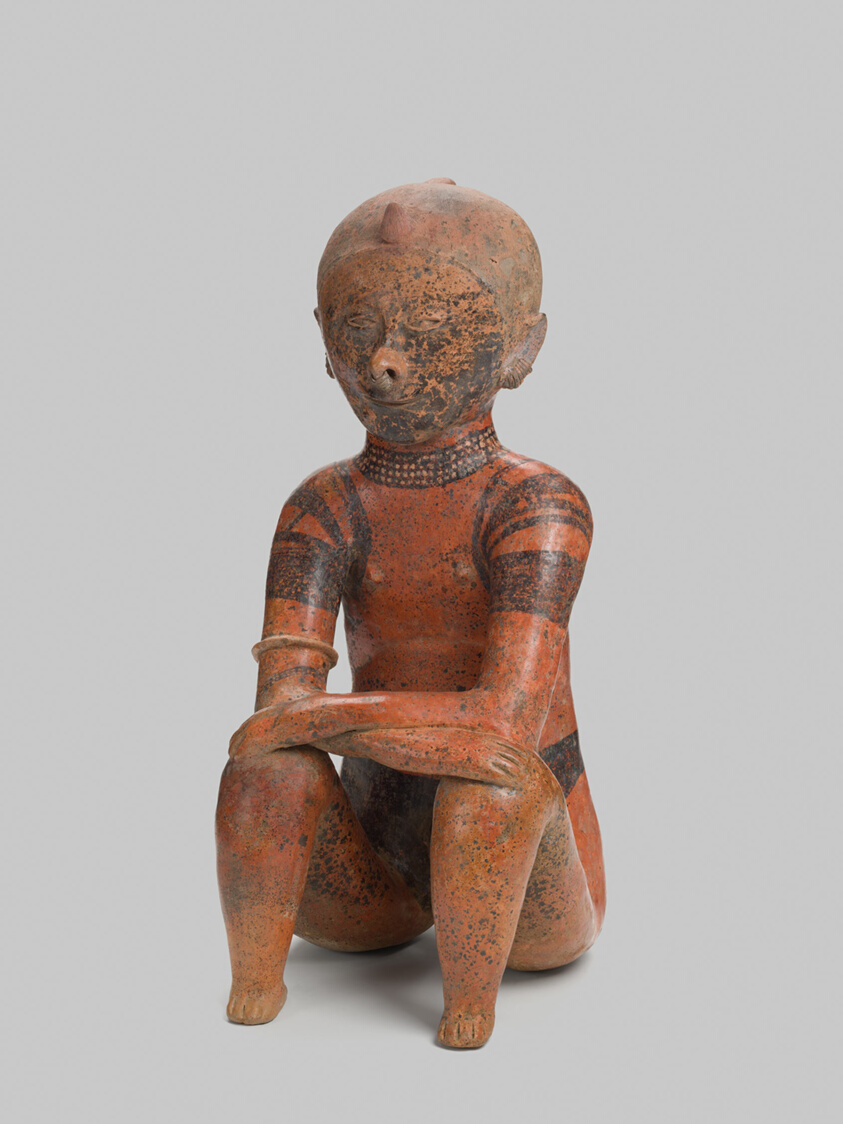
Figure of a Seated Chieftain
Art Institute of Chicago
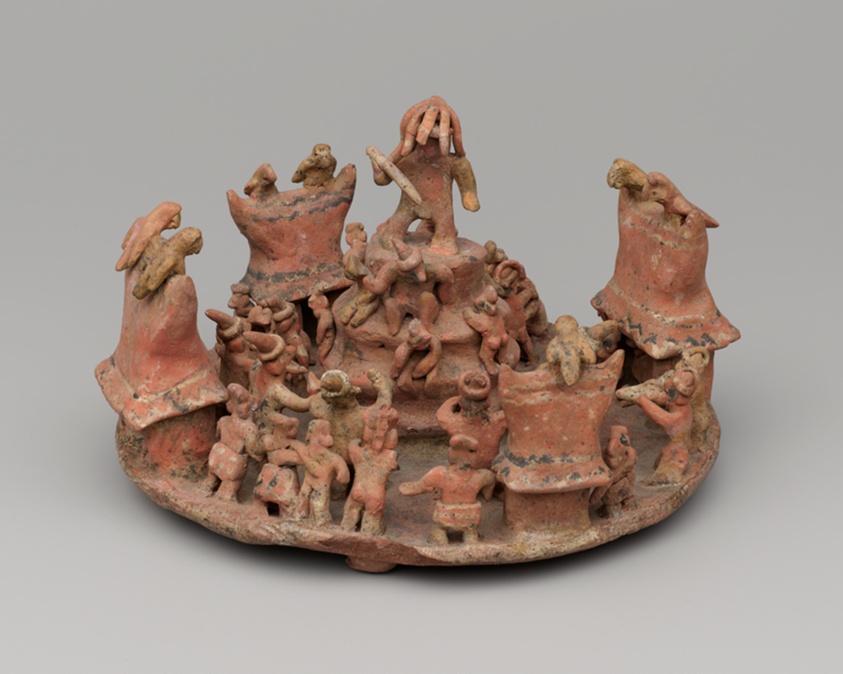
Model Depicting a Ritual Center
Art Institute of Chicago