Art Institute of Chicago
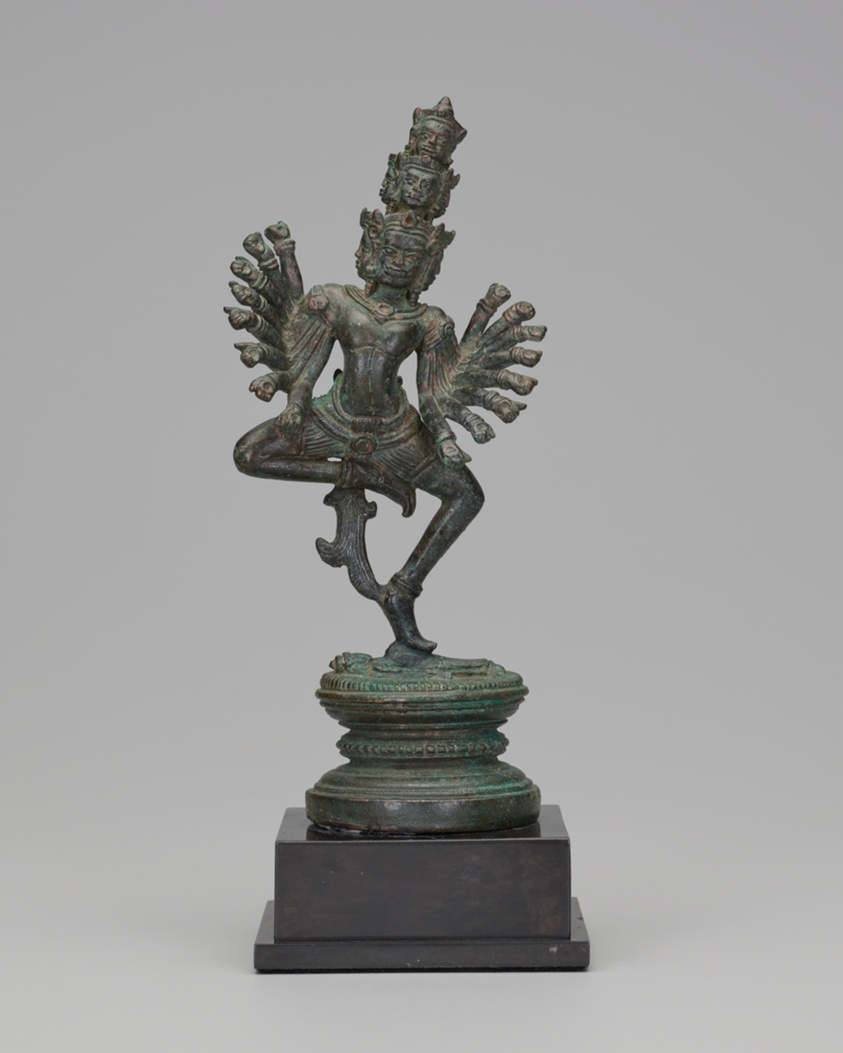
Dancing Hevajra (Ardhaparyanka)
Thailand or CambodiaLinkedCulture matchlcp-49ca2cebc063
- Date
- Angkor period, 12th‒13th century or later
- Medium
- Bronze
- Culture
- Southeast Asia
- Department
- Arts of Asia
- Institution
- Art Institute of Chicago
- Object ID
- 148419
From the Art Institute of Chicago record
This small bronze depicts Hevajra, a wrathful tantric form of the Buddha Akshobhya, central to Vajrayana Buddhism. With eight heads, sixteen arms holding skull cups, and a dynamic dance pose trampling ignorance, Hevajra appears alone—unlike Himalayan depictions that include his consort. This Khmer-style image, likely used in ritual, reflects royal tantric practices promoted at Angkor in the late 12th and 13th centuries. Hevajra images found at Buddhist sites in Cambodia and northeast Thailand suggest a broader regional diffusion of this esoteric tradition.
The authoritative record is held by Art Institute of Chicago. LinkedCulture surfaces this object and its connections; it does not alter institutional metadata.
Get printable QR codesHide QR codes
Open QR codes for this object page and the museum record. They stay collapsed until needed.
Provenance & credit
As published by the source institution. Coverage varies — not every institution's open-data feed includes ownership history.
- Credit line
- Avery Brundage, Samuel Nickerson, and Margrette Dornbusch funds
- Provenance
- With Douglas Latchford, London, by Apr. 4, 1996 [according to receipt of object and invoice from Douglas Latchford, Apr. 26, 1996, and Nov. 24, 1997; copies in curatorial object file]; sold to the Art Institute of Chicago, Nov. 17, 1997.
Linked open data
Authority identifiers that link this record into the wider web of cultural data — stable references you can follow to the source.
- Object type
- AAT300301253
Related across collections
Semantically similar works from Art Institute of Chicago and other institutions.