Art Institute of Chicago
Furisode
Japan
- Date
- late Edo period (1789–1868), 1801/1868
- Medium
- Silk, 4:1 satin damask weave (rinzu); embroidered with silk and gold-leaf-over-lacquered-paper-strip-wrapped silk in satin stitches; laid work and couching, and padded couching; lined with silk, plain weave
- Culture
- Japan
- Department
- Textiles
- Institution
- Art Institute of Chicago
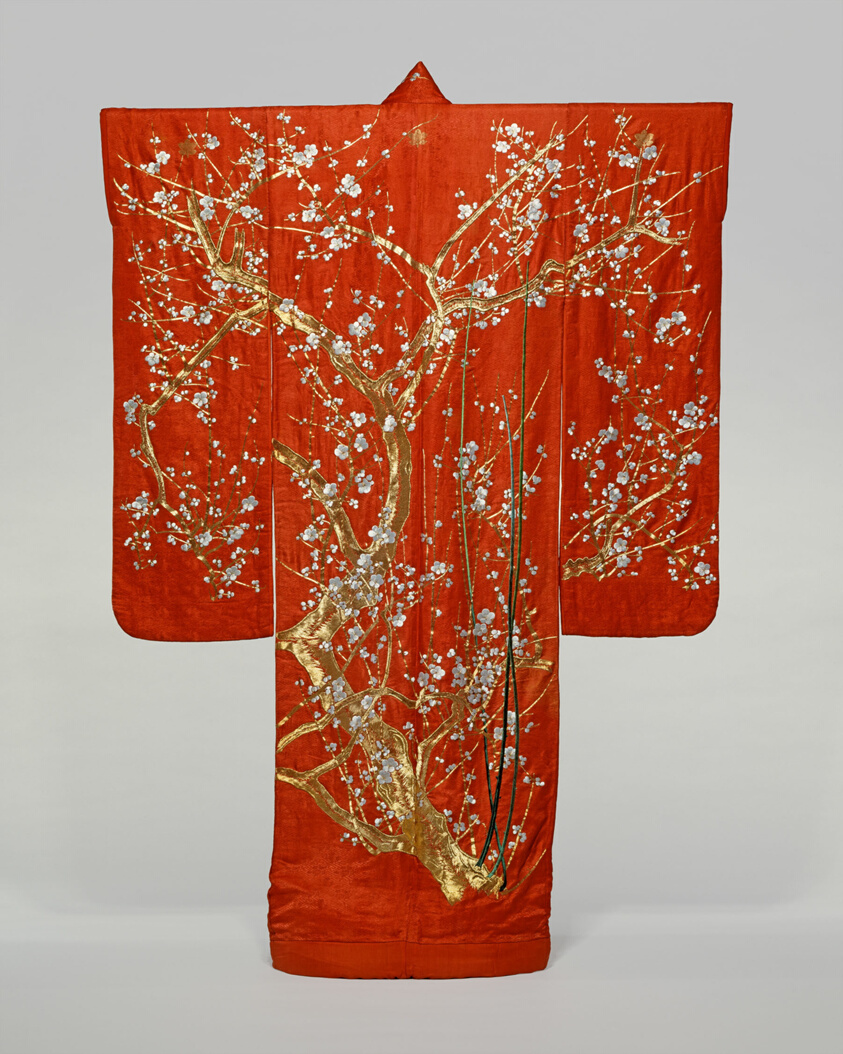
This furisode , a long-sleeved garment worn by children and unmarried women on special occasions, belonged to a family whose crest was the tachibana , the flower of the Mandarin orange. Made of rinzu (a soft, lustrous silk), it probably was used as an uchikake (outer coat). The red fabric is woven in a pattern that combines geometric and floral forms. A blossoming plum tree embroidered with gold and white silk thread spreads its branches from hem to shoulder. The carefully embroidered blooming tree shows the influence of Western art on Japanese design. Needlework typical of this period was used to portray illusionistically the contours of the tree trunk. First the edges of the trunk were padded with a heavy thread; then, over this padding, gold-wrapped thread was couched with red silk thread.
The authoritative record is held by Art Institute of Chicago. LinkedCulture surfaces this object and its connections; it does not alter institutional metadata.
Linked open data
Authority identifiers that link this record into the wider web of cultural data — stable references you can follow to the source.
- Object type
- AAT300014063
Related across collections
Semantically similar works from Art Institute of Chicago and other institutions.

Woman's long-sleeved kimono (furisode) with design of a fishing village in spring
Minneapolis Institute of Art

Small-sleeved kimono (kosode) with design of peonies, chrysanthemums, wisteria, and fans
Minneapolis Institute of Art
Furisode
Art Institute of Chicago

Furisode
Art Institute of Chicago
Furisode
Art Institute of Chicago
Furisode
Art Institute of Chicago
Fukusa (Gift Cover)
Art Institute of Chicago
Fukusa (Gift Cover)
Art Institute of Chicago
Fukusa (Gift Cover)
Art Institute of Chicago
Kuro Tomesode
Art Institute of Chicago
Fukusa (Gift Cover)
Art Institute of Chicago
Fukusa (Gift Cover)
Art Institute of Chicago