Art Institute of Chicago
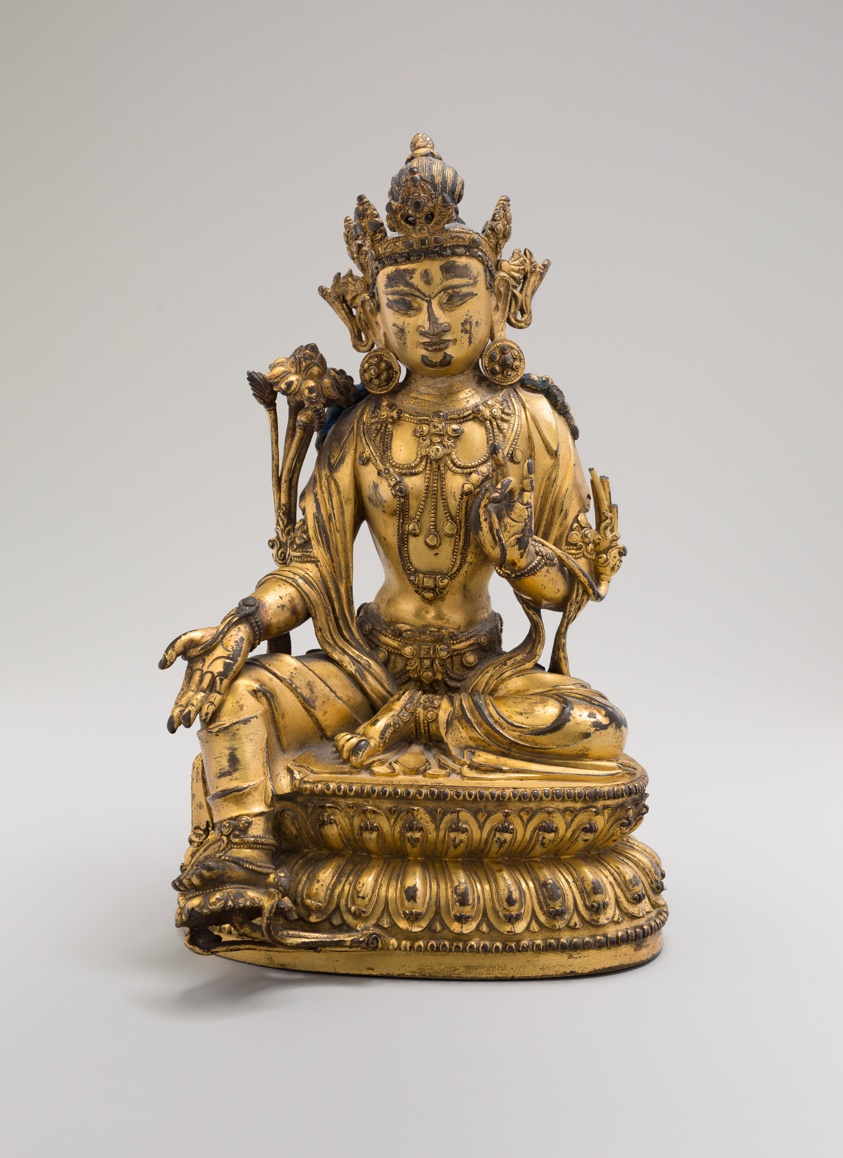
Green Tara, Seated in Pose of Royal Ease (Lalitasana), with Lotus Stalks on Right Shoulder and Hands in Gestures of Reasoning (Vitarkamudra) and Gift Conferring (Varadamudra)
ChinaLinkedCulture matchlcp-777a05c2acea
- Date
- Ming dynasty (1368–1644), Yongle reign mark and period (1403–24)
- Medium
- Gilt copper alloy with traces of pigment (lapis lazuli)
- Culture
- China
- Department
- Arts of Asia
- Institution
- Art Institute of Chicago
- Object ID
- 15722
From the Art Institute of Chicago record
China's pantheon of Buddhist deities, with their accompanying rituals and artistic styles, burgeoned following its conquest by the Mongols and its absorption into the pan-Asian, multiethnic Yuan empire (1279 1368). From then on, many Chinese rulers and members of elite society, of both native and foreign heritage, became fervent devotees of Tibetan Buddhism. This faith is also known as Vajrayana (Diamond Path) Buddhism or, for its esoteric teachings derived largely from Hinduism, Tantric Buddhism. Buddhist images made in China but influenced by Tibetan (as well as Nepalese) iconography and style are termed Sino-Tibetan. This image depicts one of many emanations of the compassionate god Tara. An inscription on the top surface of its throne reads "Da Ming Yongle nian zhi" (Bestowed in the Yongle reign of the Great Ming). The Yongle emperor was the third ruler of the Ming dynasty and a great patron of Buddhist art.
The authoritative record is held by Art Institute of Chicago. LinkedCulture surfaces this object and its connections; it does not alter institutional metadata.
Get printable QR codesHide QR codes
Open QR codes for this object page and the museum record. They stay collapsed until needed.
Provenance & credit
As published by the source institution. Coverage varies — not every institution's open-data feed includes ownership history.
- Credit line
- Gift of Guy H. Mitchell
Linked open data
Authority identifiers that link this record into the wider web of cultural data — stable references you can follow to the source.
- Object type
- AAT300411548
Related across collections
Semantically similar works from Art Institute of Chicago and other institutions.