Art Institute of Chicago
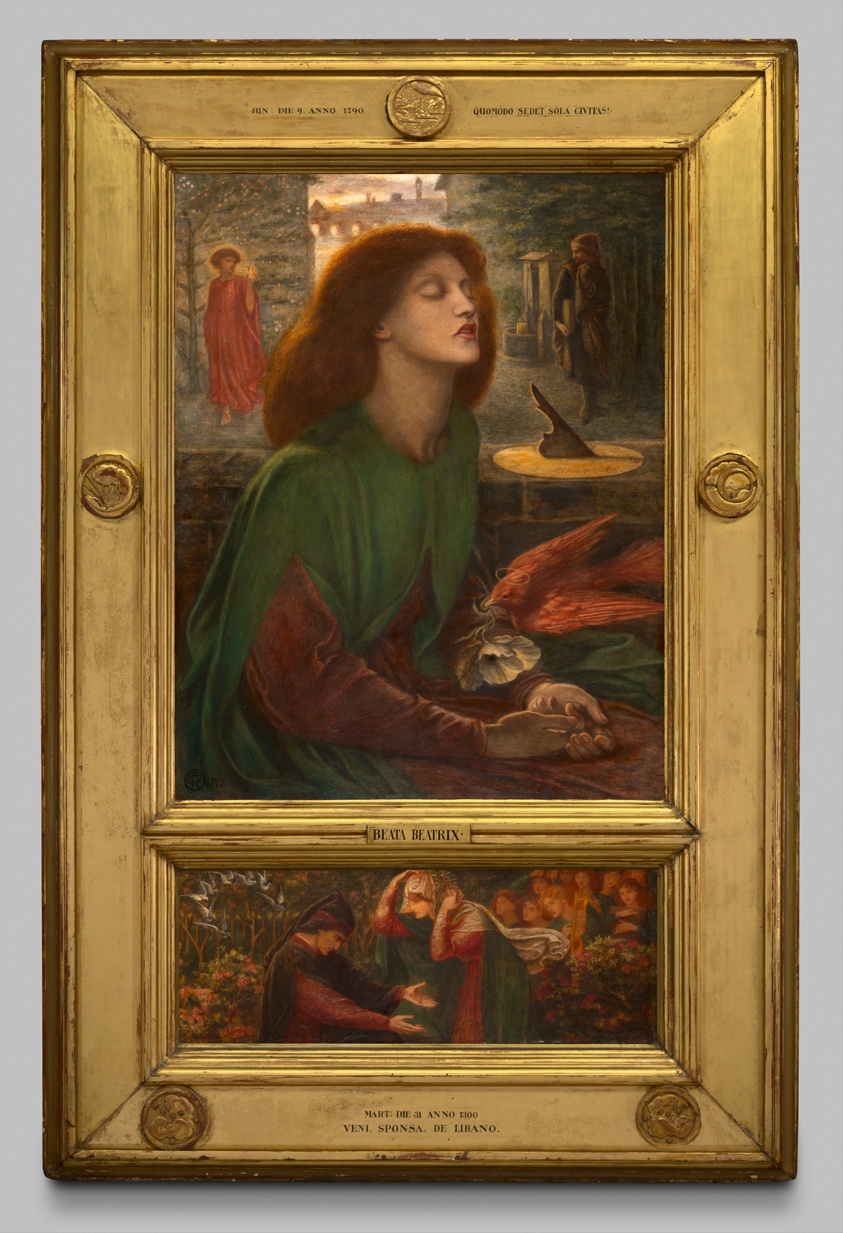
Beata Beatrix
Dante Gabriel Rossetti (English, 1828–1882)
- Date
- 1871–72
- Medium
- Oil on canvas
- Culture
- England
- Department
- Painting and Sculpture of Europe
- Institution
- Art Institute of Chicago
Both a poet and a painter, Dante Gabriel Rossetti was a founder of the Pre-Raphaelite Brotherhood, a circle of Victorian artists united in their appreciation of medieval aesthetics and the “primitive” style of pre-Renaissance art. Rossetti found inspiration for Beata Beatrix in La vita nuova (The New Life) , written by his namesake, the Italian poet Dante Alighieri, in 1295. Rossetti’s scene draws a parallel between Dante’s love for the late Beatrice and his own aff ection for his recently deceased wife and muse, Elizabeth Siddal. While the picture is a tribute to Siddal, Rossetti was adamant that it does not represent her death; rather, the work portrays her as if in a trance or other spiritual state. The work’s symbolism similarly combines details from Rossetti’s personal life with those from La vita nuova . “The Dove” was the artist’s nickname for Siddal, and a haloed dove delivers her a white poppy, a symbol of the laudanum—a derivative of opium—that caused her death by overdose. Above her head rises the Ponte Vecchio, the Florentine bridge that served as the setting for Dante’s poem. To the upper left is the personifi cation of Love and to the right the fi gure of Dante, who doubles as a representation of Rossetti himself. The sundial shadows the number nine, the age at which they met and also the hour and day of her death. Rossetti designed the frame, which he inscribed at the top right: “How doth the city sit solitary,” a quote from the opening of the biblical book of Lamentations, which Dante uses to express how the city of Florence itself seemed to mourn Beatrice. Given the work’s deeply personal nature, Rossetti initially refused his patron William Graham’s request to create a replica, although he eventually yielded. The Art Institute’s painting is this second version, which includes a predella—the painted scene at the bottom of the frame—depicting Beatrice and Dante’s reunion in paradise. With this addition, Rossetti provided the medieval love story with a happy conclusion, perhaps suggesting that he, too, had begun to come to terms with his grief.
The authoritative record is held by Art Institute of Chicago. LinkedCulture surfaces this object and its connections; it does not alter institutional metadata.
Linked open data
Authority identifiers that link this record into the wider web of cultural data — stable references you can follow to the source.
- Object type
- AAT300033618
Related across collections
Semantically similar works from Art Institute of Chicago and other institutions.

Dante and Virgil with the Vision of Beatrice
Minneapolis Institute of Art

Portrait of Elizabeth Siddal Resting, Holding a Parasol
Getty Museum
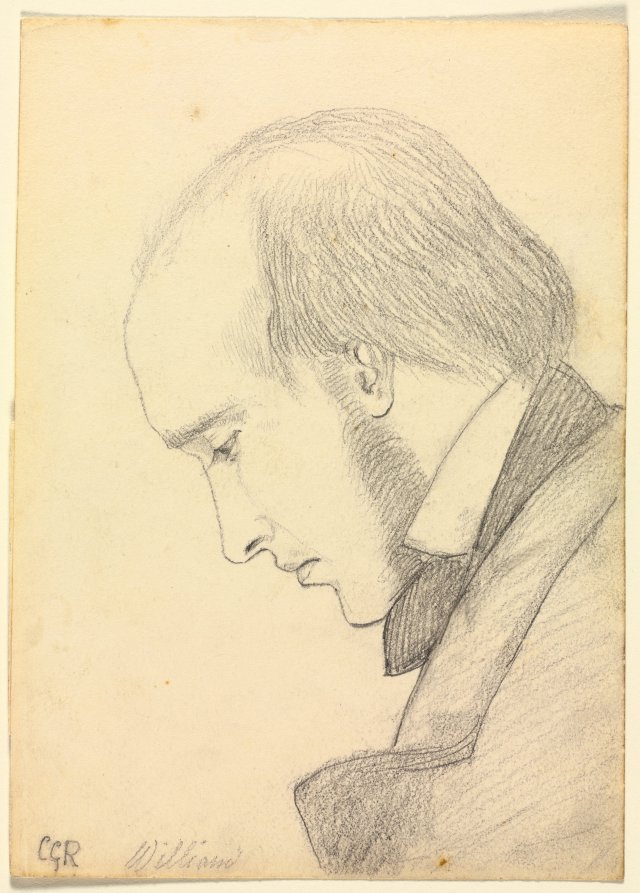
Portrait of William Michael Rossetti
Cleveland Museum of Art
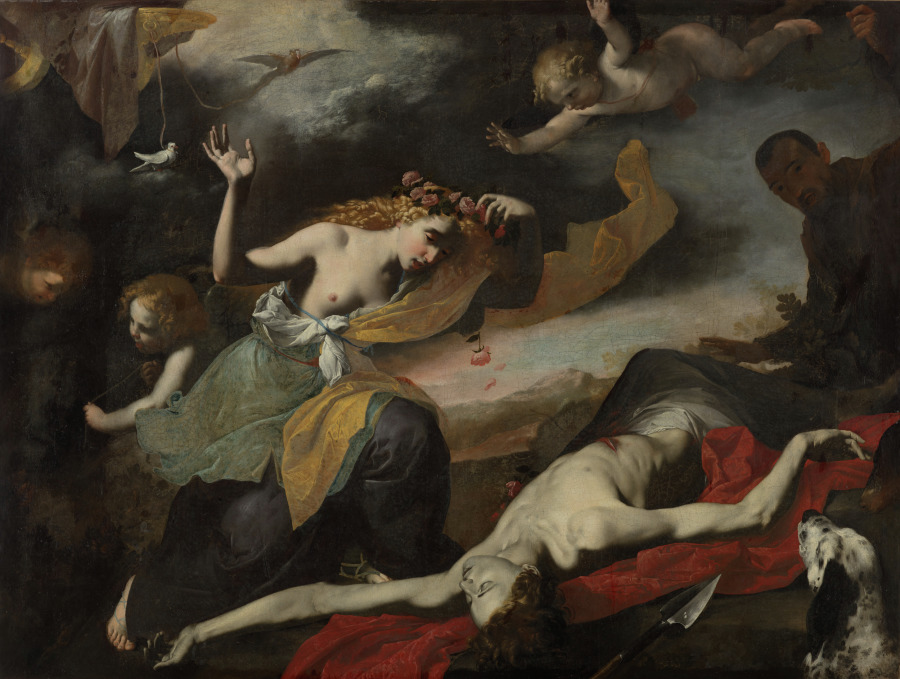
Venus Discovering the Dead Adonis
Cleveland Museum of Art

Six Tuscan Poets
Minneapolis Institute of Art
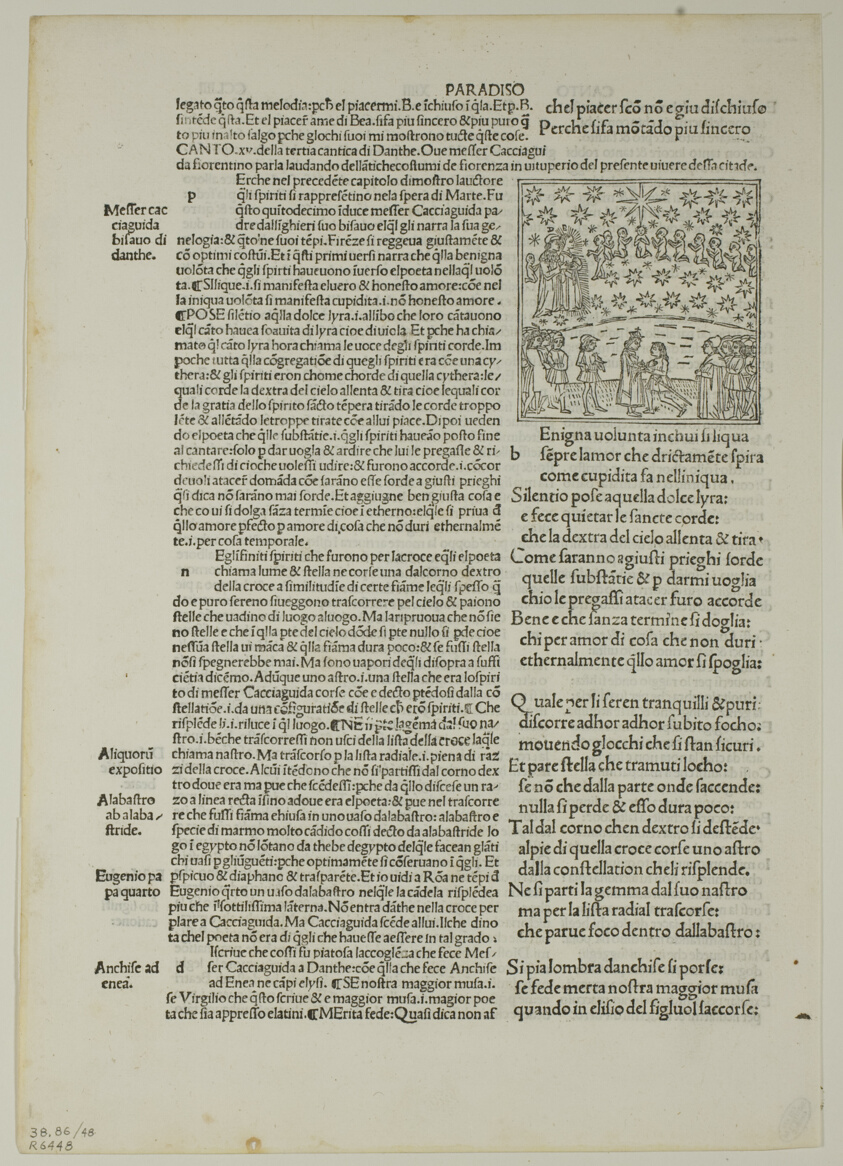
Paradise: Canto XV (Fifth Heaven, Sphere of Mars) from Divina Commedia (Divine Comedy), Plate 48 from Woodcuts from Books of the 15th Century
Art Institute of Chicago
Pastoral Scene
Art Institute of Chicago
Proserpine donne à Psyché la boîte remplie de beauté pour la porter à Vénus (Bartsch 65, Bartsch illustré tome 29 (volume 15, 2ème partie), page 221
Petit Palais, musée des Beaux-arts de la Ville de Paris
Proserpine donne à Psyché la boîte remplie de beauté pour la porter à Vénus (Bartsch 65, Bartsch illustré tome 29 (volume 15, 2ème partie), page 221
Petit Palais, musée des Beaux-arts de la Ville de Paris
Psyché, croyant paraître plus belle aux yeux de l'Amour, ouvre la boîte fatale et l'Amour vole à son secours (Bartsch 66, Bartsch illustré tome 29 (volume 15, 2ème partie), page 222)
Petit Palais, musée des Beaux-arts de la Ville de Paris
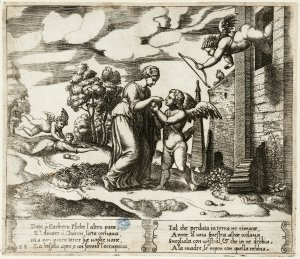
Psyché, croyant paraître plus belle aux yeux de l'Amour, ouvre la boîte fatale et l'Amour vole à son secours (Bartsch 66, Bartsch illustré tome 29 (volume 15, 2ème partie), page 222)
Petit Palais, musée des Beaux-arts de la Ville de Paris
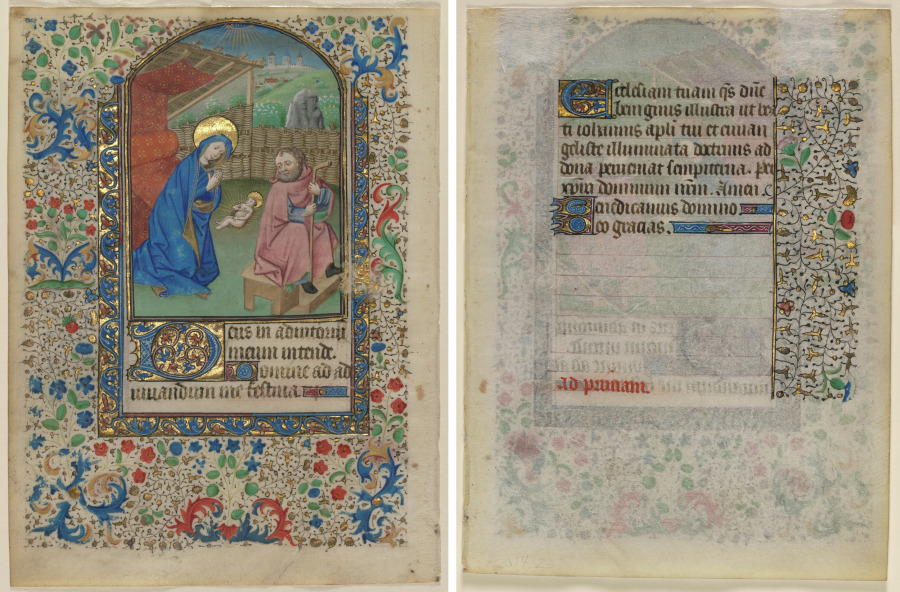
Leaf from a Book of Hours: The Nativity (recto) and Text (verso)
Cleveland Museum of Art