Art Institute of Chicago
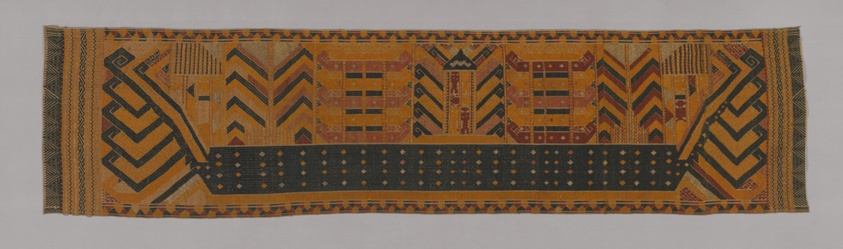
Ceremonial Hanging (Palepai)
Paminggir people
- Date
- 19th century
- Medium
- Cotton, silk, gold-leaf-over-lacquered-paper strip wrapped bast fiber (probably ramie), and silver-leaf-over-lacquered-paper strip wrapped cotton, plain weave with supplementary brocading wefts
- Culture
- Indonesia
- Department
- Textiles
- Institution
- Art Institute of Chicago
The Paminggir aristocracy employed a type of ritual hanging commonly known as a ship cloth, a name that refers to one of the principal motifs of such textiles. These hangings display a very limited repertoire of patterns, including one or two red ships, a single blue ship, tree images, buildings, and rows of stylized anthropomorphic figures. The indigenous name for textiles of this type, palepai , probably goes back to the old Javanese word lepih , which means “to fold” or “to double.” Palepai served as markers of status and perhaps even denoted descent. Indeed, title, claim to leadership, and certain other privileges accompanied the possession of palepai . These textiles were also important requisites during rites of passage, such as marriage, death, or accession to a higher rank—events that were thought to be unstable moments fraught with danger. The ship images that appear on this palepai would have indicated an appropriate agent of safe conduct from one stage of life to another. The red vessels are also understood to represent the upper world, the abode of the ancestors, which can be reached by the ship of death. Since the Lampung economy was based on sea trade, ships served as symbols of wealth and power as well.
The authoritative record is held by Art Institute of Chicago. LinkedCulture surfaces this object and its connections; it does not alter institutional metadata.
Linked open data
Authority identifiers that link this record into the wider web of cultural data — stable references you can follow to the source.
- Object type
- AAT300312158
Related across collections
Semantically similar works from Art Institute of Chicago and other institutions.
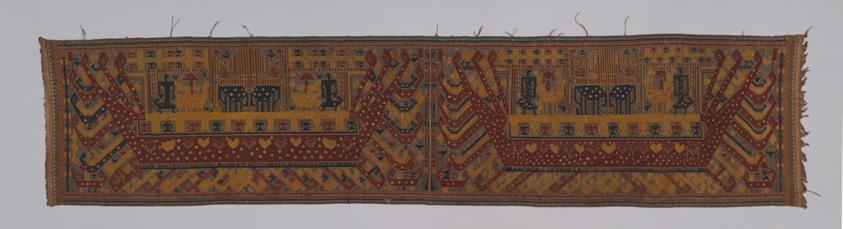
Ceremonial Hanging (Palepai)
Art Institute of Chicago
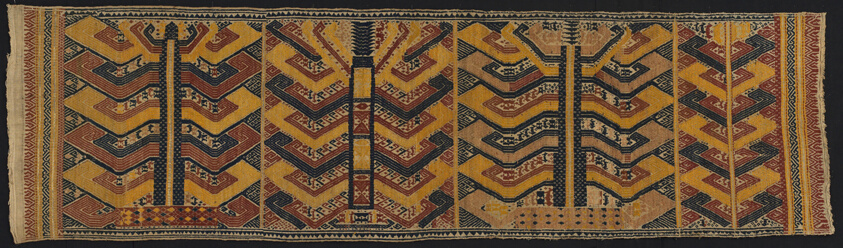
Ceremonial Hanging (palepai)
Art Institute of Chicago
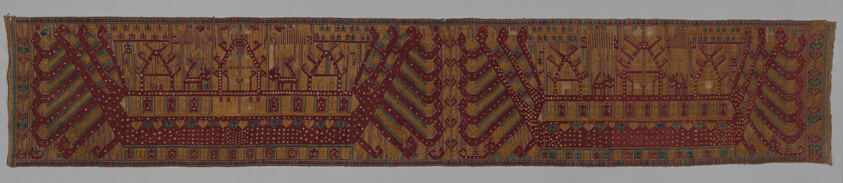
Palepai (Ceremonial Hanging)
Art Institute of Chicago
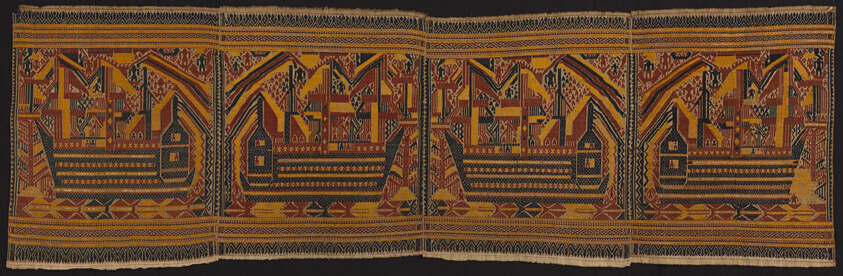
Ceremonial Textile (Tampan)
Art Institute of Chicago
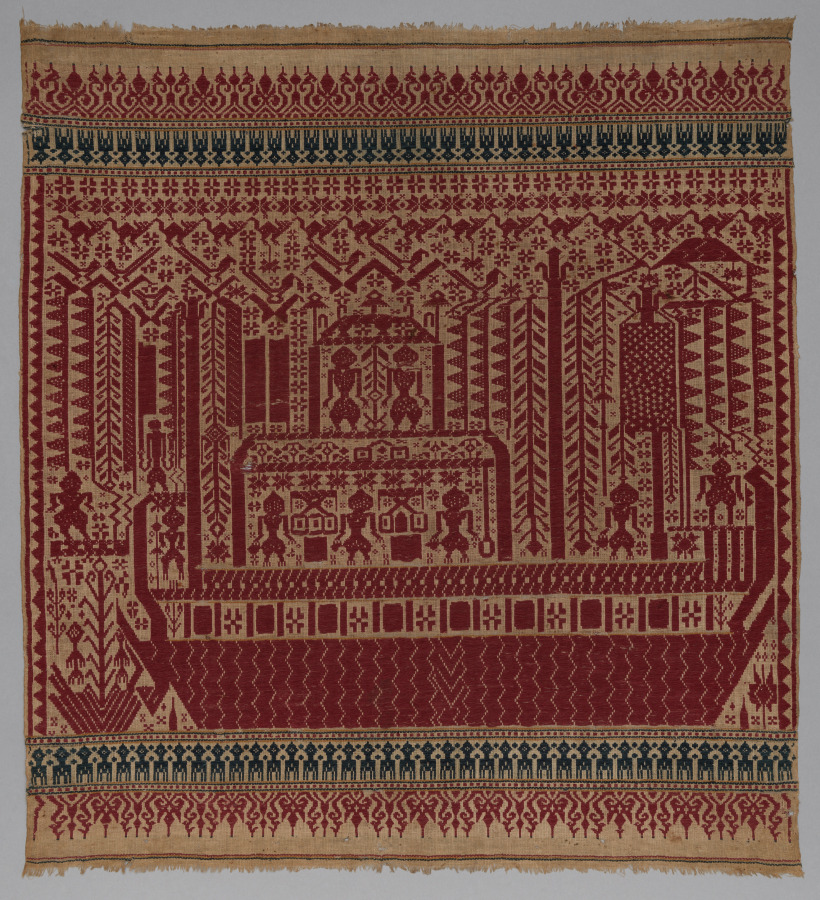
Tampan Pasisir (Ship Cloth)
Cleveland Museum of Art
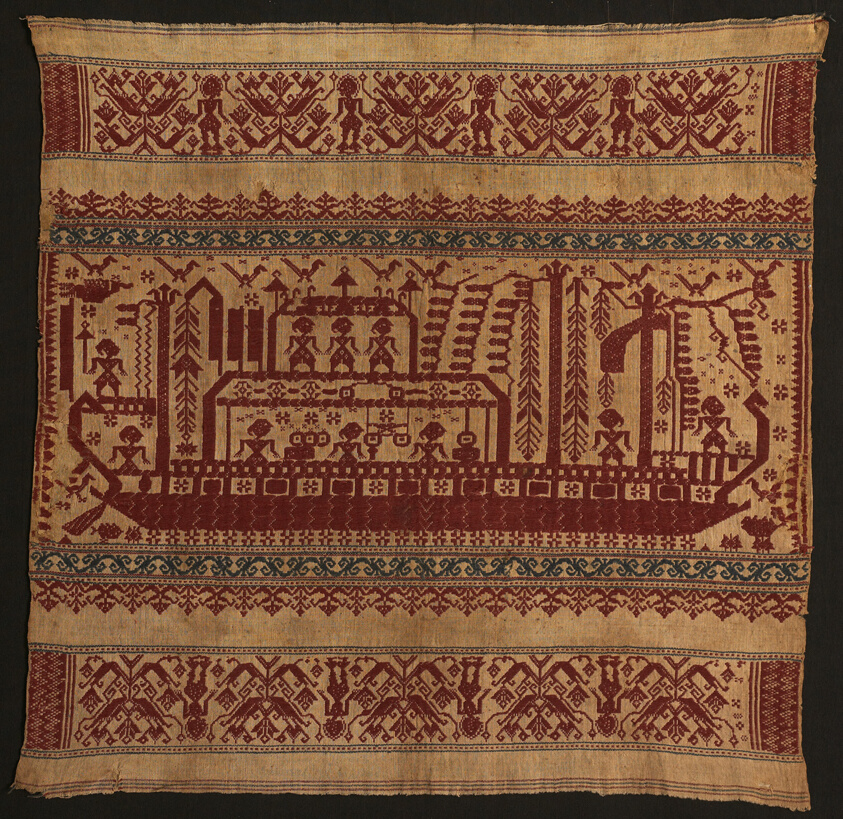
Ceremonial Cloth (tampan)
Art Institute of Chicago
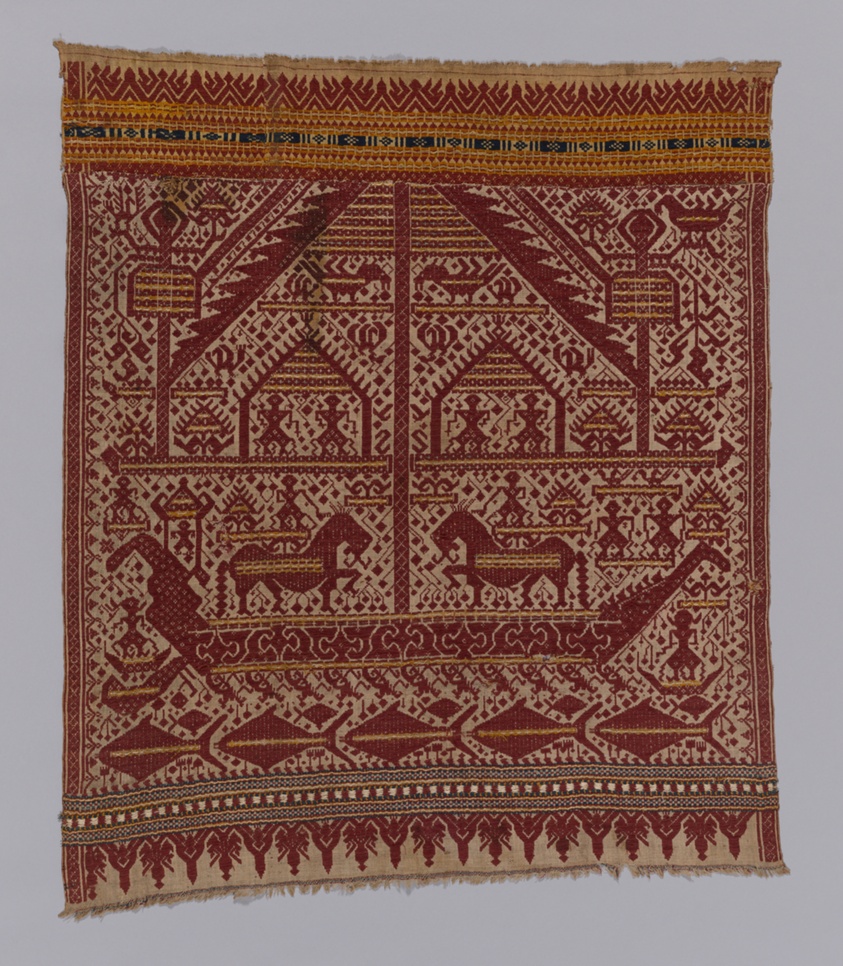
Ritual Cloth with Prancing Horses (Tampan)
Art Institute of Chicago
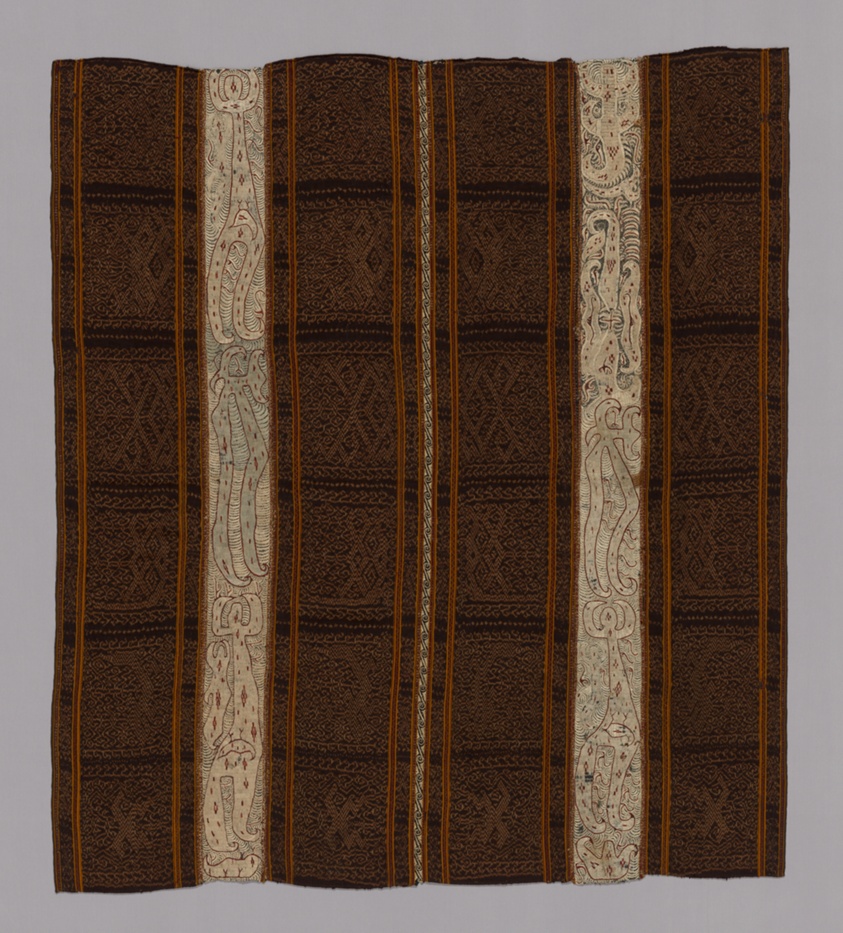
Woman's Ceremonial Cloth (Tapis)
Art Institute of Chicago

Woman's Ceremonial Skirt (tapis)
Art Institute of Chicago
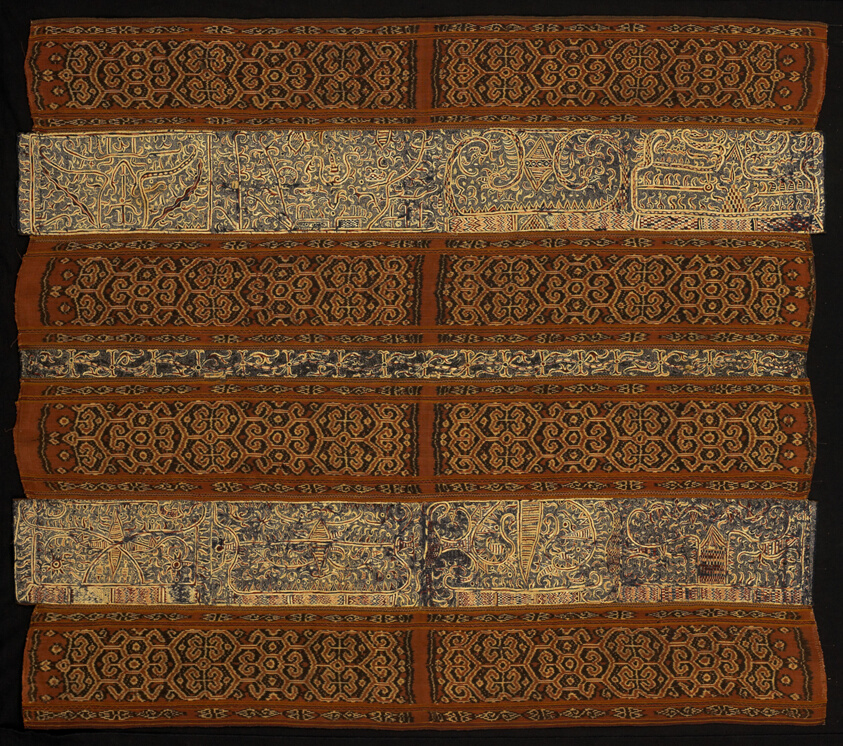
Woman's Ceremonial Skirt (tapis)
Art Institute of Chicago
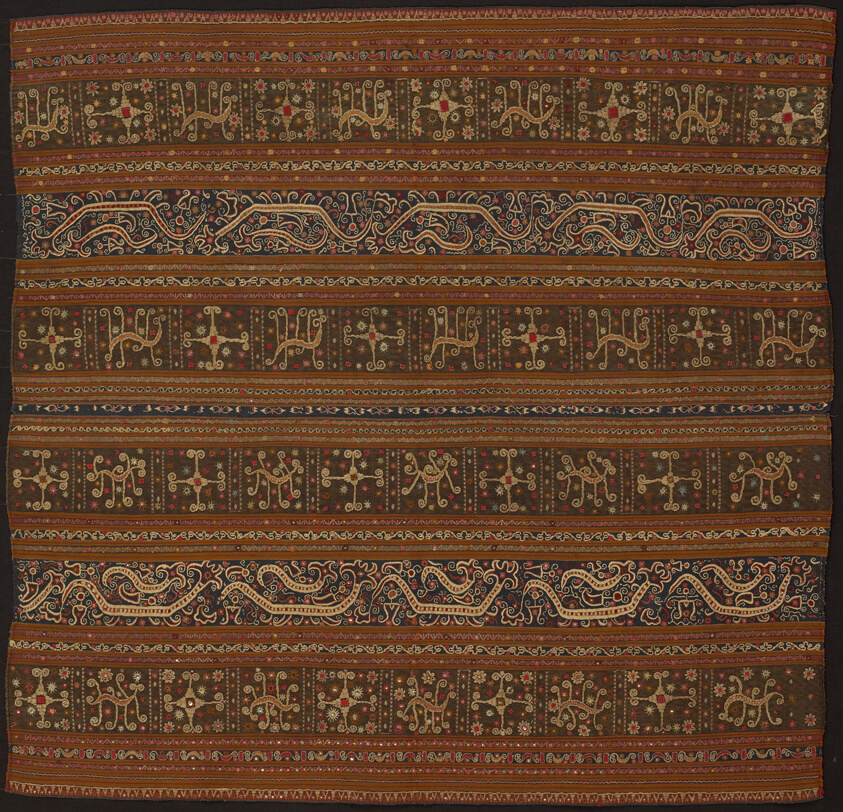
Ceremonial Skirt (tapis)
Art Institute of Chicago
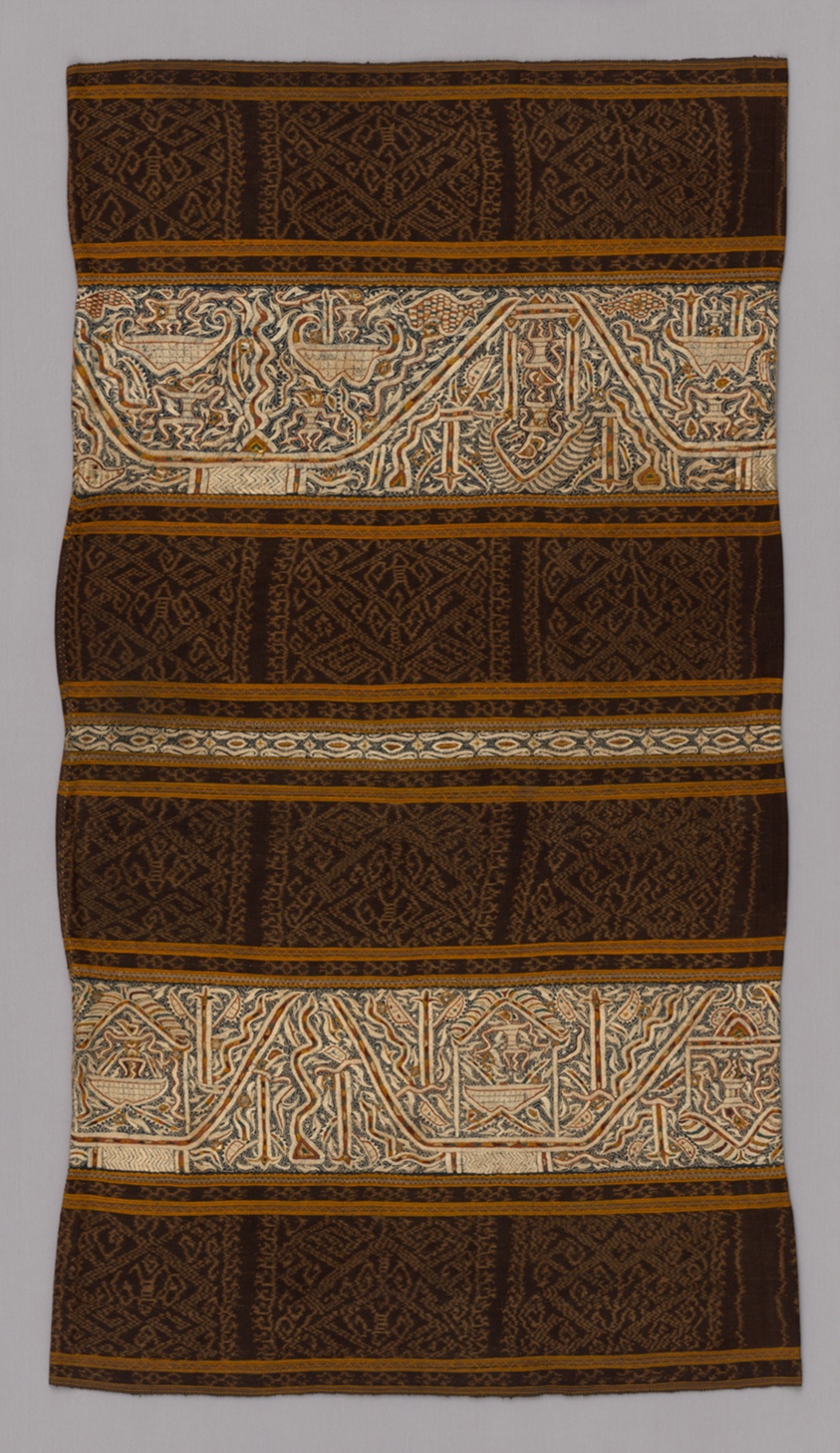
Woman's Ceremonial Skirt (tapis)
Art Institute of Chicago