Art Institute of Chicago
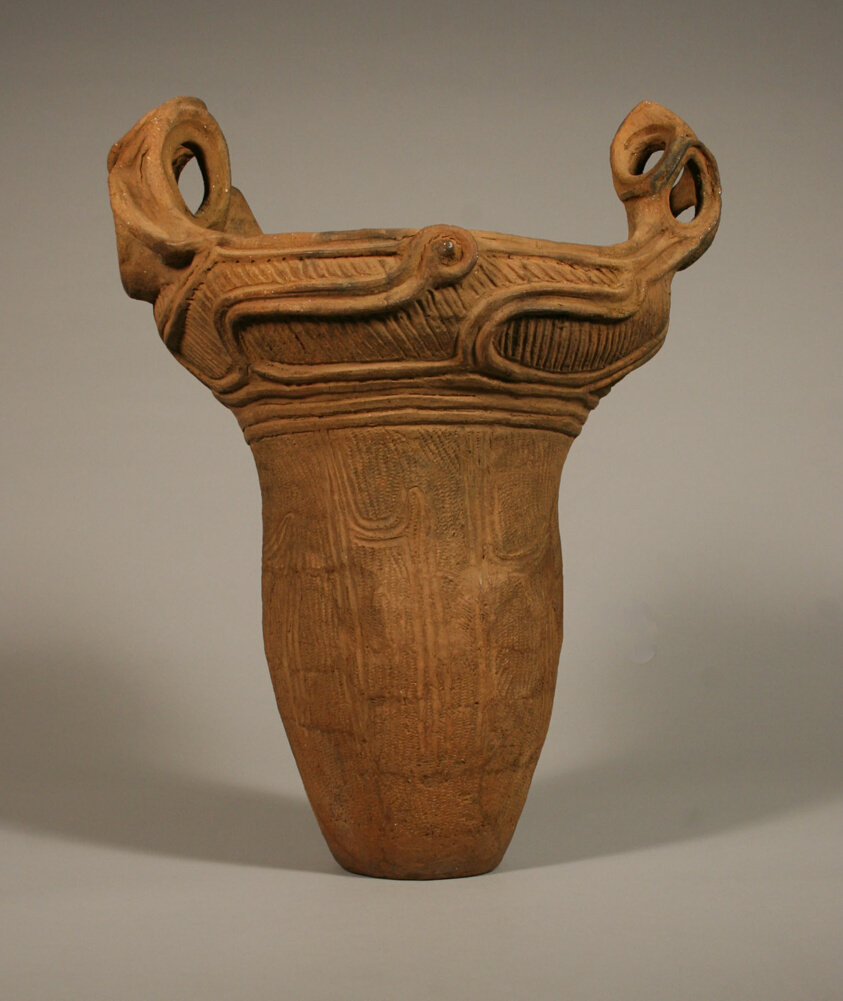
Jar with Handles
Japan
- Date
- c. 2000 B.C.
- Medium
- Earthenware
- Culture
- Japan
- Department
- Arts of Asia
- Institution
- Art Institute of Chicago
Some of the oldest pottery in the world has been found in Japan. Although the country’s population was made up of hunters and gatherers during the Jomon period (12,500–300 B.C.), there was a stable pattern of settlements, making pottery production a possibility. The Jomon (literally “cord-mark decoration”) period is characterized by low-fired earthenware pottery with indentation marks, raised patterns, and sometimes flamboyant sculptural elements on the rims; such vessels can be found in regions across the Japanese archipelago. Those works displaying a highly refined artistic sense may have served ceremonial functions. This open-work decorated jar is of the Ubayama (Kasori E) type found in the Neolithic shell mounds of Ichikawa in Chiba; this vessel type is characterized by integration of ornamentation and form, and an increasingly complex manner of patterning clay. Here double-lined “waves” made from coils of clay surge toward one of the perforated handles. The lower walls were impressed with a twisted cord.
The authoritative record is held by Art Institute of Chicago. LinkedCulture surfaces this object and its connections; it does not alter institutional metadata.
Linked open data
Authority identifiers that link this record into the wider web of cultural data — stable references you can follow to the source.
- Object type
- AAT300193015
Related across collections
Semantically similar works from Art Institute of Chicago and other institutions.

Large shouldered jar
The Metropolitan Museum of Art
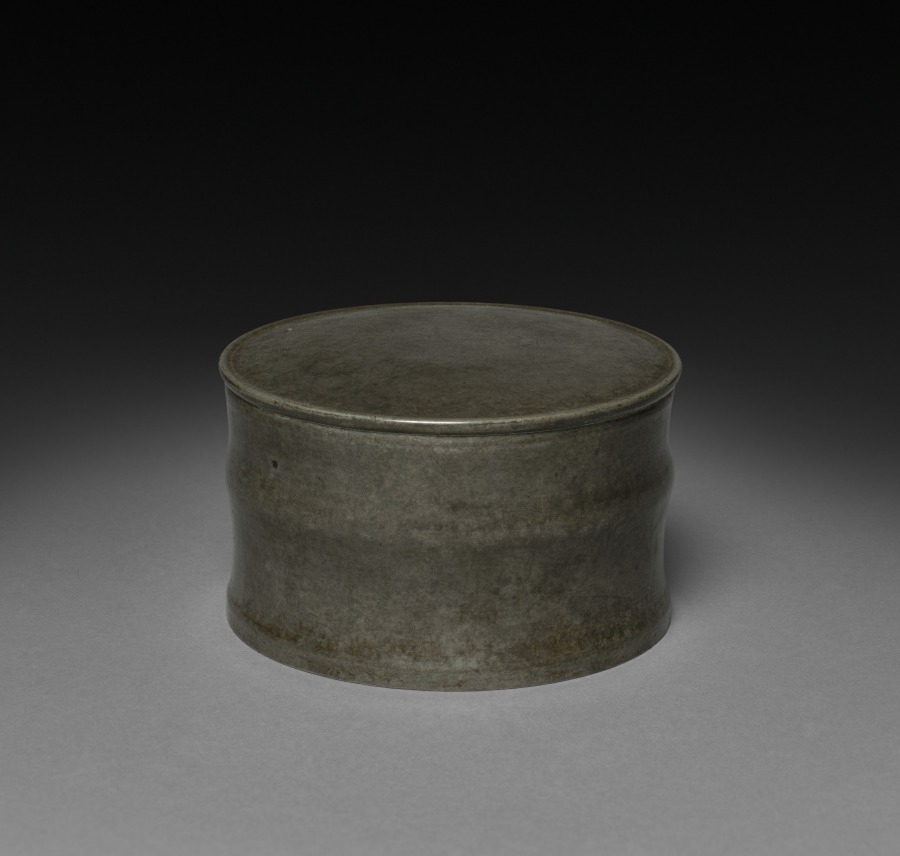
Jar (lid)
Cleveland Museum of Art
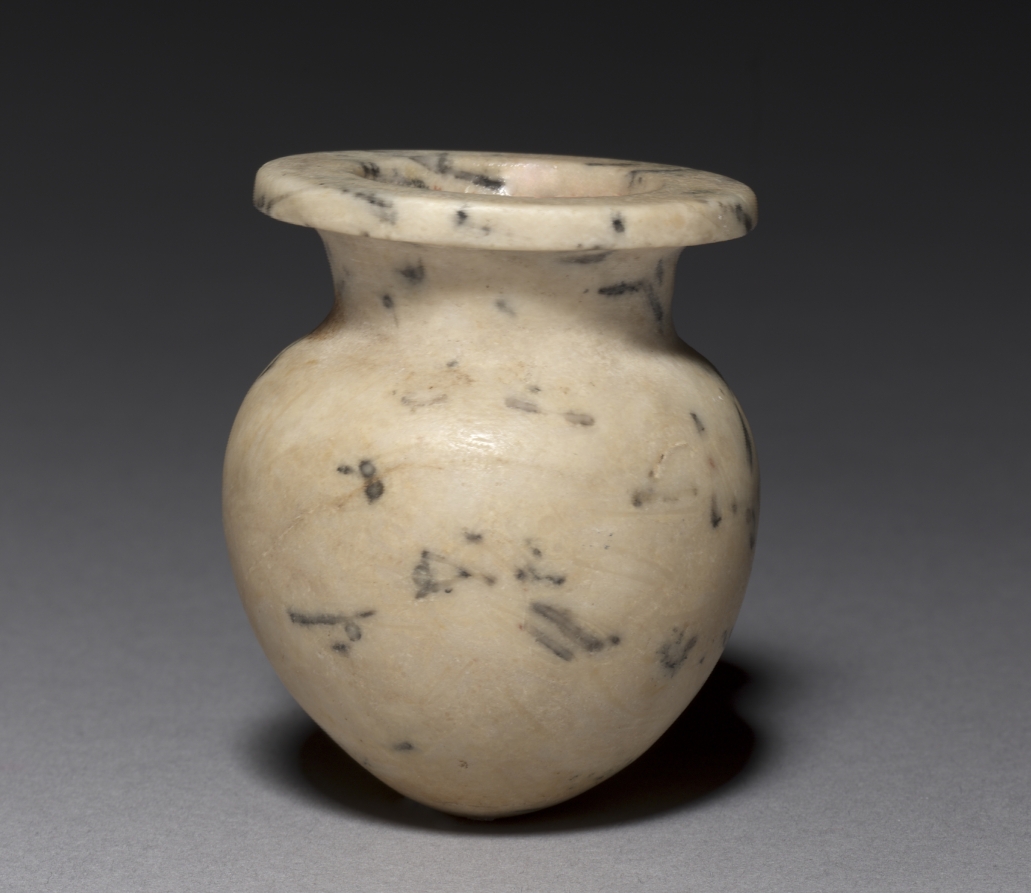
Collared Jar
Cleveland Museum of Art
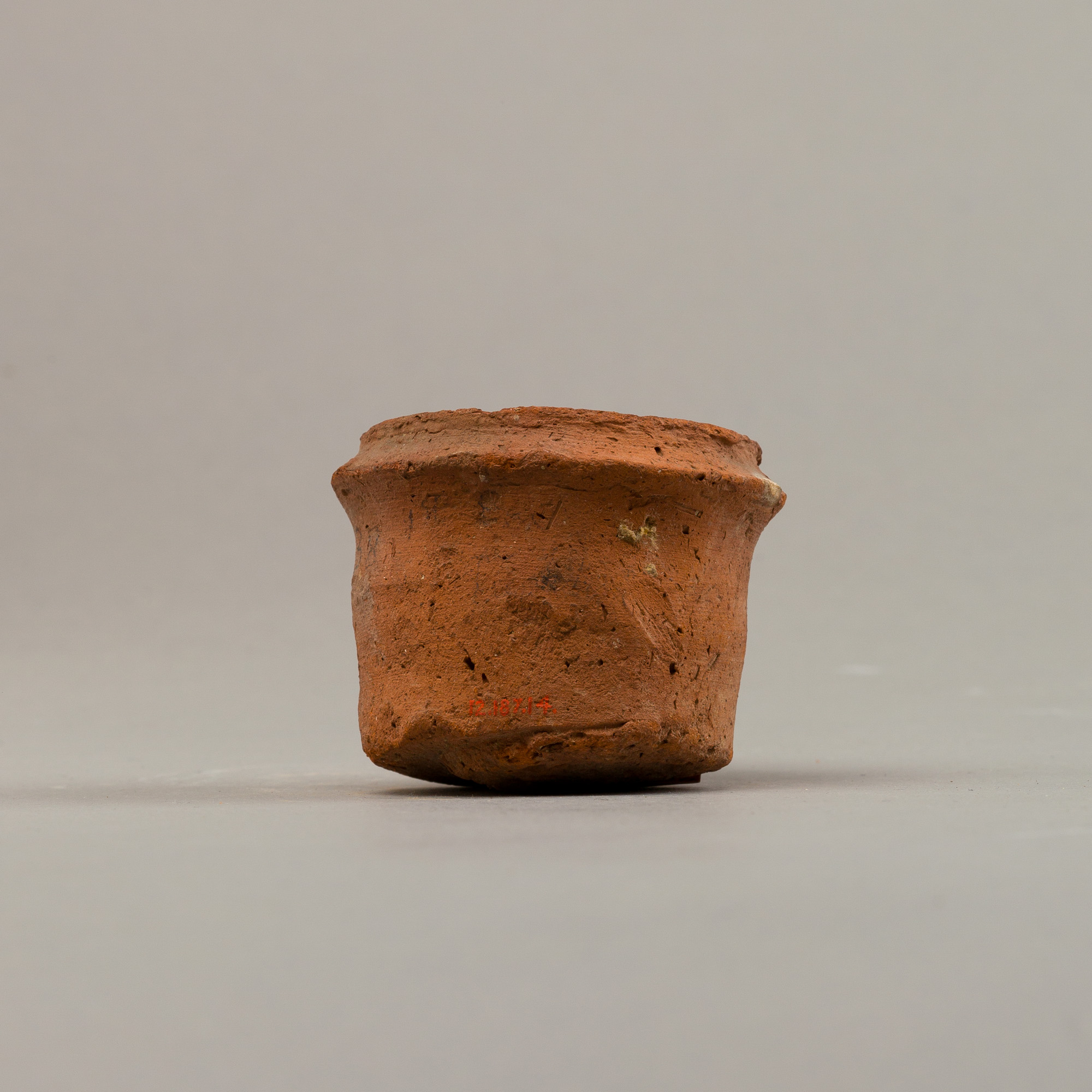
Short cylindrical jar
The Metropolitan Museum of Art

Cup with winged handles, one of a pair
Minneapolis Institute of Art

Box with sword beans
Minneapolis Institute of Art

Five-tiered box decorated with the Thirty-Six Immortal Poets
Minneapolis Institute of Art
Terracotta spouted conical bowl, white-on-dark ware
The Metropolitan Museum of Art
Sword Guard (Tsuba)
Cleveland Museum of Art
Sword Guard (Tsuba)
Cleveland Museum of Art
Sword Guard (Tsuba)
Cleveland Museum of Art
Sword Guard (Tsuba)
Cleveland Museum of Art