Art Institute of Chicago
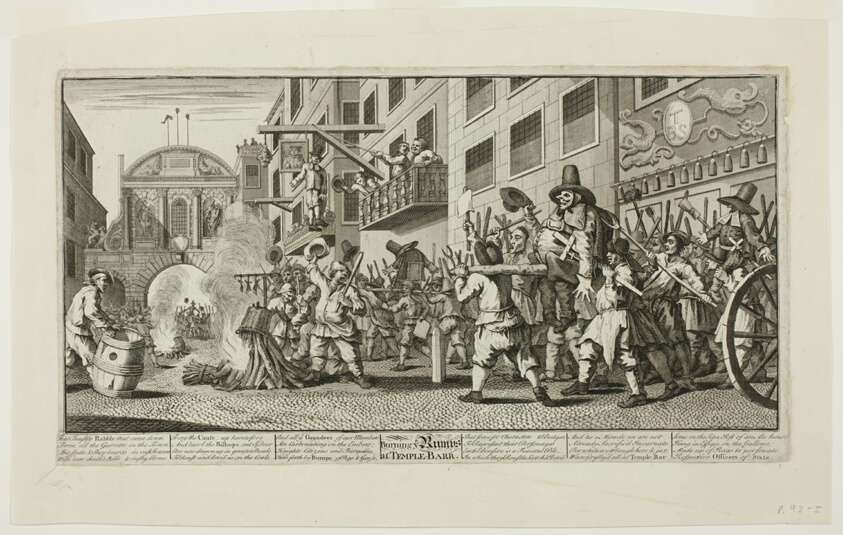
Burning the Rumps at Temple Bar, plate eleven from Hudibras
William HogarthLinkedCulture matchlcp-4bc0237dded5
- Date
- February 1725/26
- Medium
- Engraving in black on cream laid paper edge mounted on cream wove paper
- Culture
- England
- Department
- Prints and Drawings
- Institution
- Art Institute of Chicago
- Object ID
- 184616
From the Art Institute of Chicago record
William Hogarth illustrated the story of a sad-sack adventurer named Hudibras in twelve engravings. His source was Samuel Butler’s satirical, mock-heroic poem written in the vein of Cervantes and Rabelais. Ridiculing the puritan party’s attempts to overthrow the British monarchy during the Great Civil War of 1640, Butler’s poem exposes the hypocrisy and pretensions of the Presbyterians, Independents, and Zealots who hoped to establish themselves as leaders. Here, Hudibras appears in this large crowd scene as a masked dummy about to burnt. A row of London butcher shops is the setting for a protest against the “Rump Parliament,” a political body that had replaced much of the previous government during the English Civil War. Protester at this historical event in 1659 did in fact burn beef rumps in the streets as well as political effigies.
The authoritative record is held by Art Institute of Chicago. LinkedCulture surfaces this object and its connections; it does not alter institutional metadata.
Get printable QR codesHide QR codes
Open QR codes for this object page and the museum record. They stay collapsed until needed.
Provenance & credit
As published by the source institution. Coverage varies — not every institution's open-data feed includes ownership history.
- Credit line
- Sara R. Shorey Endowment; purchased with funds provided by Phyllis Neiman and the Woman's Board in honor of Phyllis Neiman
Linked open data
Authority identifiers that link this record into the wider web of cultural data — stable references you can follow to the source.
- Object type
- AAT300041273
Related across collections
Semantically similar works from Art Institute of Chicago and other institutions.