Art Institute of Chicago
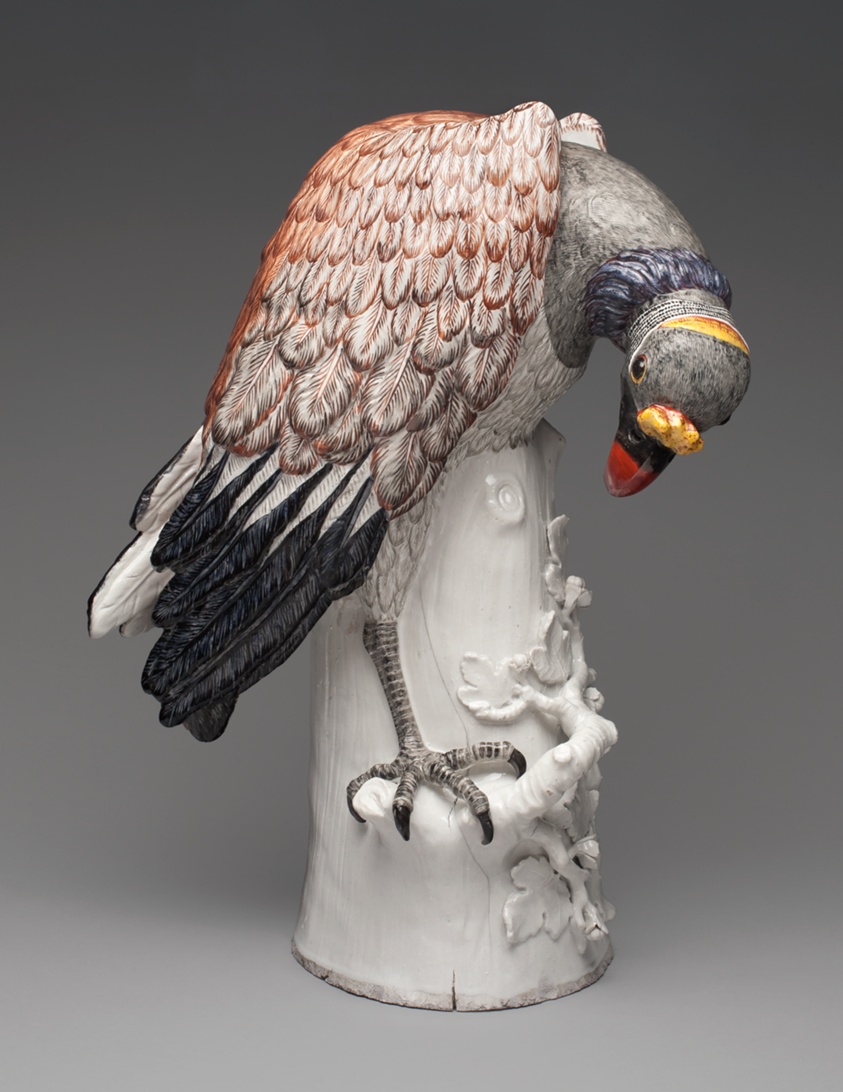
King Vulture
Meissen Porcelain Manufactory (1710–present)LinkedCulture matchlcp-dcc441afb176
- Date
- 1734
- Medium
- Hard-paste porcelain and polychrome enamels
- Culture
- Germany
- Department
- Applied Arts of Europe
- Institution
- Art Institute of Chicago
- Object ID
- 189715
From the Art Institute of Chicago record
As elector of Saxony and king of Poland, Augustus II (r. 1694/97–1733) presided over the ambitious transformation of his capital, Dresden, through advances in architecture, the arts, science, and technology. Produced beginning in 1710 through royal sponsorship and funding, Meissen porcelain was an exclusive luxury good of its time. Around 1728 Augustus conceived of replicating the animal kingdom in porcelain for display in a Baroque palace that he was transforming into a showcase for his collections of Asian and Meissen ceramics. This porcelain zoo was intended for the long gallery on the main floor of the palace. By 1733, the year the king died, more than thirty different models of birds and almost forty animals had been made, many by the sculptor Johann Joachim Kändler, who worked at Meissen from 1731 to 1775. Kändler drew this vulture from life, which allowed him to animate his work with the creature’s quintessential spirit. Such porcelain animals remain the most vivid expression of Augustus’s wish, as elector and king, to possess and rule over the natural world.
The authoritative record is held by Art Institute of Chicago. LinkedCulture surfaces this object and its connections; it does not alter institutional metadata.
Get printable QR codesHide QR codes
Open QR codes for this object page and the museum record. They stay collapsed until needed.
Provenance & credit
As published by the source institution. Coverage varies — not every institution's open-data feed includes ownership history.
- Credit line
- Harry and Maribel G. Blum and Kate S. Buckingham endowment funds; purchased with funds provided by the Antiquarian Society; Applied Arts of Europe Sales Proceeds, Charles H. and Mary F.S. Worcester and Major Acquisitions Centennial funds; Robert Allerton Trust; Mary and Leigh Block Endowment Fund; Ada Turnbull Hertle Fund; purchased with funds provided by Harry A. Root; Wirt D. Walker Endowment Fund; Gladys N. Anderson Fund; Pauline Seipp Armstrong, Edward E. Ayer in memory of Charles L. Hutchinson, and Kay and Frederick Krehbiel endowment funds; purchased with funds provided by Doris and Stanford Marks; Helen A. Regenstein Endowment Fund; Samuel A. Marx Fund; Laura T. Magnuson, Marian and Samuel Klasstorner, and Maurice D. Galleher endowment funds; Robert Allerton Purchase Fund; Bessie Bennett and Applied Arts of Europe General endowment funds; Edward Johnson, Elizabeth R. Vaughan, and Annette M. Chapin funds; Wentworth Greene Field Memorial Endowment Fund; Campaign for Chicago's Masterpiece Director's Fund; purchased with funds provided by Maureen and Edward Byron Smith Jr.; Samuel P. Avery Endowment Fund; Hugh Leander Adams and Mary Trumbull Adams Fund; purchased with funds provided by G-Bar Charitable Foundation; Betty Bell Spooner Fund; purchased with funds provided by Elizabeth Souder Louis; Irving and Jane Seaman, Charles U. Harris, and S. DeWitt Clough endowment funds; purchased with funds provided by the Woman's Board of the Alliance Française of Chicago; Grant J. Pick Purchase Fund; purchased with funds provided by Ghenete Zelleke
Linked open data
Authority identifiers that link this record into the wider web of cultural data — stable references you can follow to the source.
- Object type
- AAT300386308
Part of a LinkedCulture topic
 18th Century Porcelain Figurines
These objects are decorative ceramic figures and figure groups made from soft-paste or hard-paste porcelain during the 18th century, produced by major European porcelain factories including Meissen, Sèvres, Derby, Chelse
413 objects from 4 institutions
Related across collections
Semantically similar works from Art Institute of Chicago and other institutions.