Art Institute of Chicago
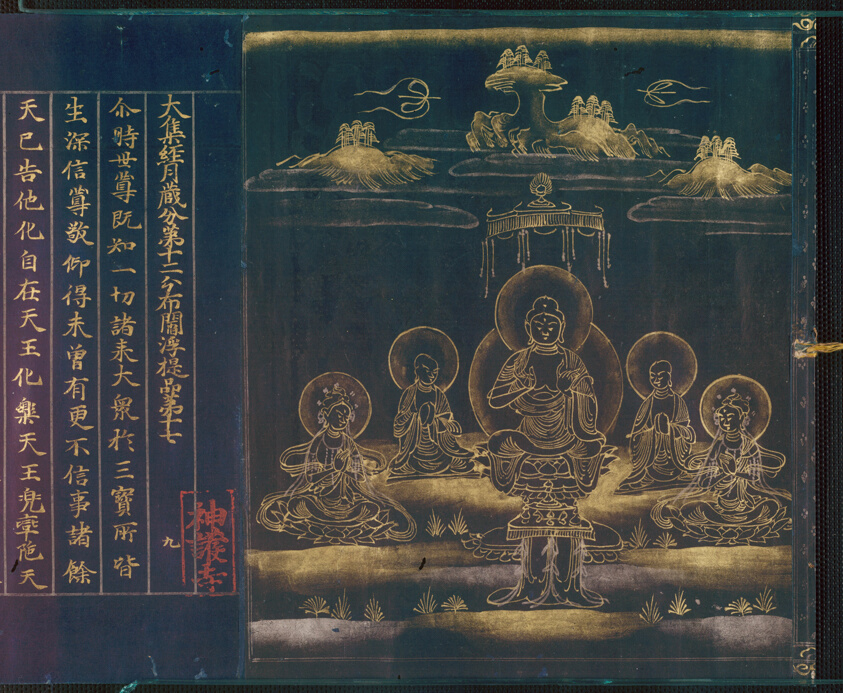
Jingoji Sutra and Wrapper
Artist unknownLinkedCulture matchlcp-720adf61c688
- Date
- Late 12th century
- Medium
- Gold and silver pigments on indigo-dyed paper, bamboo, silk, mica, and gilt bronze.
- Culture
- Japan
- Department
- Arts of Asia
- Institution
- Art Institute of Chicago
- Object ID
- 193241
From the Art Institute of Chicago record
The second half of the 12th century was a time of great political instability in Japan. Aristocrats felt as if they were living in an age of mappo , or Buddhist decline, and were preoccupied with the afterlife. This sutra is part of a famous set of 5,000 scriptures likely commissioned by Emperor Toba (1103–1156) and completed by his son, Emperor Go-Shirakawa (1127–1192), in 1185. The frontispiece of the sutra shows the Buddha preaching at Vulture Peak. At the beginning of the text is the seal of Jingoji temple in red. The ruled lines of text are in silver, and the Chinese characters are brushed in gold in a balanced and orderly script. Those with the means to launch such a project believed that all involved received merit and were assured a favorable rebirth in paradise. As a result of this belief, decorated sutras were some of the most extravagant commissions of their time.
The authoritative record is held by Art Institute of Chicago. LinkedCulture surfaces this object and its connections; it does not alter institutional metadata.
Get printable QR codesHide QR codes
Open QR codes for this object page and the museum record. They stay collapsed until needed.
Provenance & credit
As published by the source institution. Coverage varies — not every institution's open-data feed includes ownership history.
- Credit line
- Purchased with Funds Provided by the Weston Foundation
Linked open data
Authority identifiers that link this record into the wider web of cultural data — stable references you can follow to the source.
- Object type
- AAT300033618
Related across collections
Semantically similar works from Art Institute of Chicago and other institutions.