Art Institute of Chicago
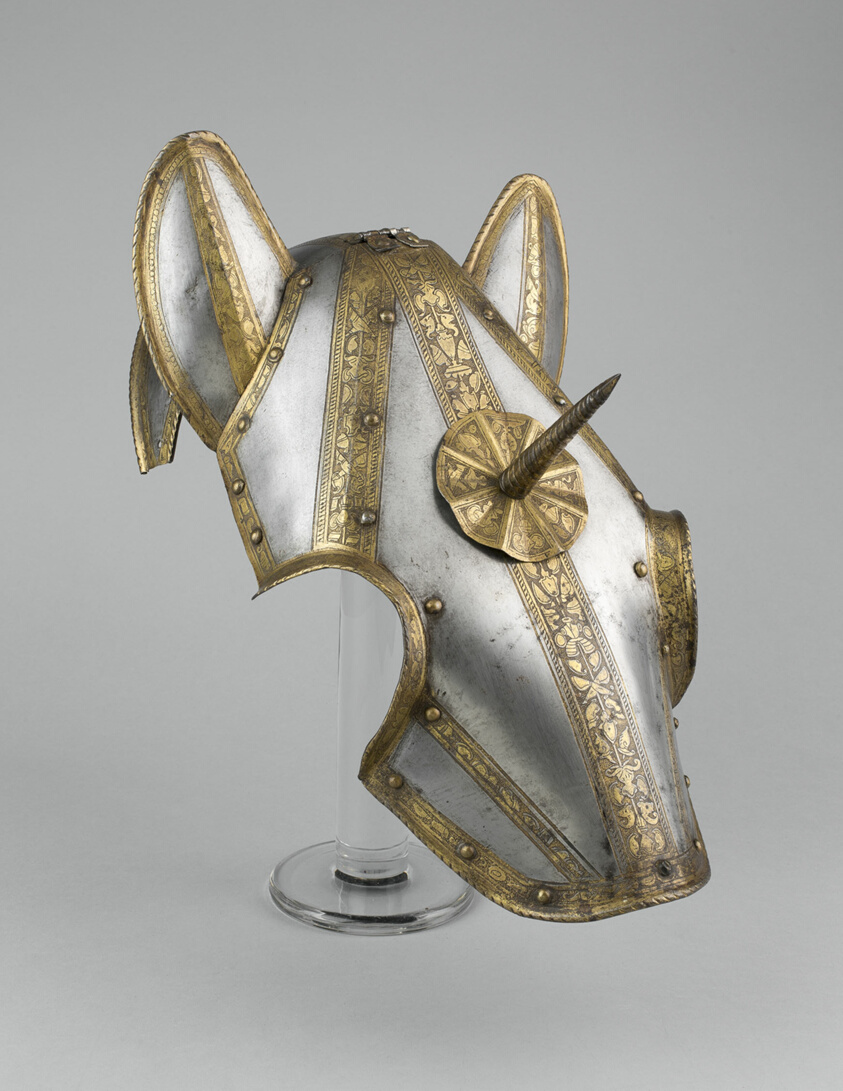
Shaffron
Italian, MilanLinkedCulture matchlcp-1d93c4686fe9
- Date
- c. 1575
- Medium
- Steel with gilding
- Culture
- Italy
- Institution
- Art Institute of Chicago
- Object ID
- 199854
From the Art Institute of Chicago record
Chivalry—with its connotation of the knightly ideal—was intimately connected with the horse (cheval in French). A knight took care to protect his mount, on which he was dependent for the mobility and speed required in both attack and retreat. In Roman times, some heavy cavalry used armor made of iron or bronze scales to protect their horses. From the twelth century on, knights covered their steeds in bands of iron mail (a network of interlocking rings). By the fifteenth century, full-plate armors were not uncommon. This shaffron, or headpiece, is etched in gilt bands with decoration on a finely dotted ground. Riveted between the eyes is an elongated conical spike, perhaps inspired by the horn of the mythical unicorn. A manifestation of great power and wealth, the shaffron has been valued for centuries as an object of beauty, not just as a tool of warfare and sport.
The authoritative record is held by Art Institute of Chicago. LinkedCulture surfaces this object and its connections; it does not alter institutional metadata.
Get printable QR codesHide QR codes
Open QR codes for this object page and the museum record. They stay collapsed until needed.
Provenance & credit
As published by the source institution. Coverage varies — not every institution's open-data feed includes ownership history.
- Credit line
- George F. Harding Collection
Linked open data
Authority identifiers that link this record into the wider web of cultural data — stable references you can follow to the source.
- Object type
- AAT300209266
Part of a LinkedCulture topic
 European Renaissance Armor Components
These objects are all pieces of defensive armor and military equipment from 15th-17th century Europe, primarily from major armoring centers like Italy, Germany, and France.
500 objects from 4 institutions
Related across collections
Semantically similar works from Art Institute of Chicago and other institutions.