Art Institute of Chicago
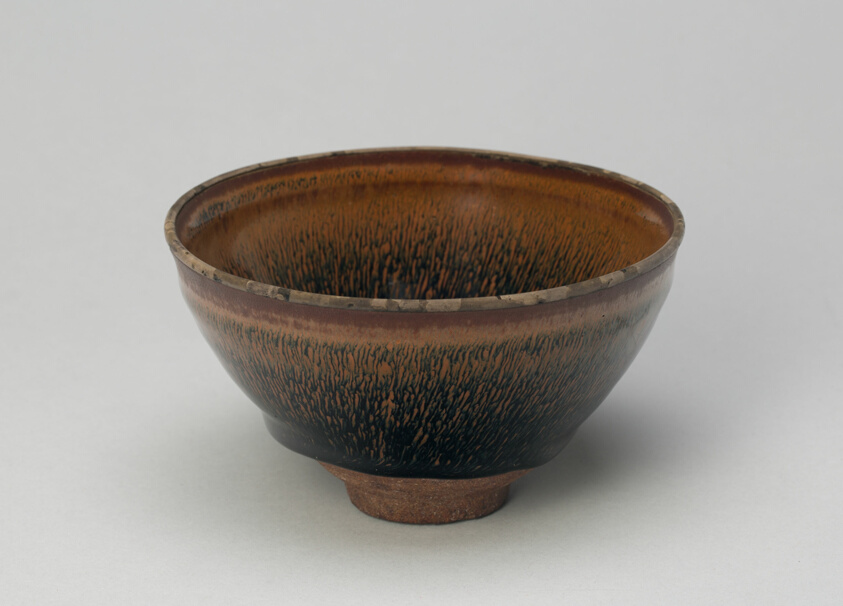
Tea Bowl
China, Fujian ProvinceLinkedCulture matchlcp-36ed77822581
- Date
- Song dynasty (960–1279), 12th century
- Medium
- Jian ware; dark-gray stoneware with dark-brown glaze and overglaze “hare’s fur” markings in iron oxide
- Culture
- China
- Department
- Arts of Asia
- Institution
- Art Institute of Chicago
- Object ID
- 20392
From the Art Institute of Chicago record
Song dynasty potters achieved unprecedented refinement in iron-rich, chocolate brown stonewares with lustrous dark glazes. This bowl's "hare's fur" effect was formed naturally when an iron-rich slip was applied to the rim of the glazed surface. During firing, gravity pulled particles of this slip downward into the bowl, creating feathery streaks. The much-admired style of this piece originated at kilns in southeastern Fujian province, which specialized almost exclusively in conical tea bowls. These bowls fit perfectly in cupped hands and visually intensified the milky froth of white tea, brewed from young tea leaves that were steamed, baked, press-molded into cakes, reground to a fine powder, and then blended and whipped with boiling water. This type of blackware is popularly designated temmoku , the Japanese name of a mountain in south China and the site of a Buddhist monastery where Japanese monks treasured such bowls for tea-drinking rituals.
The authoritative record is held by Art Institute of Chicago. LinkedCulture surfaces this object and its connections; it does not alter institutional metadata.
Get printable QR codesHide QR codes
Open QR codes for this object page and the museum record. They stay collapsed until needed.
Provenance & credit
As published by the source institution. Coverage varies — not every institution's open-data feed includes ownership history.
- Credit line
- Lucy Maud Buckingham Collection
Linked open data
Authority identifiers that link this record into the wider web of cultural data — stable references you can follow to the source.
- Object type
- AAT300193015
Related across collections
Semantically similar works from Art Institute of Chicago and other institutions.