Art Institute of Chicago
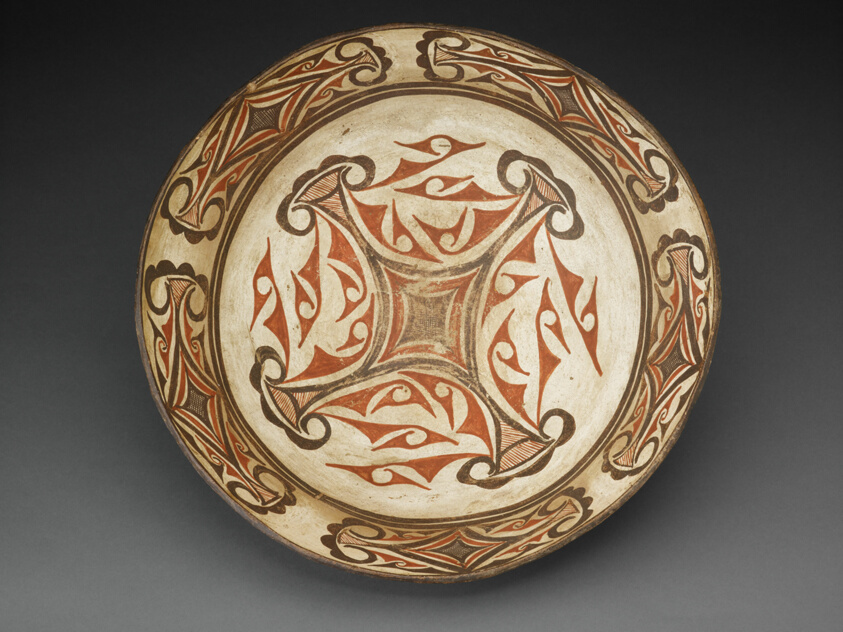
Polychrome Bowl
Probably We'wha (Zuni Donashi:kew Clan and Bichi:kwe Clan, c. 1848-1896)
- Date
- c. 1890
- Medium
- Ceramic and pigment
- Culture
- Zuni Tribe of the Zuni Reservation, New Mexico
- Department
- Arts of the Americas
- Institution
- Art Institute of Chicago
Toward the end of the nineteenth century, an artistic renewal occurred throughout the Southwest as centuries-old styles and techniques were recast in response to increasing public interest in Native American art and culture. Potters from several pueblos, or towns, developed innovative vessel shapes and designs by adapting and adding to the achievements of their ancestors. The styles and symbolic forms expressed each com-munity’s particular historical identity and sense of place. The interior of this bowl is filled with a large, X-shaped symbol with arms emerging from a crosshatched diamond—a reference to the four sacred directions of the Zuñi world. The red, hooked motifs between the arms represent pahos , prayer sticks with attached feathers that were placed at sacred locations to petition for rain. On the exterior, zigzag lines flanked by red and black triangles signify lightning and rainfall. Many features of this vessel are characteristic of ceramics made by We’wah, one of the most renowned Zuñi artists, who held a special status within his community as one of their lhamanas . These highly respected individuals typically were born male but followed traditional female gender roles, including pottery making and weaving, and served as mediators with special ceremonial and spiritual responsibilities.
The authoritative record is held by Art Institute of Chicago. LinkedCulture surfaces this object and its connections; it does not alter institutional metadata.
Linked open data
Authority identifiers that link this record into the wider web of cultural data — stable references you can follow to the source.
- Object type
- AAT300386308
Related across collections
Semantically similar works from Art Institute of Chicago and other institutions.
Bowl Depicting a Bird with Outstretched Wings
Art Institute of Chicago
Polychrome Bowl with Geometric Designs and Face in Relief on Shoulder
Art Institute of Chicago
Polychrome Bowl with Abstract Geometric Motifs
Art Institute of Chicago
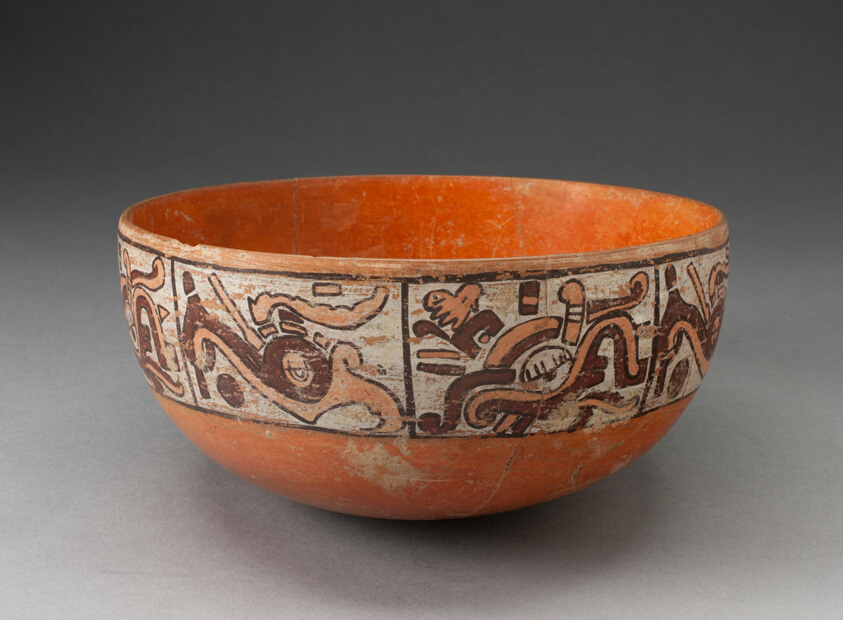
Polychrome Bowl Depicting Eight Abstract Motifs on Exterior
Art Institute of Chicago
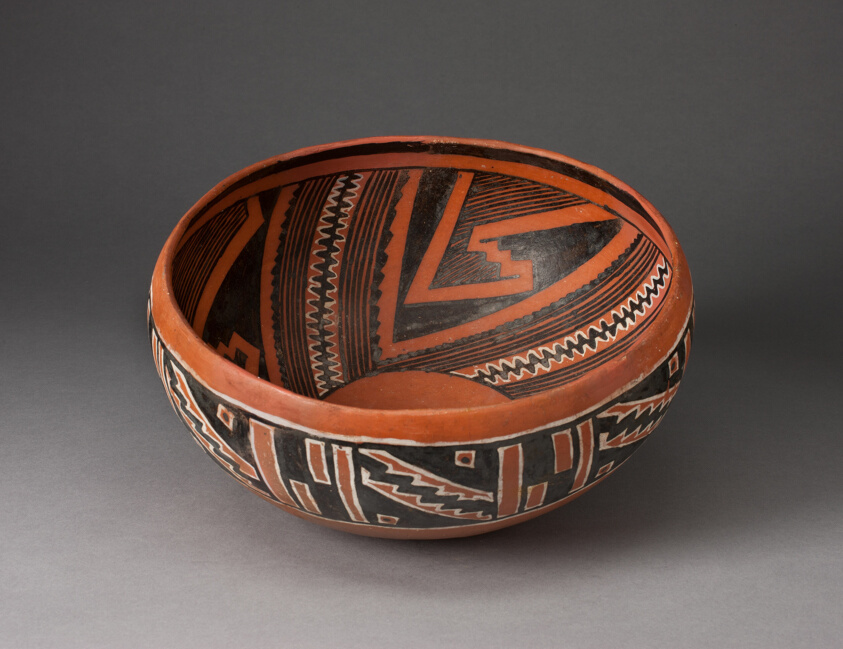
Bowl with Geometric Black-and-White Motifs on Interior and Exterior Surface
Art Institute of Chicago
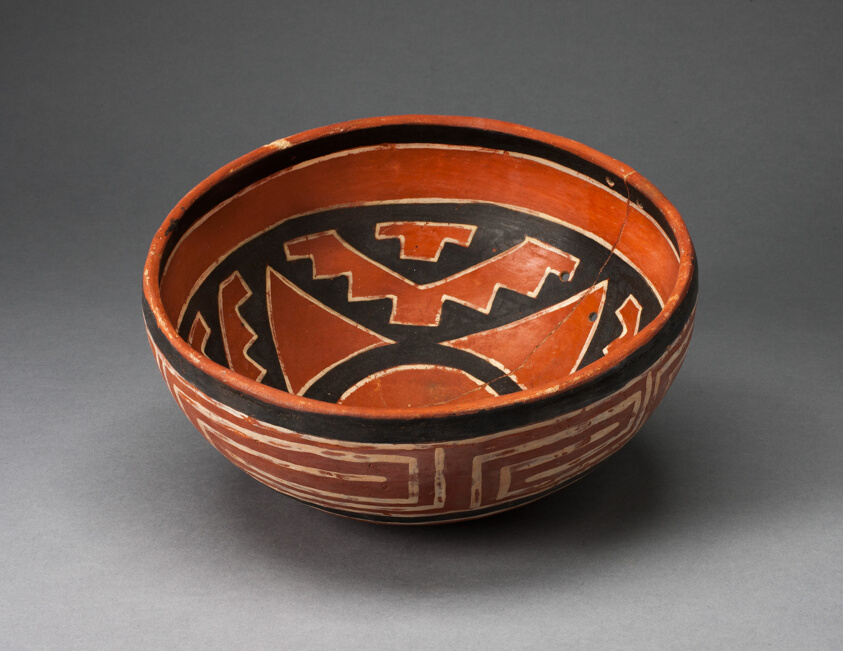
Polychrome Bowl with Geometric Star Motif on Interior and Interloking Scroll on Exterio
Art Institute of Chicago

Bowl
Minneapolis Institute of Art
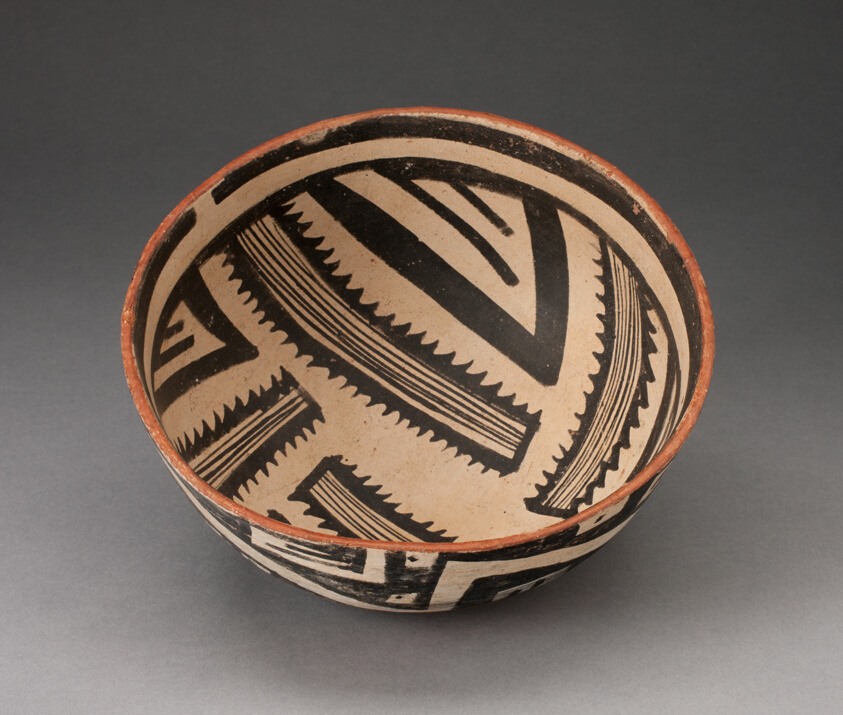
Bowl with Radiating Striped Bands and Triangles and Interlocking Zigzag on Exterior
Art Institute of Chicago
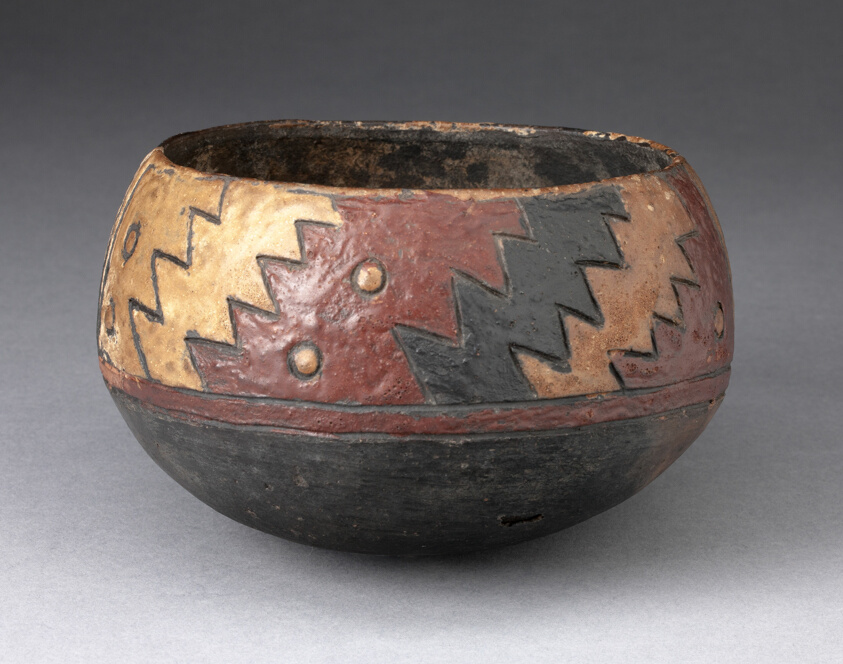
Bowl with Thickly-Painted Polychrome Zigzag Motif
Art Institute of Chicago
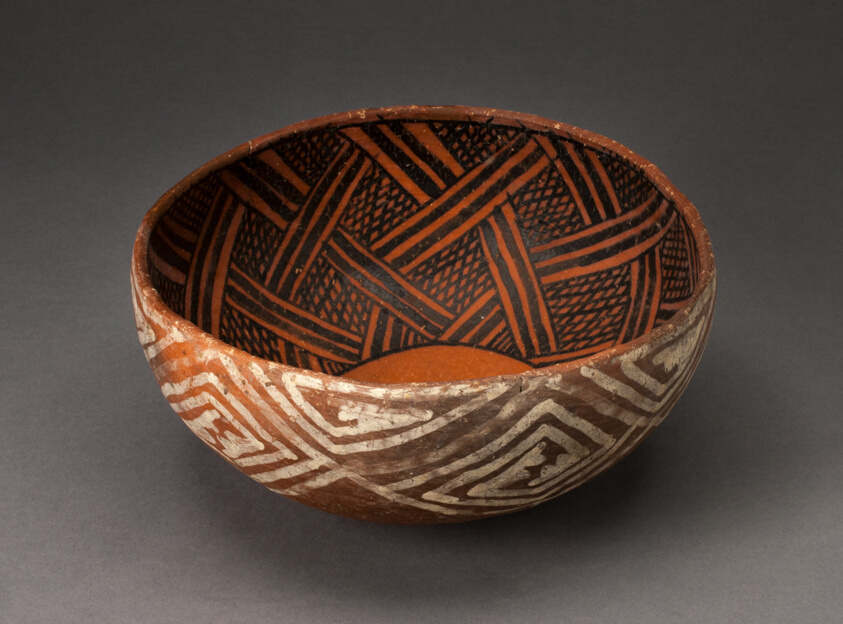
Bowl with Black Interlocking Lattice on Interior; White Interlocking Squared Spirals on Exterior
Art Institute of Chicago
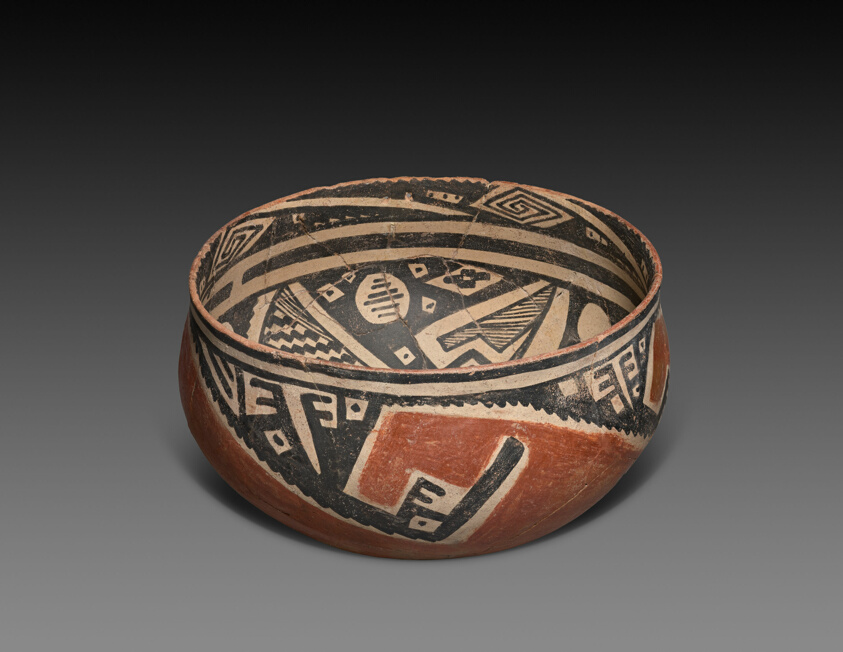
Bowl
Art Institute of Chicago
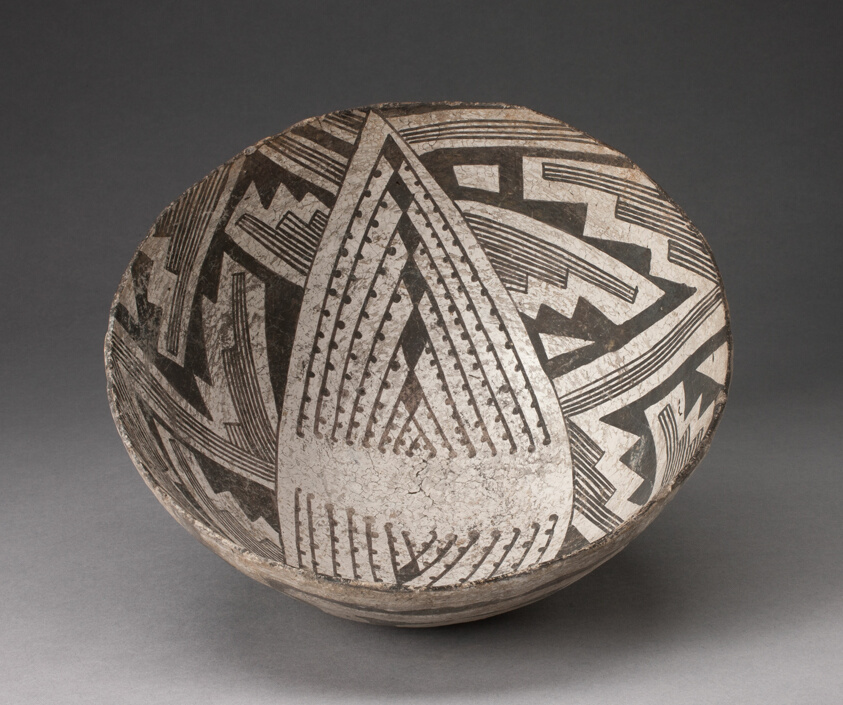
Bowl with Large Diamond-Shaped Area Interior with Dotted Lines and Diamonds, and Interlocking Stepped Motifs
Art Institute of Chicago