Art Institute of Chicago
Fragment of Mawa' or Ma'a (Sacred Heirloom Textile)
India, GujaratLinkedCulture matchlcp-ed1580d2d7ea
- Date
- late 14th or 15th century
- Medium
- Cotton, plain weave; block printed resist and mordeant dyed
- Culture
- India
- Department
- Textiles
- Institution
- Art Institute of Chicago
- Object ID
- 212379
From the Art Institute of Chicago record
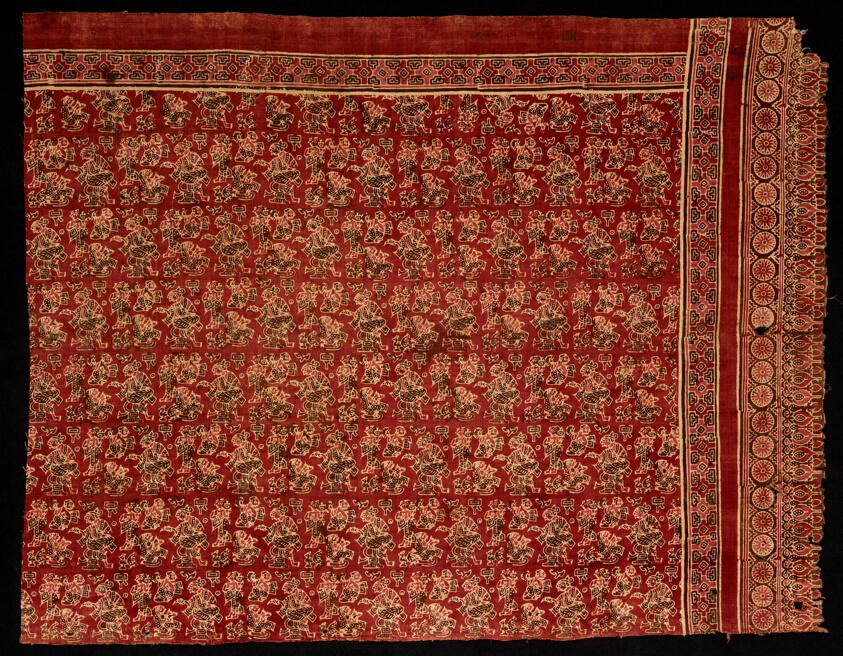
Textiles were the primary Indian goods traded for southeast Asian spices ultimately destined for European markets. This fragment is among the oldest extant Indian textiles found in southeast Asia. Made in Gujarat for the Indonesian market, it has been radiocarbon-dated to between 1382 and 1502. The pattern features a block-printed image arranged horizontally along the textile’s length, repeated without regard for vertical alignment in seven and a half rows. The repeat consists of a seated male figure with three attendant figures of lesser scale, the group is complemented by small geese and vegetal or perhaps architectural elements. The main figure may be a Jain sage, and indeed the three-quarter profile view and the so-called protruding eye do provide a link to the Jain painting tradition seen in Gujarati manuscripts dating from the fourteenth and fifteenth centuries. Trade cloths such as this have not survived in India, where they may have originally functioned as ceremonial hangings or backdrops. In Indonesia such cloths were treasured as heirlooms, preserved and handed down for use as banners and architectural decoration during thanksgiving ceremonies.
The authoritative record is held by Art Institute of Chicago. LinkedCulture surfaces this object and its connections; it does not alter institutional metadata.
Get printable QR codesHide QR codes
Open QR codes for this object page and the museum record. They stay collapsed until needed.
Provenance & credit
As published by the source institution. Coverage varies — not every institution's open-data feed includes ownership history.
- Credit line
- Belle M. Borland Estate; Marie Walters Endowment Fund; The Christa C. Mayer Thurman Textile Endowment
Linked open data
Authority identifiers that link this record into the wider web of cultural data — stable references you can follow to the source.
- Object type
- AAT300014063
Related across collections
Semantically similar works from Art Institute of Chicago and other institutions.