Art Institute of Chicago
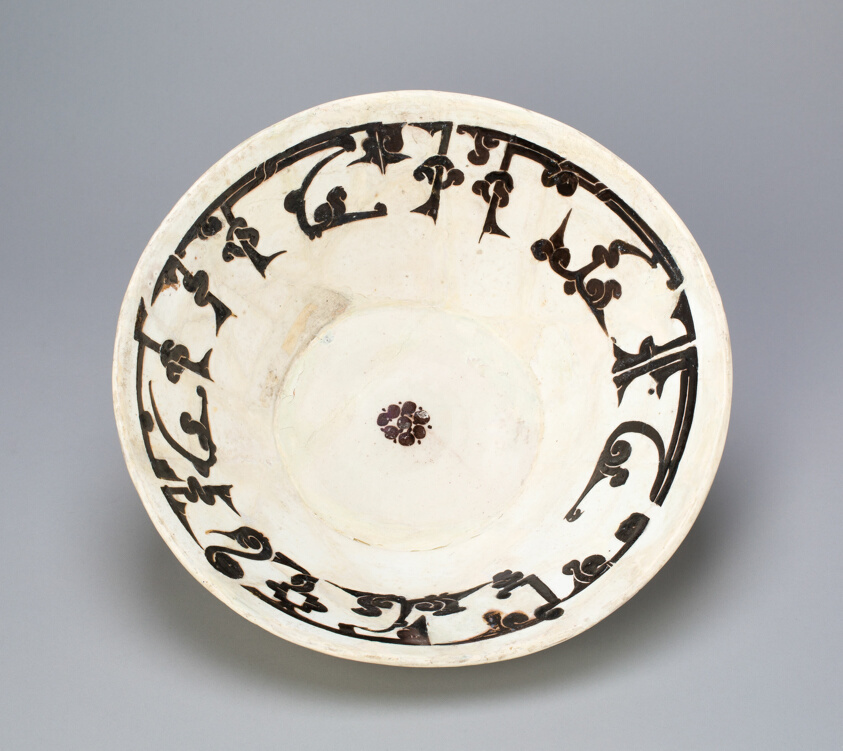
Bowl with Calligraphic Design
Eastern Iran or Central AsiaLinkedCulture matchlcp-a44f91297050
- Date
- Samanid dynasty (819-1005), 10th century
- Medium
- Earthenware, white slip with black slip decoration under a transparent glaze
- Culture
- Iran
- Department
- Arts of Asia
- Institution
- Art Institute of Chicago
- Object ID
- 217770
From the Art Institute of Chicago record
In the 10th and 11th centuries, a tradition of painting ceramics in thick colored slips (watered-down clay) became common practice in central and eastern Iran. These vessels were typically decorated with simple calligraphic lines, often containing blessings or pious insights, not unlike fortune cookie messages. Here the text reads, "[Generosity] is a disposition of the dwellers of Paradise... regret." This type of script is known as knotted Kufic, distinctive for its consistent baseline and embellished by small knots and twists in the staffs of the letters.
The authoritative record is held by Art Institute of Chicago. LinkedCulture surfaces this object and its connections; it does not alter institutional metadata.
Get printable QR codesHide QR codes
Open QR codes for this object page and the museum record. They stay collapsed until needed.
Provenance & credit
As published by the source institution. Coverage varies — not every institution's open-data feed includes ownership history.
- Credit line
- Gift of Harvey and Beth Plotnick
Linked open data
Authority identifiers that link this record into the wider web of cultural data — stable references you can follow to the source.
- Object type
- AAT300386308
Related across collections
Semantically similar works from Art Institute of Chicago and other institutions.