Art Institute of Chicago
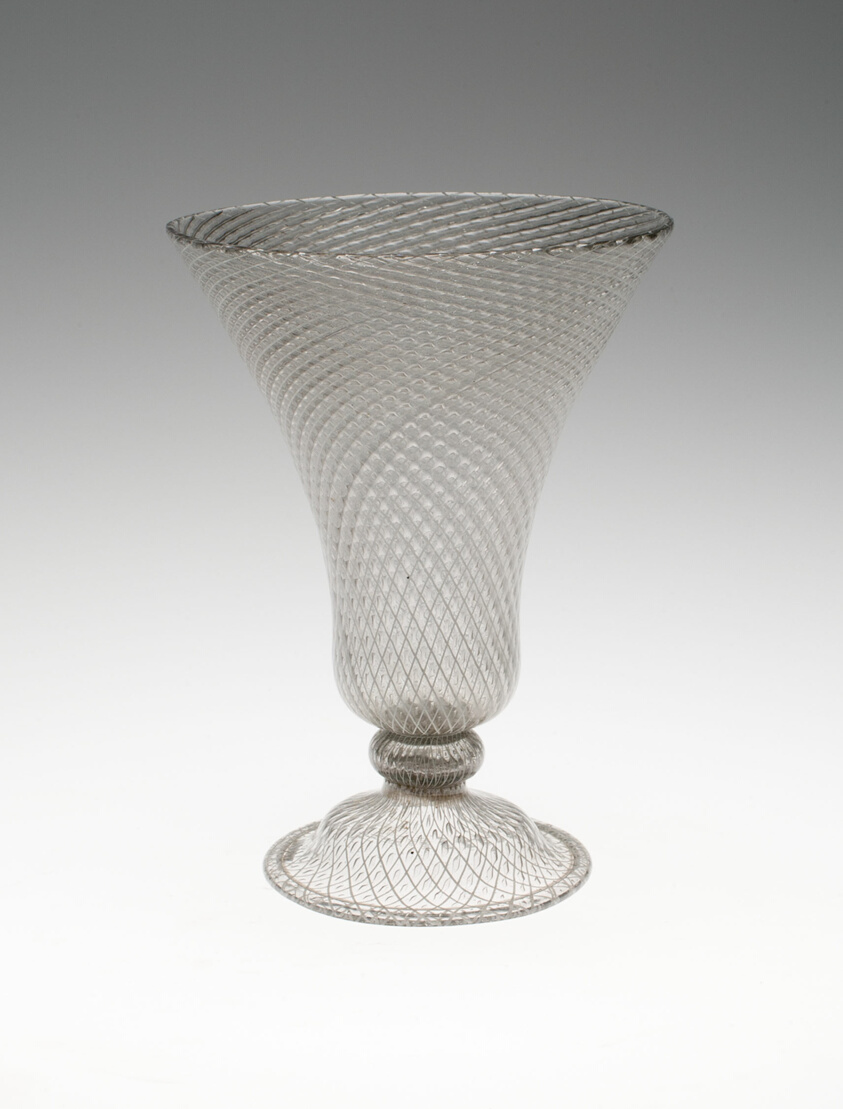
Goblet
ItalianLinkedCulture matchlcp-fe73adccbb59
- Date
- c. 1600
- Medium
- Glass (vetro a reticello)
- Culture
- Venice
- Department
- Applied Arts of Europe
- Institution
- Art Institute of Chicago
- Object ID
- 223422
From the Art Institute of Chicago record
The spiraling white opaque latticework in the glass of this goblet, called filigrana (filigree) or reticello (network), was a technique developed in Murano, a small island located off the coast of Venice devoted to glasswork. This effect was achieved by rolling a mass of clear molten glass over white glass canes or small rods and blowing it into a tube. Then a second tube fused with white canes tilted in an alternate direction was blown into the walls of the first and formed into the finished goblet. On close inspection of the walls of the goblet, tiny air bubbles are found between each crossing white cane, permanently trapped between the two layers. Murano dominated the European luxury glass market in the sixteenth and seventeenth centuries. Reticello goblets like this were highly sought by nobles to decorate their feasting tables, signifying their wealth and good taste.
The authoritative record is held by Art Institute of Chicago. LinkedCulture surfaces this object and its connections; it does not alter institutional metadata.
Get printable QR codesHide QR codes
Open QR codes for this object page and the museum record. They stay collapsed until needed.
Provenance & credit
As published by the source institution. Coverage varies — not every institution's open-data feed includes ownership history.
- Credit line
- Mary Swissler Oldberg Fund
Linked open data
Authority identifiers that link this record into the wider web of cultural data — stable references you can follow to the source.
- Object type
- AAT300386226
Related across collections
Semantically similar works from Art Institute of Chicago and other institutions.