Art Institute of Chicago
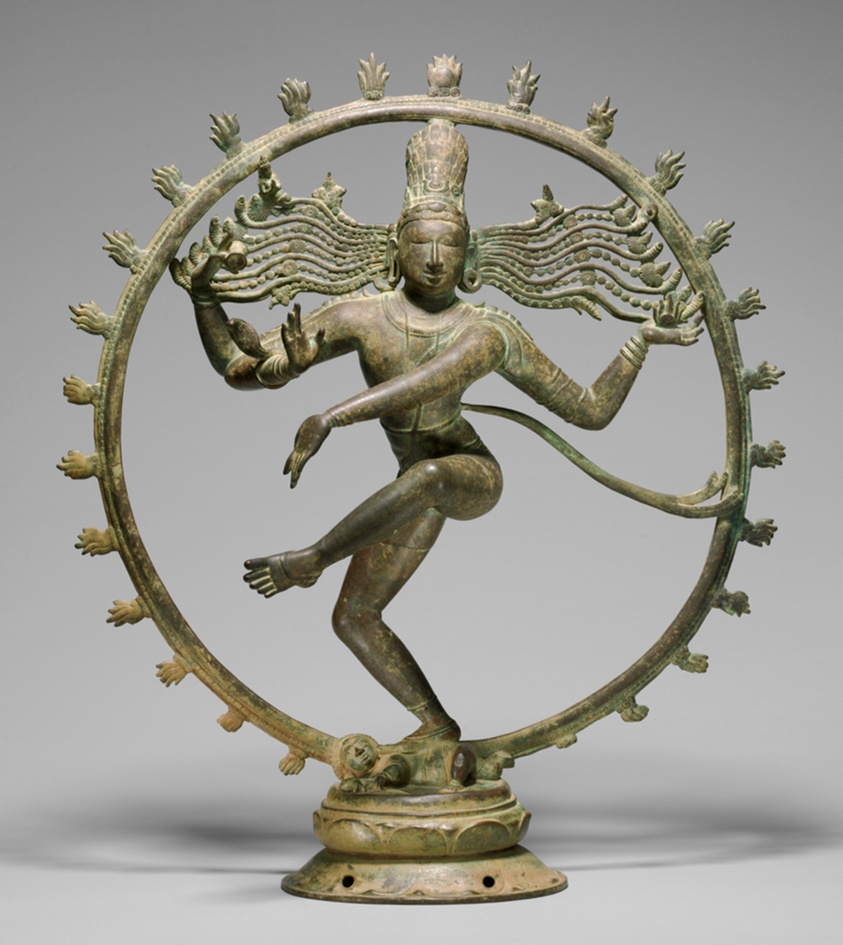
Shiva as Lord of the Dance (Nataraja)
IndiaLinkedCulture matchlcp-1953a76f7207
- Date
- Chola period, about 10th/11th century
- Medium
- Bronze
- Culture
- Tamil Nadu
- Department
- Arts of Asia
- Institution
- Art Institute of Chicago
- Object ID
- 24548
From the Art Institute of Chicago record
Shiva, one of the most important Hindu divinities, is here depicted as the Lord of the Dance ( Nataraja ), an iconic image in Indian art. Shiva’s cosmic dance sets in motion the rhythm of life and death; it pervades the universe, as symbolized by the ring of fire that is filled with the loose, snakelike locks of the god’s hair. One pair of his arms balances the flame of destruction and the hand drum ( damaru ) that beats the rhythm of life while another performs symbolic gestures: the raised right hand means “fear not,” and the left hand ( gajahasta ) pointing down toward his raised left foot signifies release from the ignorance that hinders realization of the ultimate reality. Shiva is shown perfectly balanced, with his right leg planted on the demon of darkness ( Apasmara ), stamping out ignorance. The tiny figure of the personified river goddess, Ganga, is caught up in his matted, flowing locks. Shiva was believed to break the fall of the great Ganges River as it descends from the Himalayas by standing beneath the waters, which divide over his hair, becoming the seven holy rivers of India. This classic bronze comes from the Chola period in the south of India. Icons such as this were carried in procession during religious ceremonies.
The authoritative record is held by Art Institute of Chicago. LinkedCulture surfaces this object and its connections; it does not alter institutional metadata.
Get printable QR codesHide QR codes
Open QR codes for this object page and the museum record. They stay collapsed until needed.
Provenance & credit
As published by the source institution. Coverage varies — not every institution's open-data feed includes ownership history.
- Credit line
- Kate S. Buckingham Fund
- Provenance
- Sold to the Art Institute of Chicago by William H. Wolff Incorporated, New York City, September 15, 1965.
Linked open data
Authority identifiers that link this record into the wider web of cultural data — stable references you can follow to the source.
- Object type
- AAT300301253
Part of a LinkedCulture topic
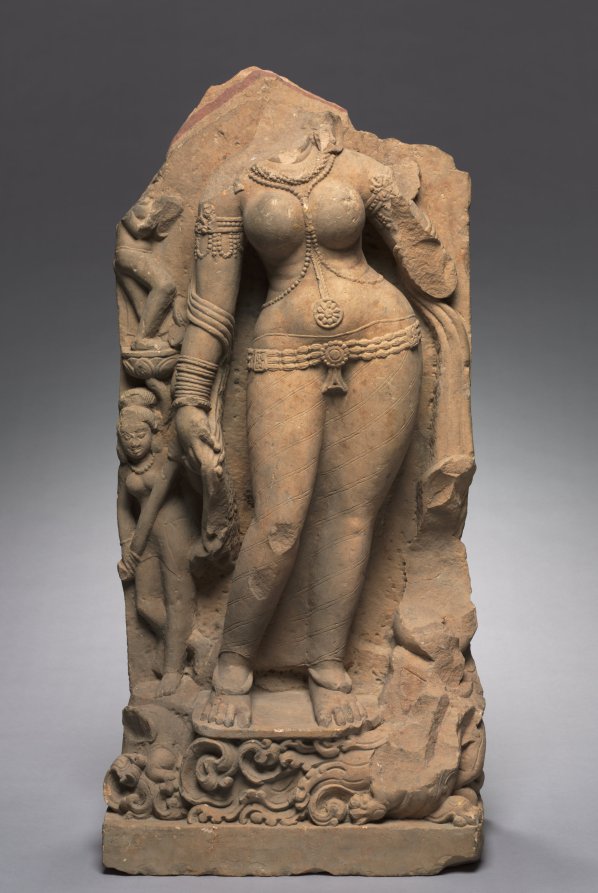 Hindu Deities and Mythology
These objects depict Hindu gods, goddesses, and mythological narratives, particularly featuring Durga slaying the buffalo demon Mahishasura, along with other deities like Ganesh, Krishna, and Brahma from various South an
59 objects from 3 institutions
Related across collections
Semantically similar works from Art Institute of Chicago and other institutions.