Art Institute of Chicago
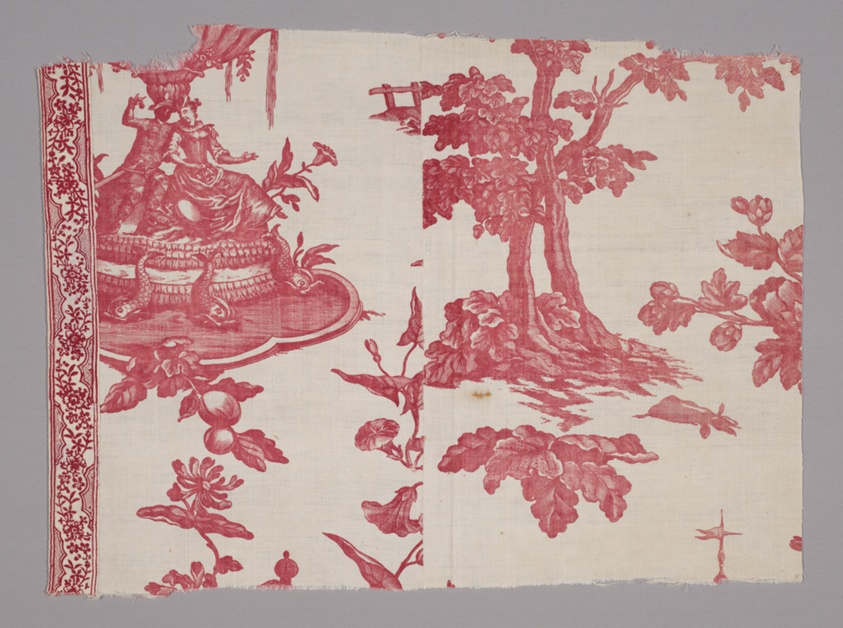
Curtain Fragment
England and possibly IndiaLinkedCulture matchlcp-b9afcbaaa03c
- Date
- late 18th century
- Medium
- Cotton; copperplate printed; block printed trimming
- Culture
- England
- Department
- Textiles
- Institution
- Art Institute of Chicago
- Object ID
- 257368
From the Art Institute of Chicago record
The late 18th and early 19th centuries were an incredibly fertile period for innovation in the European textile industries, especially in the field of direct printing. Decades of experimentation led to the development of a variety of ways to apply color and pattern to cloth, which enabled artists and designers to invent new design vocabularies and quickly respond to cultural trends and ideas. One of the most enduring of these innovations was the ability to print on cloth with copperplates and then subsequently with engraved copper metal rollers. The quality of detail achieved through this method was unrivaled in terms of clarity, precision.
The authoritative record is held by Art Institute of Chicago. LinkedCulture surfaces this object and its connections; it does not alter institutional metadata.
Get printable QR codesHide QR codes
Open QR codes for this object page and the museum record. They stay collapsed until needed.
Provenance & credit
As published by the source institution. Coverage varies — not every institution's open-data feed includes ownership history.
- Credit line
- Gift of Titi Halle, Cora Ginsburg LLC
- Provenance
- Cora Ginsburg LLC, New York, by 2019; given to the Art Institute of Chicago, 2020.
Linked open data
Authority identifiers that link this record into the wider web of cultural data — stable references you can follow to the source.
- Object type
- AAT300435669
Related across collections
Semantically similar works from Art Institute of Chicago and other institutions.