Art Institute of Chicago
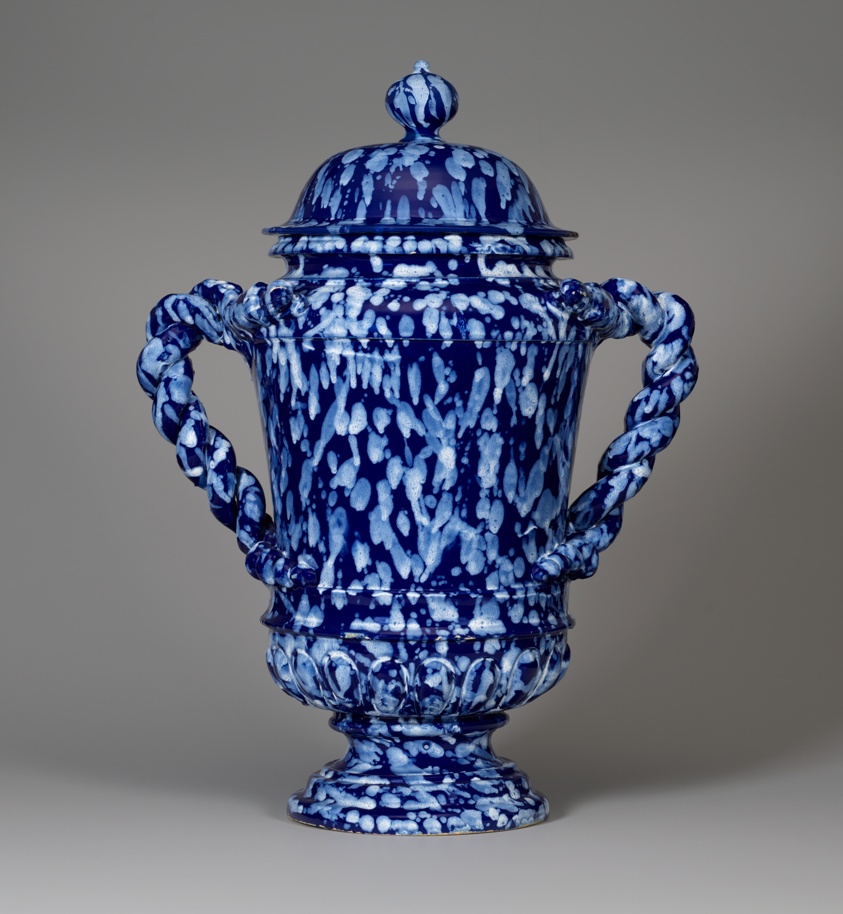
Garden Urn
Nevers, FranceLinkedCulture matchlcp-2171c30899b0
- Date
- c. 1665–85
- Medium
- Tin-glazed earthenware
- Culture
- Nevers
- Department
- Applied Arts of Europe
- Institution
- Art Institute of Chicago
- Object ID
- 265812
From the Art Institute of Chicago record
This large urn was intended for display in an aristocratic French garden. Groups of tin-glazed earthenware urns and pots, such as those produced at Nevers in central France, were an important component of seventeenth-century formal garden design in France. They were most notably used in the grounds of Versailles during the reign of Louis XIV (reigned 1643–1715). The production of tin-glazed earthenware (also known as faience), was established in Nevers in the late sixteenth century by immigrant Italian ceramicists working in the maiolica tradition. It took on a patriotic significance during the reign of Louis XIV, when the king issued Sumptuary Edicts that encouraged courtiers and members of the nobility to melt down their precious metals in order to replenish the national treasury. This, in turn, prompted a demand for tin-glazed earthenware replacements. The abstract decoration on this garden urn is characteristic of the Nevers potteries. Known as à la boujie for its similarity to the effects of dripping wax ( boujie is French for "candle"), the deep blue ground was also evocative of lapis lazuli and the precious carved marbles and hardstones that appealed to court taste. The combination of blue and white also aligned with the prevailing fashion for imported blue and white Chinese porcelain, and its European imitations.
The authoritative record is held by Art Institute of Chicago. LinkedCulture surfaces this object and its connections; it does not alter institutional metadata.
Get printable QR codesHide QR codes
Open QR codes for this object page and the museum record. They stay collapsed until needed.
Provenance & credit
As published by the source institution. Coverage varies — not every institution's open-data feed includes ownership history.
- Credit line
- Purchased with funds provided by Mary Kathryn Hartigan and the Thomas W. Dower Foundation
- Provenance
- Private Collection, France; sold to Camille LePrince, Paris, 2018; acquired by the Art Institute of Chicago, 2022.
Linked open data
Authority identifiers that link this record into the wider web of cultural data — stable references you can follow to the source.
- Object type
- AAT300386308
Part of a LinkedCulture topic
 18th Century Porcelain Figurines
These objects are decorative ceramic figures and figure groups made from soft-paste or hard-paste porcelain during the 18th century, produced by major European porcelain factories including Meissen, Sèvres, Derby, Chelse
413 objects from 4 institutions
Related across collections
Semantically similar works from Art Institute of Chicago and other institutions.