Art Institute of Chicago
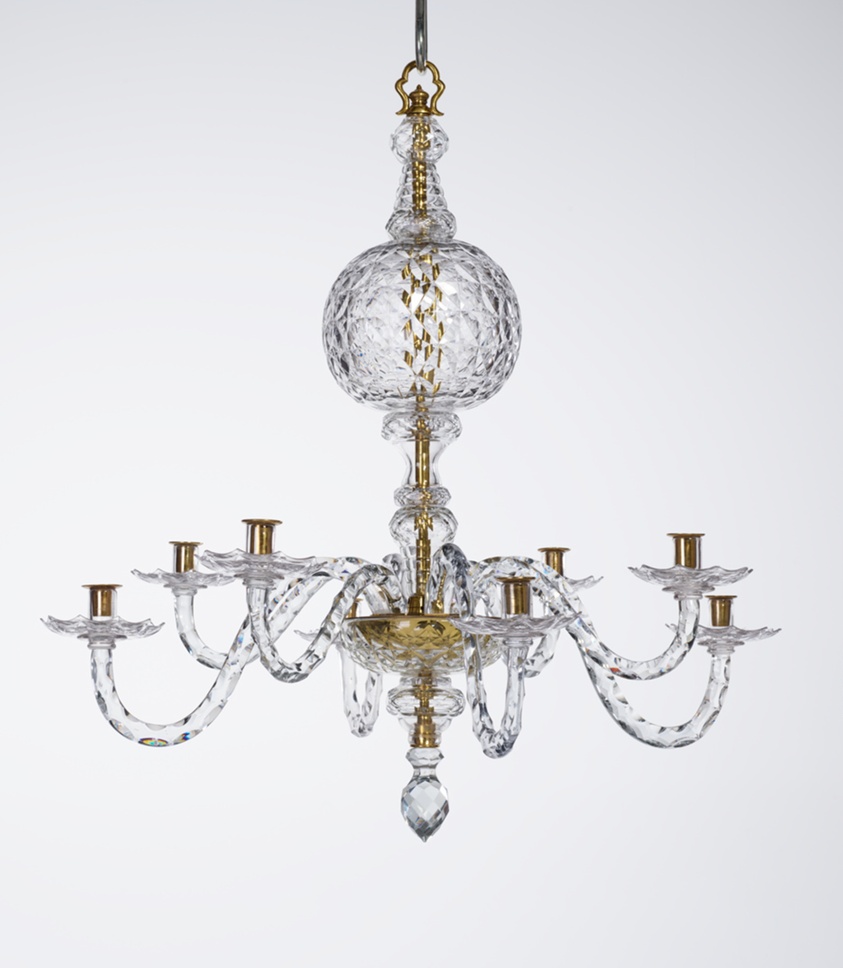
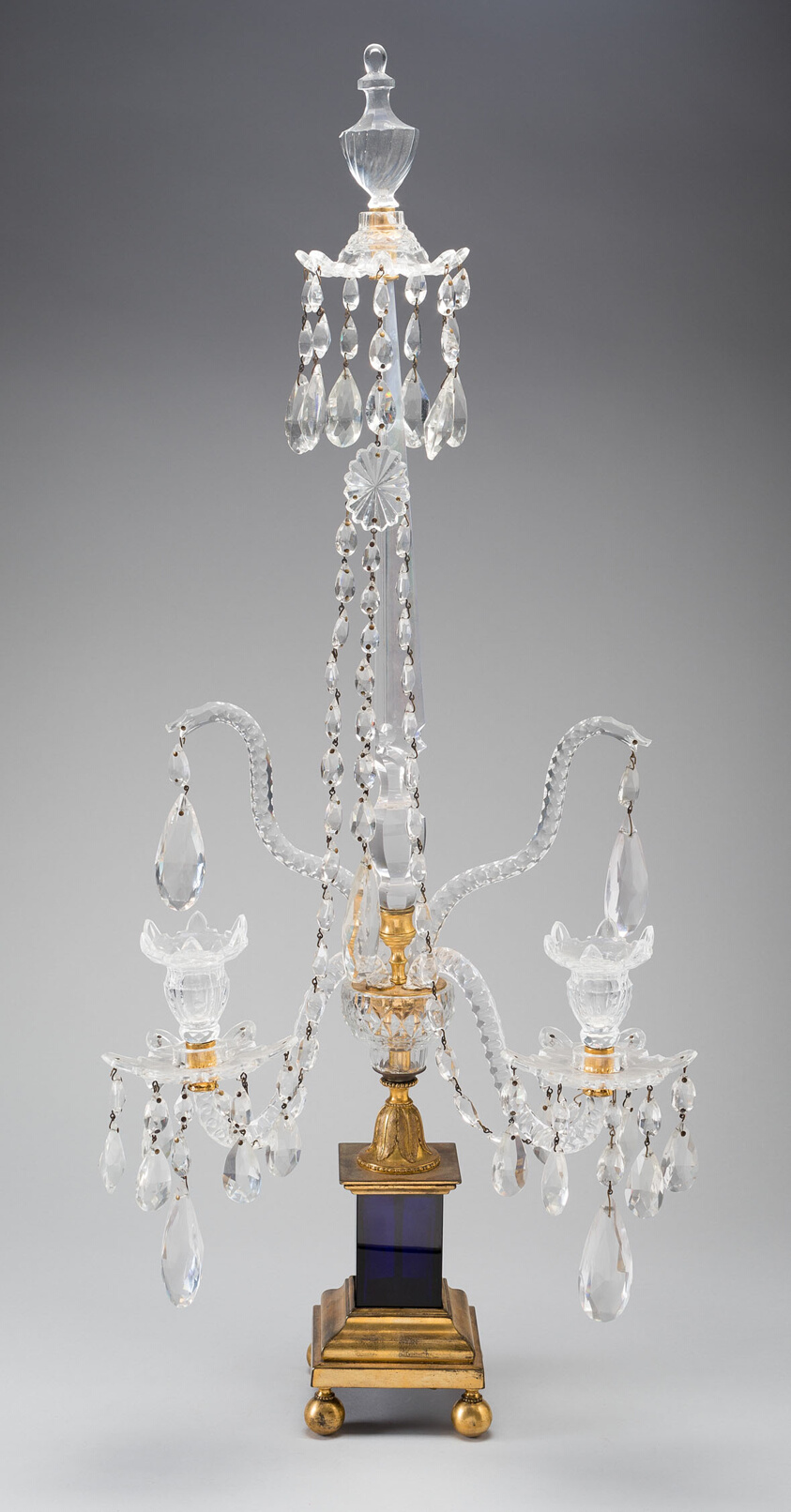
Chandelier
Attributed to Colebron Hancock (active England, mid-1700s)
- Date
- c. 1750
- Medium
- Lead glass, iron, and brass
- Culture
- England
- Department
- Applied Arts of Europe
- Institution
- Art Institute of Chicago
Made in England around 1760, this is a rare and relatively early example of a facet-cut lead-glass chandelier. Lead glass, also called lead "crystal," had been developed in the late 1680s and was prized for its heft, brightness, and clarity—qualities that made it strikingly similar to precious rock crystal, or colorless diamonds. Of particular importance was the ability of lead glass to be cut without shattering. Cut decoration on English glass first appeared in the 1720s, and chandeliers made of facet-cut lead glass became fashionable around the middle of the eighteenth century. Glass chandeliers were not only among the most expensive furnishings of an elite interior—they were also quite expensive to light. The cost of candles for an evening could be equal to several weeks' wages for a glassworker.
The authoritative record is held by Art Institute of Chicago. LinkedCulture surfaces this object and its connections; it does not alter institutional metadata.
Linked open data
Authority identifiers that link this record into the wider web of cultural data — stable references you can follow to the source.
- Object type
- AAT300386226
Related across collections
Semantically similar works from Art Institute of Chicago and other institutions.

Chandelier
Getty Museum
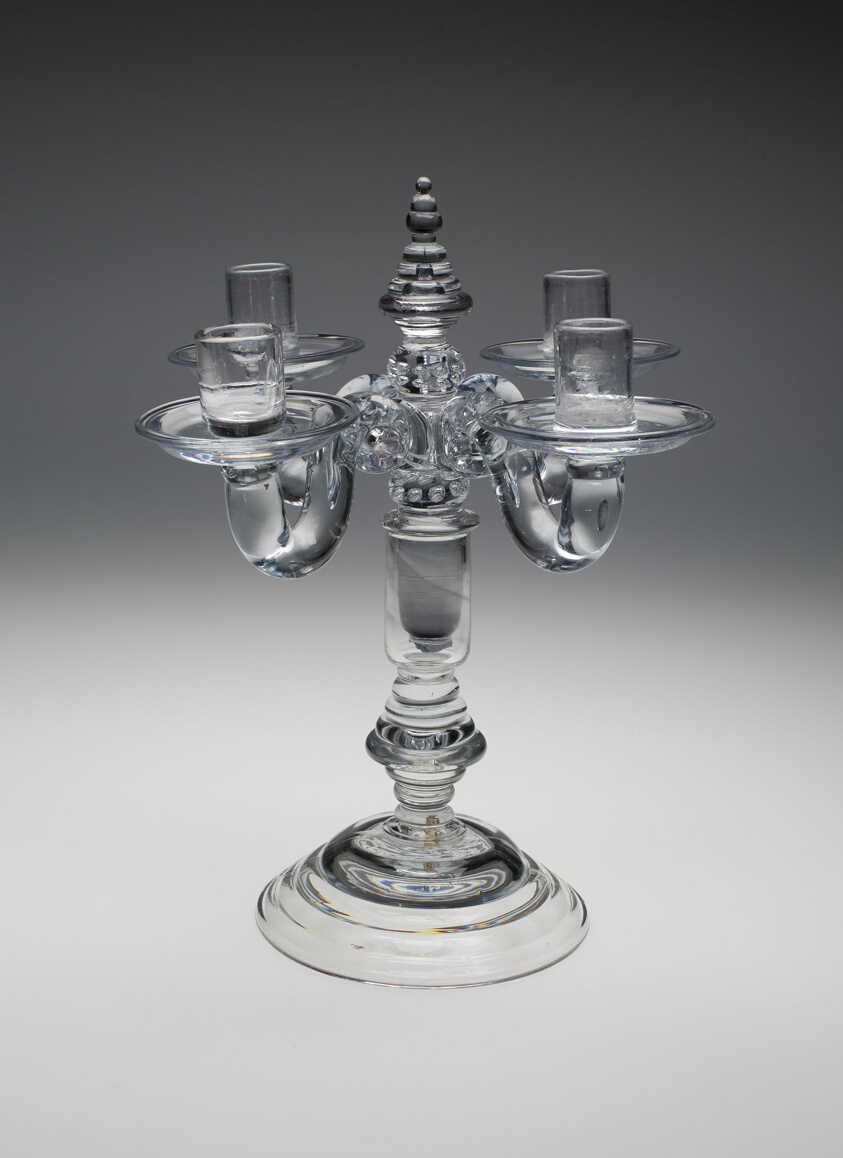
Candelabrum
Art Institute of Chicago

Cordial glass
Minneapolis Institute of Art

Cordial glass
Minneapolis Institute of Art

Cordial glass
Minneapolis Institute of Art

Cordial glass
Minneapolis Institute of Art

Cordial glass
Minneapolis Institute of Art
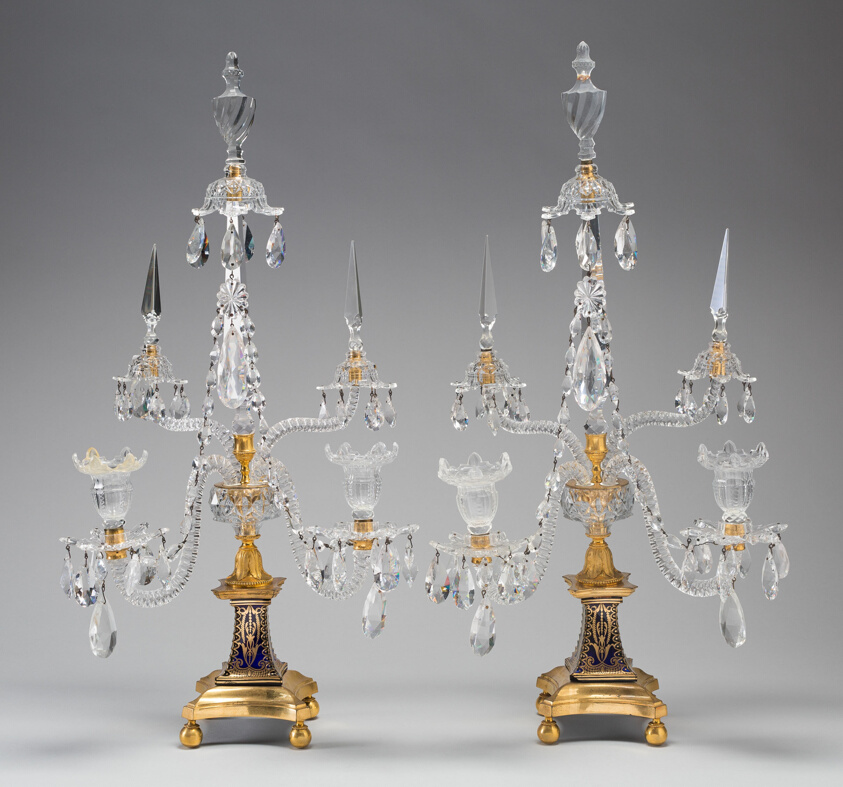
Two Candelabra
Art Institute of Chicago
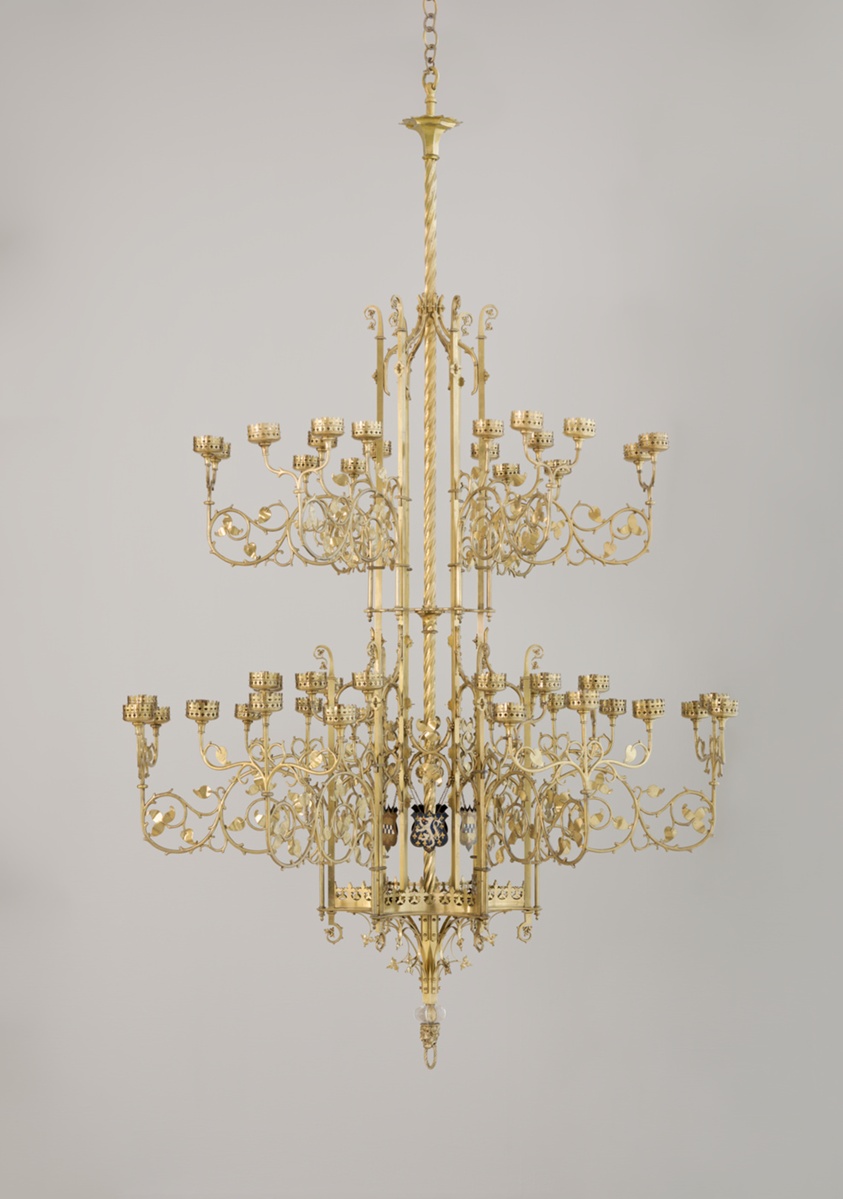
Chandelier
Art Institute of Chicago

Chandelier
Getty Museum

Chandelier
Getty Museum
Candelabra
Art Institute of Chicago