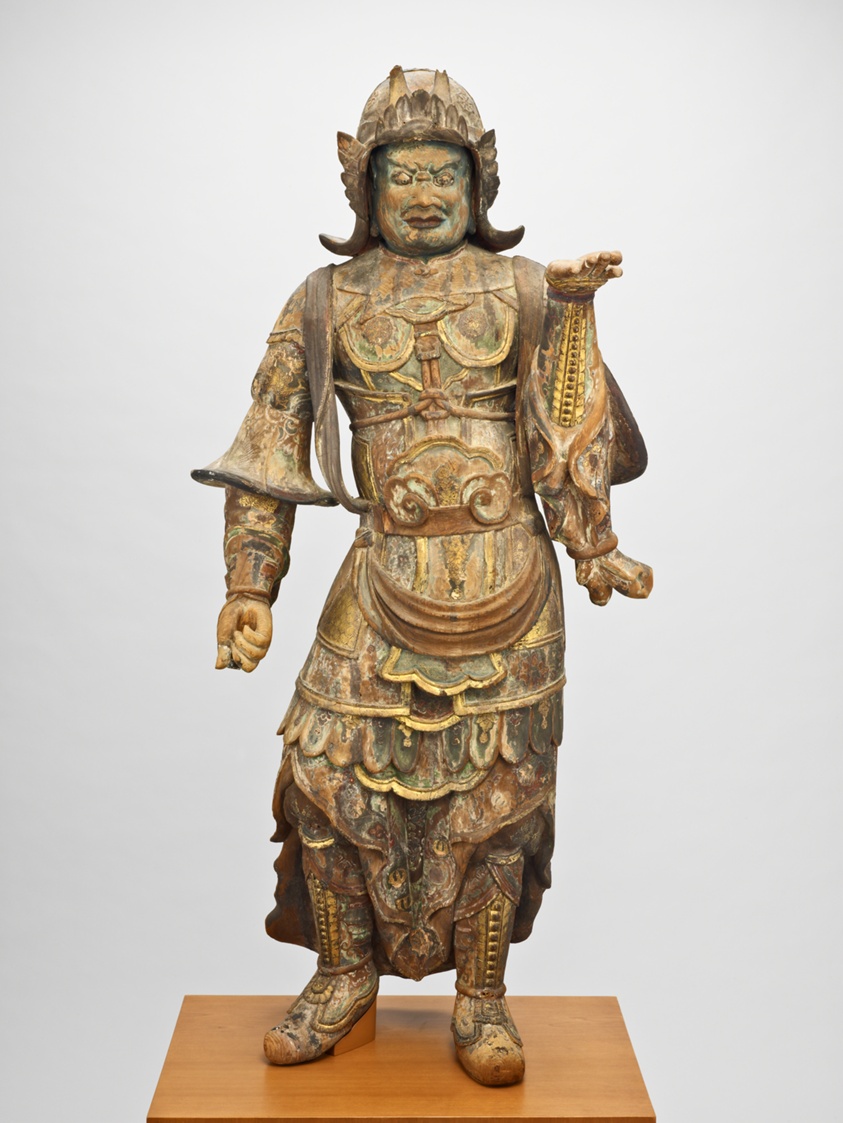
Art Institute of Chicago
Bishamon
JapanLinkedCulture matchlcp-59ff16a8c9fa
- Date
- 12th century
- Medium
- Wood with traces of polychromy
- Culture
- Japan
- Department
- Arts of Asia
- Institution
- Art Institute of Chicago
- Object ID
- 28961
From the Art Institute of Chicago record
Earlier sculptures of this type were usually made from clay and lacquer, like the Chinese versions that inspired them. This example reflects a shift to carving in wood that took place in the Heian period (794–1185). The carving hints at the deity’s strong body beneath his armor, which still bears the traces of elaborate decoration: patterns of dragons and flowers in gold and bright colors. This figure represents Bishamon, the chief of the four guardian devas (or shitennō ) who protect the four cardinal directions in a Buddhist sanctuary. Originally an Indian folk deity, and later adopted by Buddhism, Bishamon was believed to ward off harmful influences from the north. The sculpture once held a miniature reliquary in his left hand and a spear in his right, symbolizing his duty to defend Buddhist law.
The authoritative record is held by Art Institute of Chicago. LinkedCulture surfaces this object and its connections; it does not alter institutional metadata.
Get printable QR codesHide QR codes
Open QR codes for this object page and the museum record. They stay collapsed until needed.
Provenance & credit
As published by the source institution. Coverage varies — not every institution's open-data feed includes ownership history.
- Credit line
- Robert Allerton Endowment
- Provenance
- Baron Kuki Ryūichi (1852–1931), Tokyo [label attached to object]. Oriental Art Gallery, New York; sold to the Art Institute of Chicago, May 24, 1968.
Linked open data
Authority identifiers that link this record into the wider web of cultural data — stable references you can follow to the source.
- Object type
- AAT300301253
Related across collections
Semantically similar works from Art Institute of Chicago and other institutions.