Art Institute of Chicago
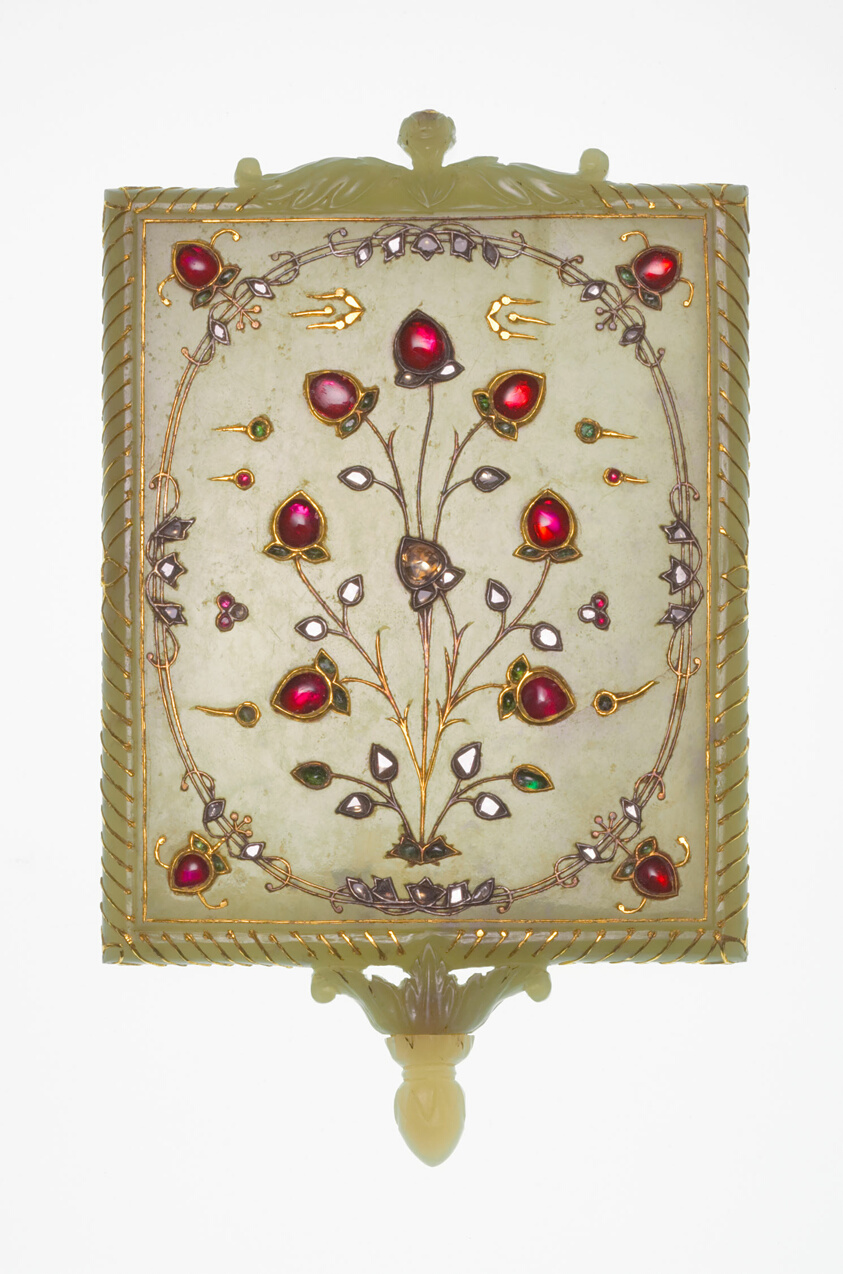
Mirror Frame with Tree of Life Motif
IndiaLinkedCulture matchlcp-1953a76f7207
- Date
- Mughal dynasty (1526-1857), 17th/18th century
- Medium
- Nephrite jade, gold, rubies, emeralds, and diamonds inset in the kundan technique
- Culture
- India
- Department
- Arts of Asia
- Institution
- Art Institute of Chicago
- Object ID
- 34286
From the Art Institute of Chicago record
This exquisite Mughal mirror frame of pale-green nephrite jade is inlaid with gems in the kundan technique, a quintessentially Indian method of gem setting. The motif of this luxury item designed for the Mughal court is a tree of life with inlaid gold stems and leaves and buds of rubies, diamonds, and emeralds. Above the naturalistically depicted plant are two abstracted Chinese-style clouds in gold. Acanthus-leaf motifs adorn the top and bottom of the frame, while the mirror handle is in the shape of an unopened flower bud. Jade was imported into India from the Khotan region of China. The owner of the jade concession there, the merchant Khwaja Mu’in, visited the court of Mughal emperor Akbar in 1563 and presented him with jade pieces. The earliest Mughal jades reflect Timurid, Ottoman, Safavid, and Chinese influences, and the finest jade objects were produced during the Jahangir and Shah Jahan periods in the seventeenth century. Jade was used for eating and drinking vessels, jewelry, sword hilts and scabbards, belt buckles, mirrors, and hookah parts. Inlaying jade with gold and setting it with gems was a popular Mughal technique derived from earlier Timurid traditions in Iran and Central Asia. This frame is a fine example of the union of various cultural motifs in a single object—a hallmark of Mughal art.
The authoritative record is held by Art Institute of Chicago. LinkedCulture surfaces this object and its connections; it does not alter institutional metadata.
Get printable QR codesHide QR codes
Open QR codes for this object page and the museum record. They stay collapsed until needed.
Provenance & credit
As published by the source institution. Coverage varies — not every institution's open-data feed includes ownership history.
- Credit line
- Gift of Mr. and Mrs. Chester D. Tripp
Linked open data
Authority identifiers that link this record into the wider web of cultural data — stable references you can follow to the source.
- Object type
- AAT300411641
Part of a LinkedCulture topic
 South Asian Traditional Jewelry
These objects represent traditional jewelry and personal adornment items primarily from India and Southeast Asia, showcasing the region's rich heritage of crafting ornamental pieces from precious metals and gemstones.
150 objects from 3 institutions
Related across collections
Semantically similar works from Art Institute of Chicago and other institutions.