Art Institute of Chicago
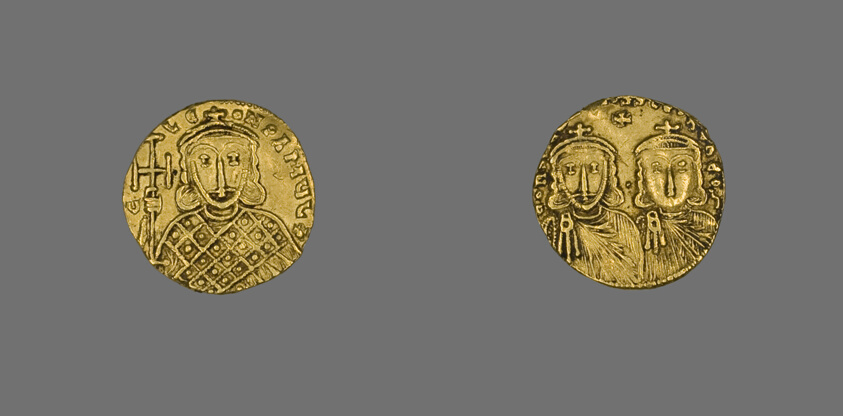
Solidus (Coin) of Constantine V and Leo IV
Byzantine, minted in Constantinople (now Istanbul, Turkey)LinkedCulture matchlcp-6c5c620f14da
- Date
- 751-775 (reigned 741–775)
- Medium
- Gold
- Culture
- Byzantine Empire
- Department
- Arts of Greece, Rome, and Byzantium
- Institution
- Art Institute of Chicago
- Object ID
- 36648
From the Art Institute of Chicago record
The purpose of the first portrait coins was to identify the ruler. The front side became a mirror of the sovereign’s self-image. The back was often used to communicate the ruler’s accomplishments or intentions. The profile portrait was used because it suited the very shallow depth and limited surface of the coin. The tiny images were carved by engravers into bronze dies, one for the front and another for the back. The coins were then struck, one by one, in a process similar to how modern coins are created today. Portraits with Royal Regalia Since few citizens actually saw their sovereign, recognizable symbols such as crowns, robes, and regalia served to identify the ruler. This image of an emperor can no longer be thought of as a likeness of the man, but instead a portrait of kingship in the regalia of royalty.
The authoritative record is held by Art Institute of Chicago. LinkedCulture surfaces this object and its connections; it does not alter institutional metadata.
Get printable QR codesHide QR codes
Open QR codes for this object page and the museum record. They stay collapsed until needed.
Provenance & credit
As published by the source institution. Coverage varies — not every institution's open-data feed includes ownership history.
- Credit line
- Gift of Emily Crane Chadbourne
- Provenance
- Emily Crane Chadbourne (1871- 1964), Paris, London, and Chicago; given to the Art Institute of Chicago, 1940.
Linked open data
Authority identifiers that link this record into the wider web of cultural data — stable references you can follow to the source.
- Object type
- AAT300037334
Related across collections
Semantically similar works from Art Institute of Chicago and other institutions.