Art Institute of Chicago
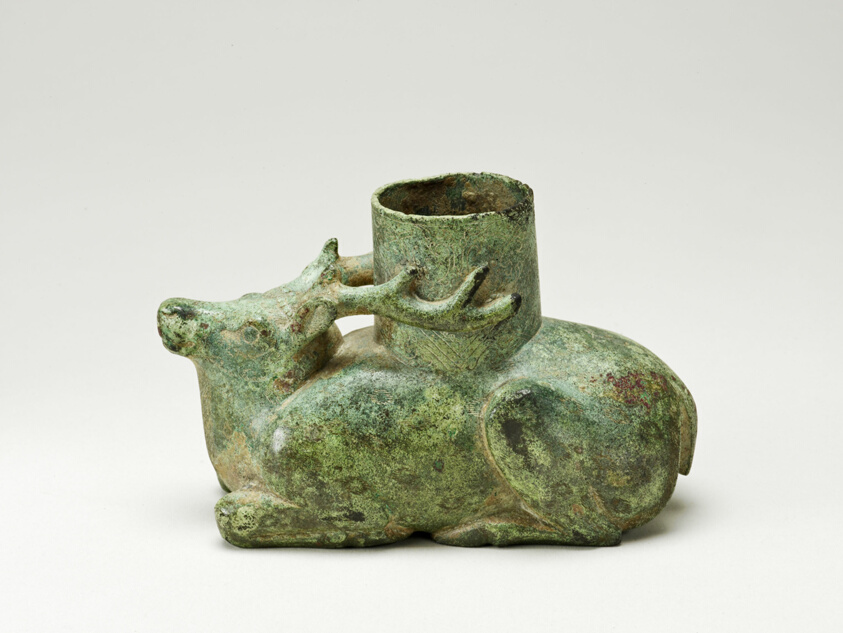
Recumbent Stag
China
- Date
- Western Han dynasty (206 B.C.–A.D. 9)
- Medium
- Bronze with incised decoration
- Culture
- China
- Department
- Arts of Asia
- Institution
- Art Institute of Chicago
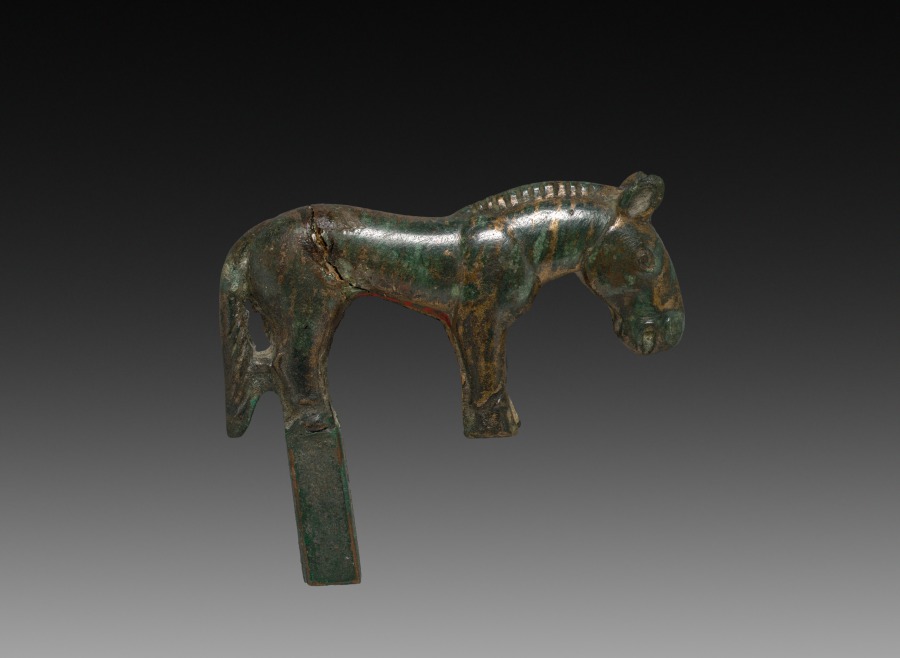
Bronze sculptures of real and imaginary animals are generally known as "Ordos" after the Ordos Desert in which they were first discovered in the early twentieth century. This northern and northwestern frontier of China—which also includes the forests and grasslands of present-day Inner Mongolia, Outer Mongolia, southern Siberia, and parts of Central Asia—was occupied by hunting and herding tribes during the first millennium B.C. The precise ethnic identities of most of these tribes are unknown; ancient Chinese texts refer to many of these tribes by ancient regional names rather than by the names by which the tribes called themselves. The vigorous lifestyle of these nomadic horsemen is reflected in their bronzes, which originally embellished chariots, harness equipment, and personal accessories. In its strikingly lifelike modeling, this relaxed but spirited stag exemplifies a new realism that entered Chinese art toward the end of the Bronze Age. Although the socket in its back indicates that this animal once supported a shaft, its exact function is unknown.
The authoritative record is held by Art Institute of Chicago. LinkedCulture surfaces this object and its connections; it does not alter institutional metadata.
Linked open data
Authority identifiers that link this record into the wider web of cultural data — stable references you can follow to the source.
- Object type
- AAT300411548
Related across collections
Semantically similar works from Art Institute of Chicago and other institutions.
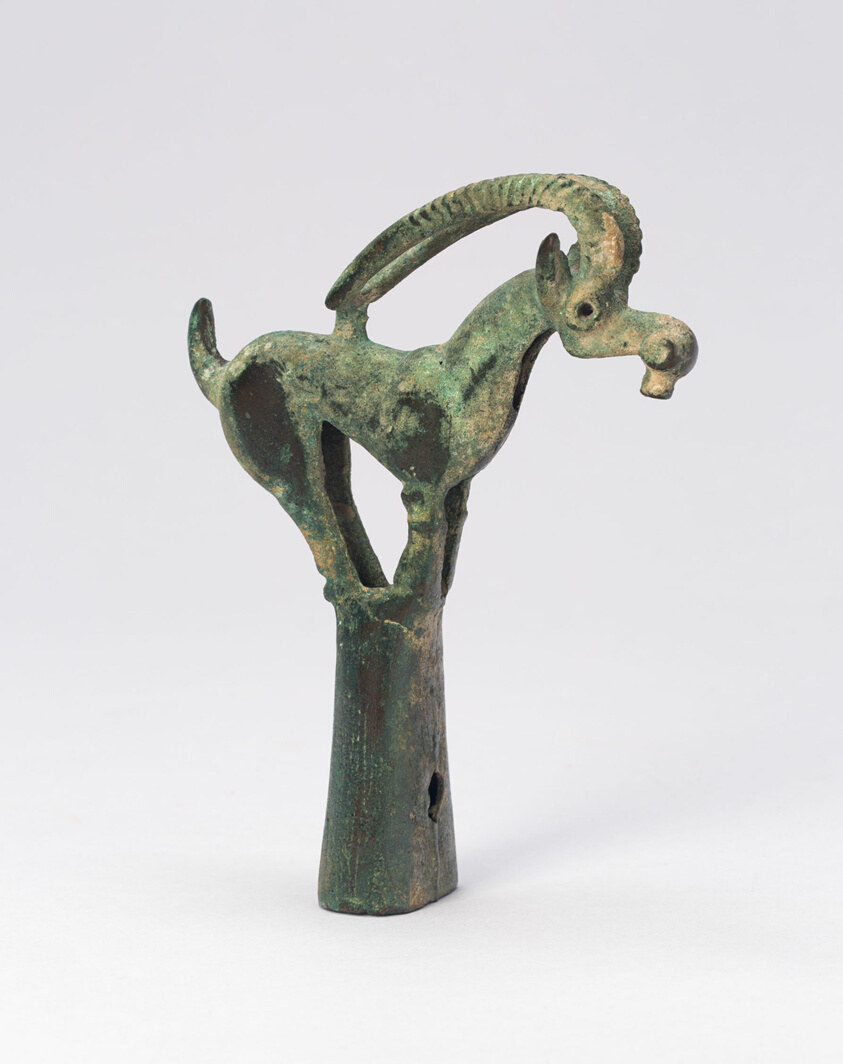
Pole Cap with Antelope
Art Institute of Chicago
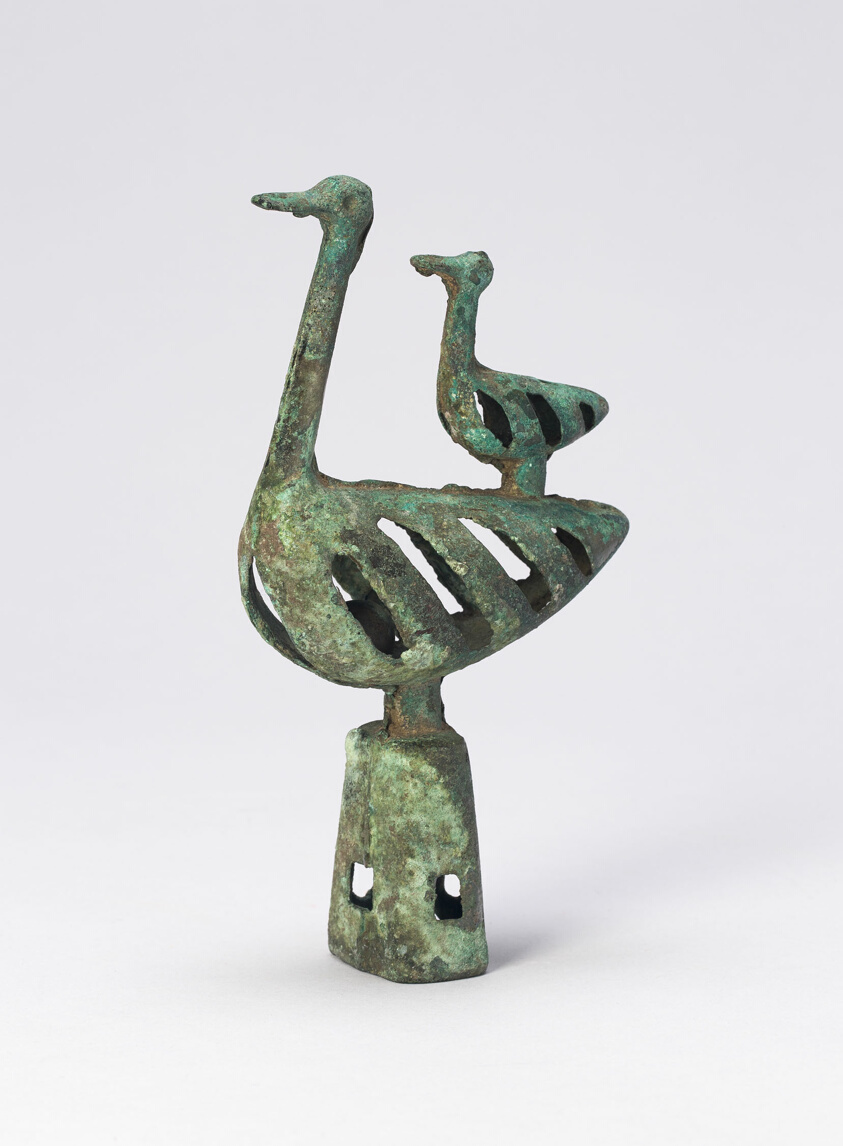
Pole Top with Double Bird-Shaped Bell (one of pair)
Art Institute of Chicago
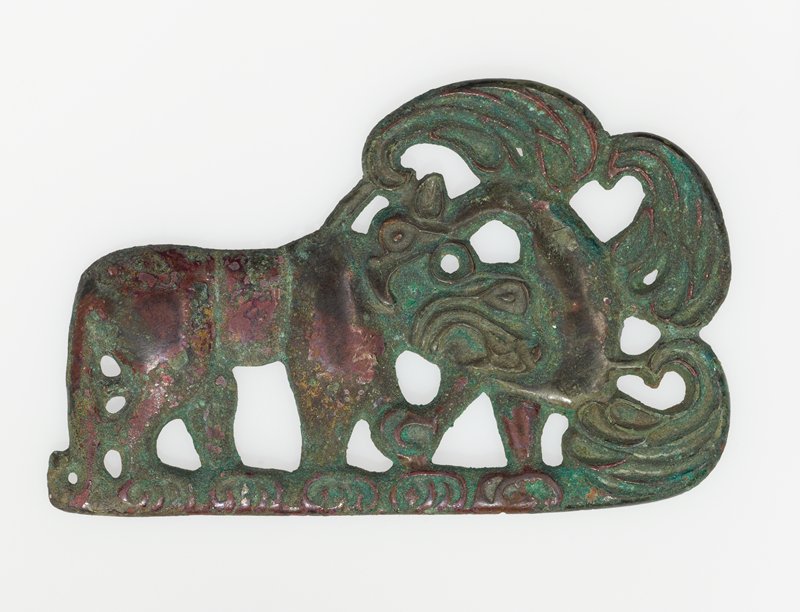
Belt plaque, one of a pair
Minneapolis Institute of Art

Harness trapping in the form of a phoenix, one of a pair
Minneapolis Institute of Art

Harness trapping in the form of a phoenix, one of a pair
Minneapolis Institute of Art
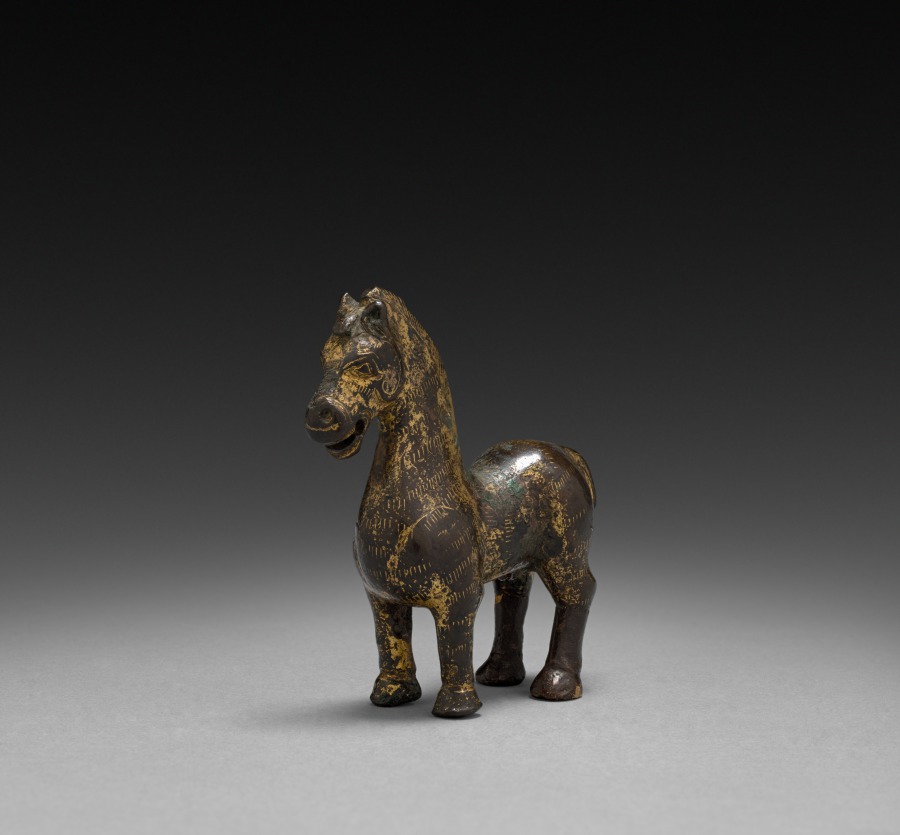
Horse
Cleveland Museum of Art
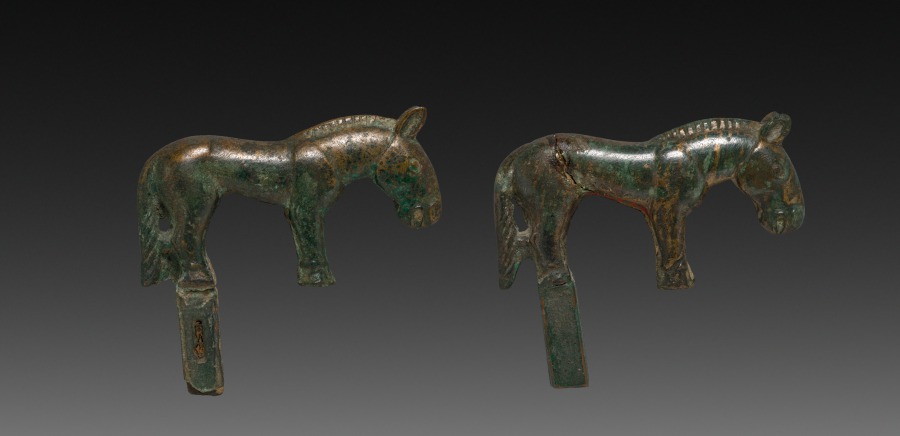
Pair of Wild Horses
Cleveland Museum of Art
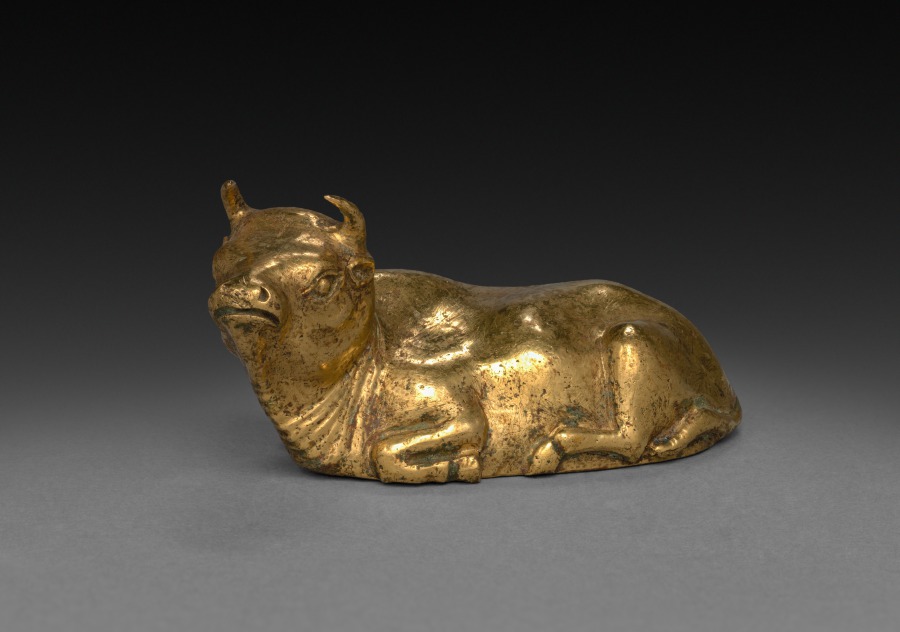
Recumbent Bull
Cleveland Museum of Art
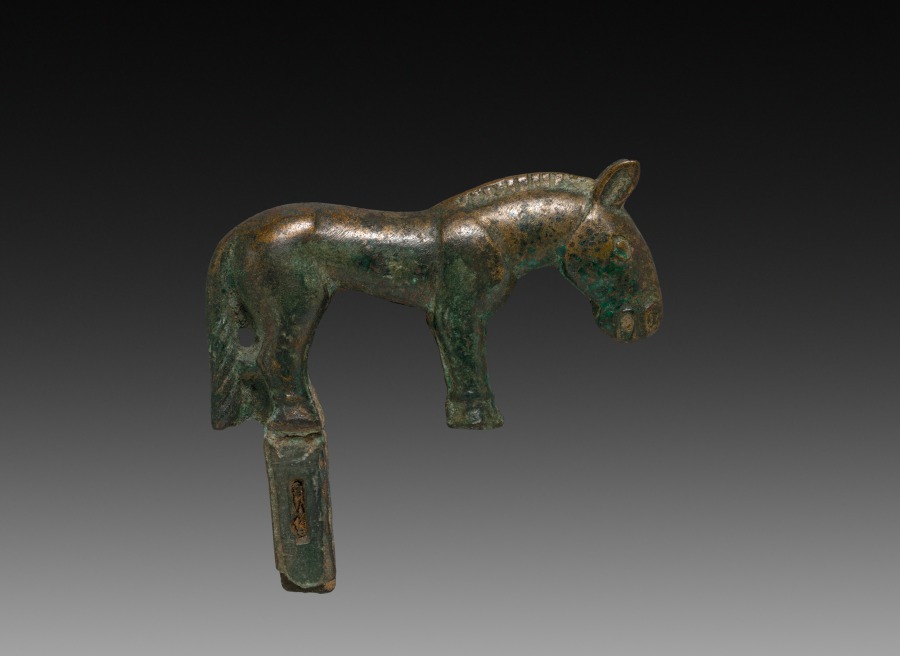
Wild Horse
Cleveland Museum of Art
Wild Horse
Cleveland Museum of Art

Rubbing of Horses and Riders
Minneapolis Institute of Art
Tripod (Ding)
Cleveland Museum of Art