Art Institute of Chicago
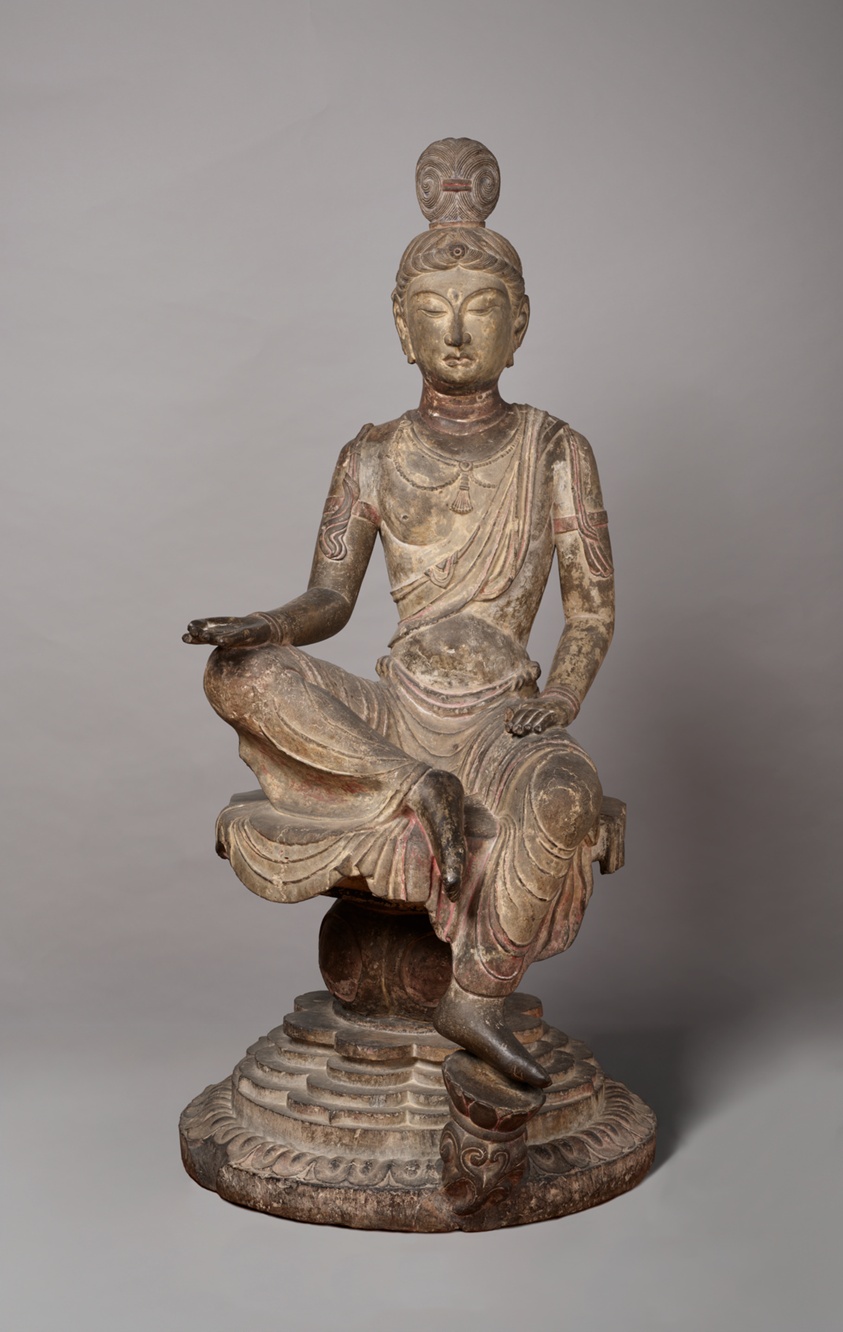
Bodhisattva
ChinaLinkedCulture matchlcp-777a05c2acea
- Date
- Tang dynasty (618–906), c. 725/50
- Medium
- Limestone with traces of polychromy
- Culture
- China
- Department
- Arts of Asia
- Institution
- Art Institute of Chicago
- Object ID
- 4453
From the Art Institute of Chicago record
In eighth-century China, Buddhist sculptors adopted new standards of secular beauty for spiritual figures. Whereas images of the Buddha appear sternly formal, bodhisattvas, the merciful deities that guide men toward salvation, often display more humanistic features. This bodhisattva's graceful proportions, upswept hair, sinuous drapery, and delicate jewelry convey an appealing physical elegance. Seated informally, the deity is poised to step down from its pedestal. Together with a large seated Buddha and another attendant bodhisattva in the Art Institute collection (1930.83, 1930.84), this sculpture came to the museum in 1930 with a note of its discovery in a temple known as Cangfosi in northern Hebei province. Neither archaeological nor written records have been located to confirm this reported site. The scale and stone medium of these figures suggest that they were commissioned for a cave temple or shrine a chamber carved into the face of a mountain or cliff.
The authoritative record is held by Art Institute of Chicago. LinkedCulture surfaces this object and its connections; it does not alter institutional metadata.
Get printable QR codesHide QR codes
Open QR codes for this object page and the museum record. They stay collapsed until needed.
Provenance & credit
As published by the source institution. Coverage varies — not every institution's open-data feed includes ownership history.
- Credit line
- Lucy Maud Buckingham Collection
Linked open data
Authority identifiers that link this record into the wider web of cultural data — stable references you can follow to the source.
- Object type
- AAT300301253
Related across collections
Semantically similar works from Art Institute of Chicago and other institutions.