Art Institute of Chicago
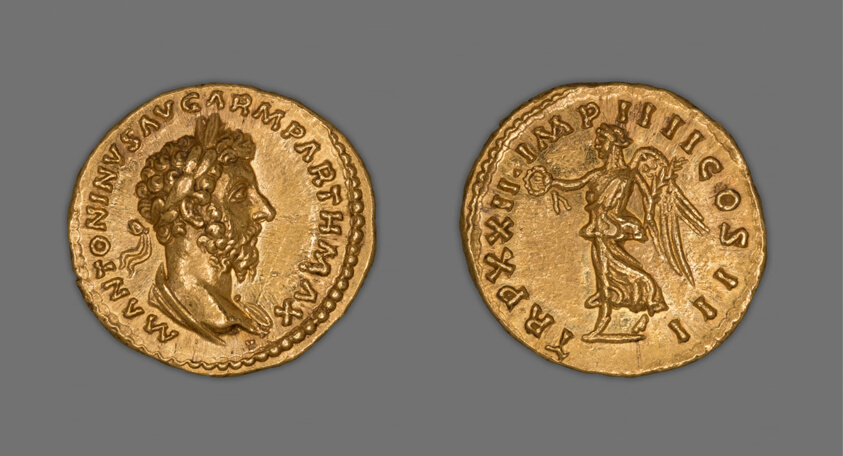
Aureus (Coin) Portraying Emperor Marcus Aurelius
Roman; minted in RomeLinkedCulture matchlcp-e211f3224235
- Date
- 167 (December)-168 (December), issued by Marcus Aurelius and Lucius Verus
- Medium
- Gold
- Culture
- Italy
- Department
- Arts of Greece, Rome, and Byzantium
- Institution
- Art Institute of Chicago
- Object ID
- 4528
From the Art Institute of Chicago record
Starting in 96 with the reign of Emperor Nerva, Rome was ruled by five wise leaders who came to be known as the “Good Emperors.” Nerva (reigned 96–98) was an honest and respected senator who enacted compassionate social programs. His rule ushered in a period of peace and prosperity, which is suggested by the sheer abundance of coins produced during this era as well as by the skill and artistry of the images created. Coins of this period, especially gold aurei like this one, were often perfectly round, well struck, and centered. The front (obverse) of this coin portrays Emperor Marcus Aurelius facing to the right, laureate and bearded. The laurel wreath, long a symbol of victory in Greece, was adopted by the Romans as an attribute of kingship. The back (reverse) of the coin depicts Victory walking to the left, wreath in right, palm branch in left.
The authoritative record is held by Art Institute of Chicago. LinkedCulture surfaces this object and its connections; it does not alter institutional metadata.
Get printable QR codesHide QR codes
Open QR codes for this object page and the museum record. They stay collapsed until needed.
Provenance & credit
As published by the source institution. Coverage varies — not every institution's open-data feed includes ownership history.
- Credit line
- Gift of William F. Dunham
- Provenance
- William F. Dunham (1857-1936), Chicago; given to the Art Institute of Chicago, 1922.
Linked open data
Authority identifiers that link this record into the wider web of cultural data — stable references you can follow to the source.
- Object type
- AAT300037334
Related across collections
Semantically similar works from Art Institute of Chicago and other institutions.