Art Institute of Chicago
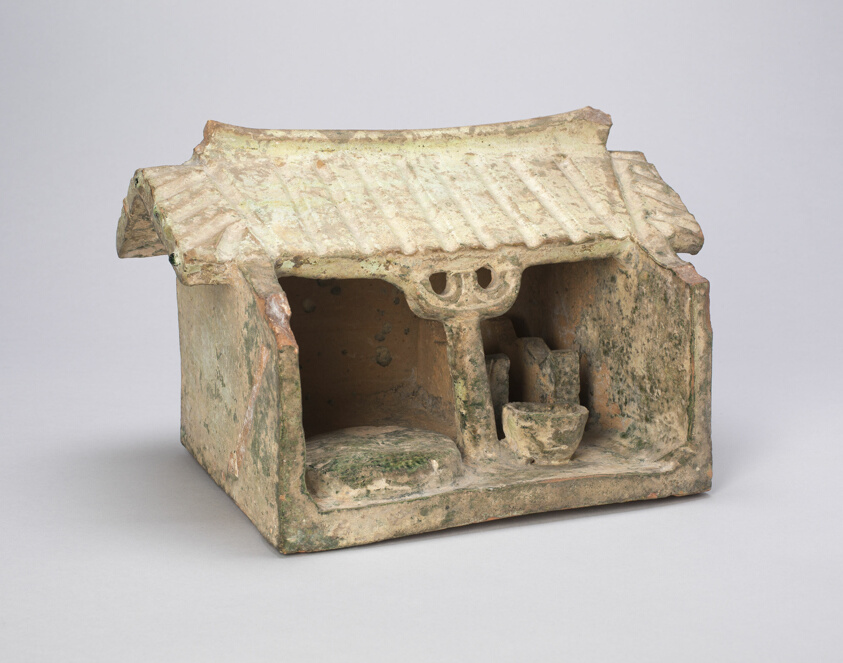
Farm Shed with Grain Mill
ChinaLinkedCulture matchlcp-777a05c2acea
- Date
- Eastern Han dynasty (25–220 CE)
- Medium
- Brick-red earthenware with green lead glaze
- Culture
- China
- Department
- Arts of Asia
- Institution
- Art Institute of Chicago
- Object ID
- 51834
From the Art Institute of Chicago record
This humble-looking burial model illustrates two notable inventions in engineering and architecture that were in used widely during the Han dynasty. The rotary mill, worked by a pedal-operated hammer, was used to prepare grain for flour. The shed that encloses it has a deeply overhanging tile roof supported by a wood column with projecting bracket arms. This type of bracketing, which transferred the weight of the roof to the column, became an increasingly important feature of later Chinese buildings.
The authoritative record is held by Art Institute of Chicago. LinkedCulture surfaces this object and its connections; it does not alter institutional metadata.
Get printable QR codesHide QR codes
Open QR codes for this object page and the museum record. They stay collapsed until needed.
Provenance & credit
As published by the source institution. Coverage varies — not every institution's open-data feed includes ownership history.
- Credit line
- Gift of Rose Movius Palmer
Linked open data
Authority identifiers that link this record into the wider web of cultural data — stable references you can follow to the source.
- Object type
- AAT300301253
Part of a LinkedCulture topic
 Jade Vessel Collection
These objects are all carved jade vessels and containers, predominantly from China's Qing Dynasty (especially the Qianlong period), demonstrating imperial patronage and mastery of jade carving techniques.
116 objects from 5 institutions
Related across collections
Semantically similar works from Art Institute of Chicago and other institutions.