Art Institute of Chicago
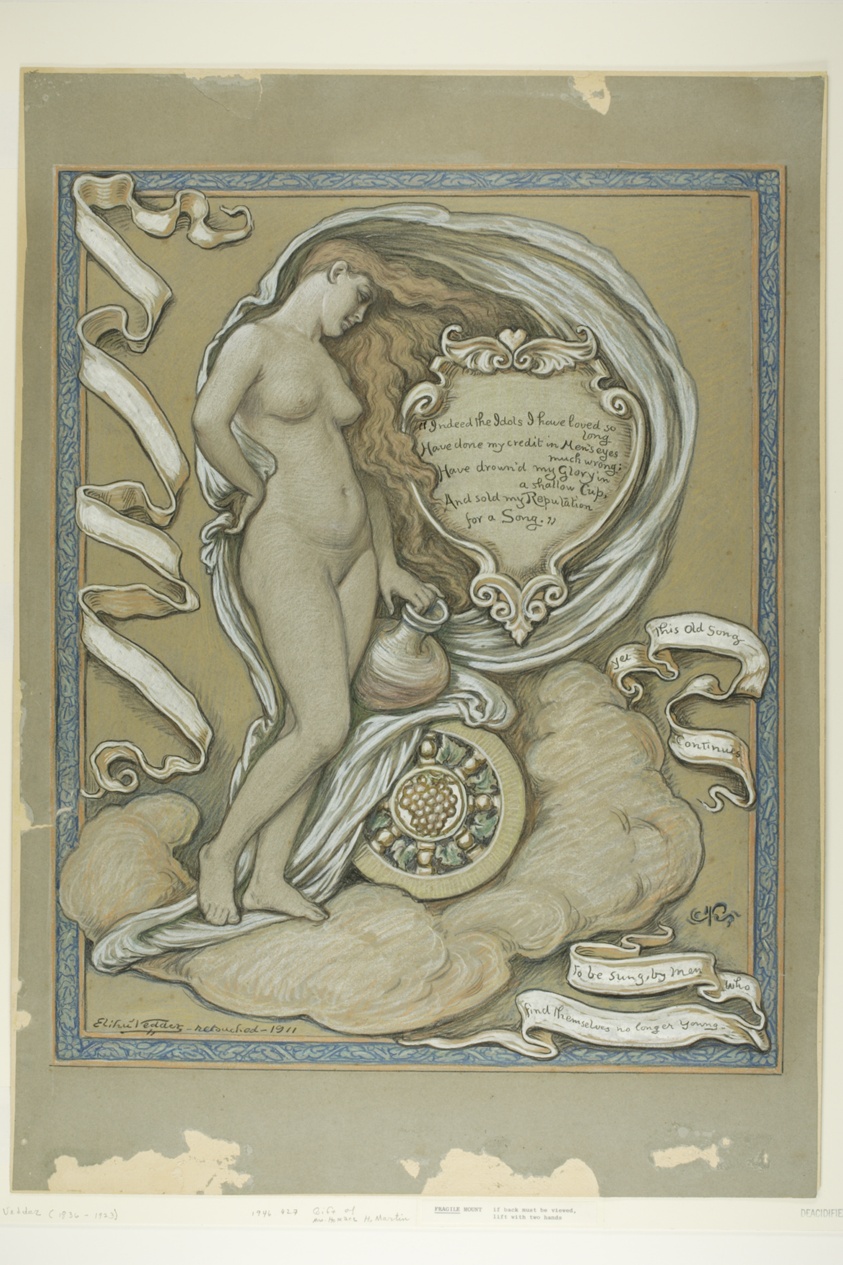
Figure Study for Rubaiyat of Omar Khayyam
Elihu VedderLinkedCulture matchlcp-f7dbc2f9357d
- Date
- c. 1884, reworked 1911
- Medium
- Black wax crayon and a variety of colored wax crayons with graphite and touches of gold pigment, heightened with white gouache on blue wove paper (discolored) laid down on tan board
- Culture
- United States
- Department
- Prints and Drawings
- Institution
- Art Institute of Chicago
- Object ID
- 55739
The authoritative record is held by Art Institute of Chicago. LinkedCulture surfaces this object and its connections; it does not alter institutional metadata.
Get printable QR codesHide QR codes
Open QR codes for this object page and the museum record. They stay collapsed until needed.
Open this page QR destination: https://linkedculture.org/q/q1.orcxceYImcePDDmM.la-bKjo0M2L2l7Ed9KYMRxdllI5wKG5RTRG5SwSBd8c2J0tGJd78qyIGbVHbz-B2DAIHmThySC4hYkWV1wyqYC5gyN-k6zqLCohqcAw_5BqgIXeVsMsVbHbNEn9XD_dA1-IybsyYVBecGNxFzbfQ2UjA1XJikGtlMS07TlaNhFUdMfQPdi757KktgsqFa3faVRFB2gzGuPdj3xhCL7cYnoMbgjB86v7hNar6IQLBYcLRRc0SPcMo5knIjoCvDTU8QSkq76bSHRm0ifw5f05t0eOjSee at Art Institute of Chicago QR destination: https://linkedculture.org/q/q1.hQt_qJtLp-lh5c1d.dh4Ft5gCeoBrr3wNXQbs-nhXz4oHj75m7rdmzRexHTW74utwumrfKZhYoahdXcRfe_d4nX6n5PUZDLCHE85dWd2oJ9ROuERLlAxX3qihqBQS31XpR-ui6Q1CekzqL8g6EVru6_KVzxEFon2awE91AG_EvP8HOJ76jfqurnWSbIGt7QCqxqRiPA417L4-G9IsD3Bn5m158sKqQ9SJ14HiCjHUxYxPUF07NKeTxOEsX9YEIosOqPew4kCXyZmOxTGEunDmkwFbo1KXcvO88D9QHw
Open this page
See at Art Institute of Chicago
Provenance & credit
As published by the source institution. Coverage varies — not every institution's open-data feed includes ownership history.
- Credit line
- Gift of Mrs. Horace H. Martin
Linked open data
Authority identifiers that link this record into the wider web of cultural data — stable references you can follow to the source.
- Object type
- AAT300033973
Related across collections
Semantically similar works from Art Institute of Chicago and other institutions.