Art Institute of Chicago
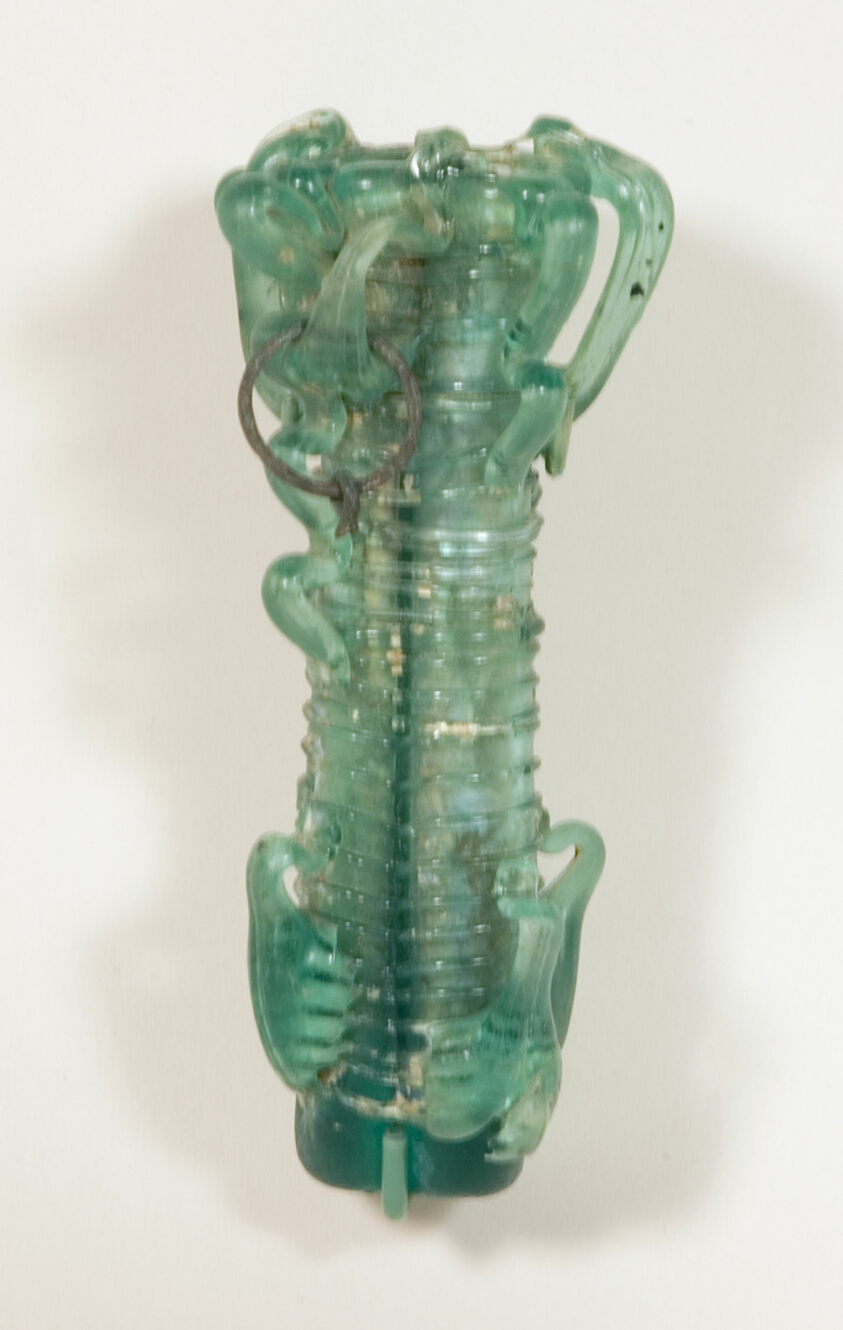
Kohl Container
Byzantine; Eastern MediterraneanLinkedCulture matchlcp-7aabd2819933
- Date
- 5th-6th century
- Medium
- Glass, blown technique
- Culture
- Levant
- Department
- Arts of Greece, Rome, and Byzantium
- Institution
- Art Institute of Chicago
- Object ID
- 62058
From the Art Institute of Chicago record
Glass containers like this one were used to store kohl, a mineral compound used to dramatic effect to darken eyelids and eyelashes. Containers for cosmetics were fashioned out of a variety of materials in addition to glass, including metal, ivory, bone, and wood. In his writings, the third-century church father Saint Clement of Alexandria (d. 215) mentions white lead, charcoal, and even the “droppings of crocodiles” as common ingredients for cosmetics, although he must be regarded as a hostile witness at best. Nevertheless, the fact that his writings feature such detail about the use of makeup attests to its ubiquity. Multicompartment kohl containers were formed when a hollow tube of glass was folded in half, thereby creating two tubular containers from one. Over time, the appearance of these vessels became more elaborate and whimsical.
The authoritative record is held by Art Institute of Chicago. LinkedCulture surfaces this object and its connections; it does not alter institutional metadata.
Get printable QR codesHide QR codes
Open QR codes for this object page and the museum record. They stay collapsed until needed.
Provenance & credit
As published by the source institution. Coverage varies — not every institution's open-data feed includes ownership history.
- Credit line
- Gift of Theodore W. and Frances S. Robinson
- Provenance
- Theodore W. and Frances S. Robinson, Chicago, by 1931; given to the Art Institute of Chicago, 1947.
Linked open data
Authority identifiers that link this record into the wider web of cultural data — stable references you can follow to the source.
- Object type
- AAT300193015
Related across collections
Semantically similar works from Art Institute of Chicago and other institutions.