Art Institute of Chicago
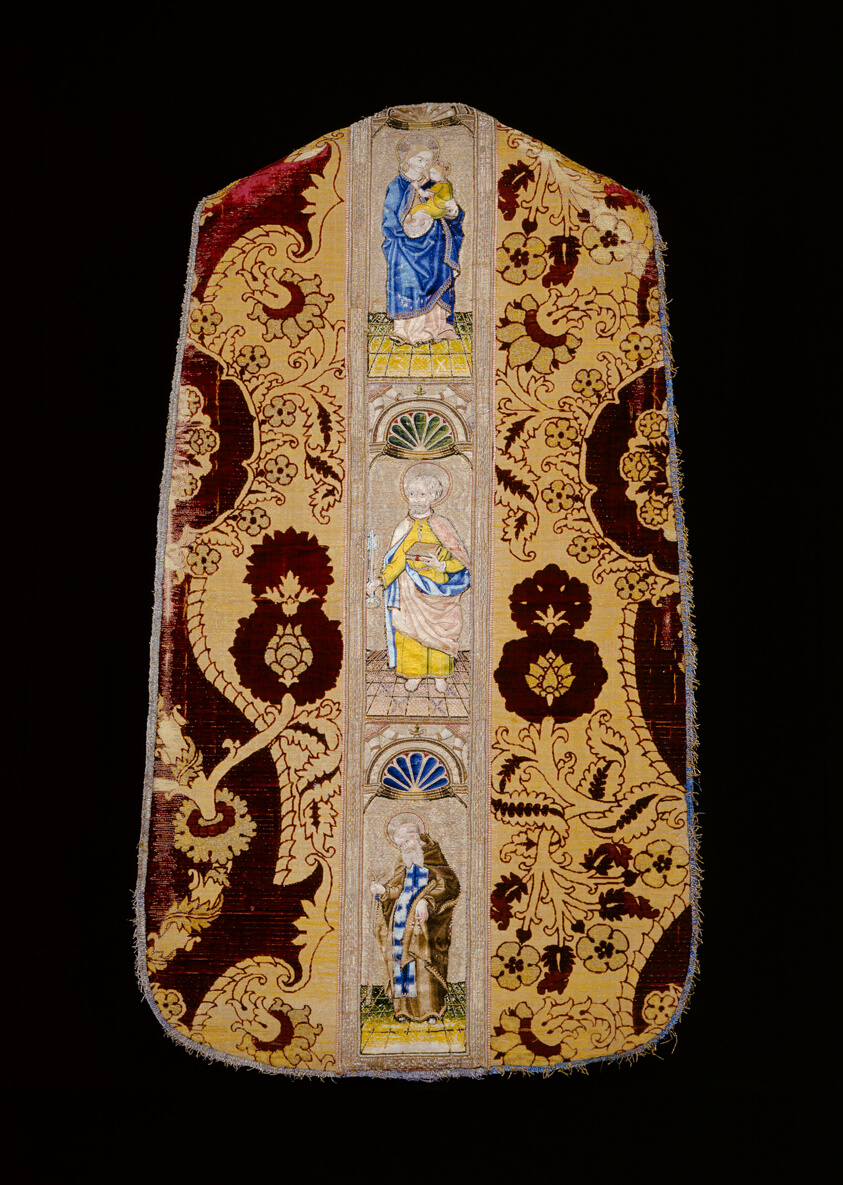
Chasuble with Orphrey Band
Chasuble: Italy or Spain
- Date
- Chasuble: Late 15th century; Orphrey Band: Late 15th/early 16th century
- Medium
- Chasuble: Silk, plain weave with silk facing wefts and twill interlacings of secondary binding warps, and gilt-metal-strip-wrapped silk facing wefts forming weft loops on cut and uncut, pile-on-pile voided velvet; Orphrey Band: Linen, plain weave; embroidered with silk, linen and gilt-metal-strip-wrapped silk in fishbone, herringbone, satin, split, and stem stitches; laid work, couching, and padded couching; edged with woven fringe
- Culture
- Spain
- Department
- Textiles
- Institution
- Art Institute of Chicago
This chasuble's motif, the pomegranate, was the predominate textile motif, along with related forms such as pomegranate thistles and pineapples, during the 15th century. Church specification dictated that all chasubles had to be made of silk, the most expensive and most precious of all materials. Quite frequently gold and silver threads were used to embellish the back of the chasuble as seen in this example. The Orphrey band, which was added at a later time, depict the Madonna and child, St. Peter, and an unidentified saint, who was probably a local patron.
The authoritative record is held by Art Institute of Chicago. LinkedCulture surfaces this object and its connections; it does not alter institutional metadata.
Linked open data
Authority identifiers that link this record into the wider web of cultural data — stable references you can follow to the source.
- Object type
- AAT300014063
Related across collections
Semantically similar works from Art Institute of Chicago and other institutions.
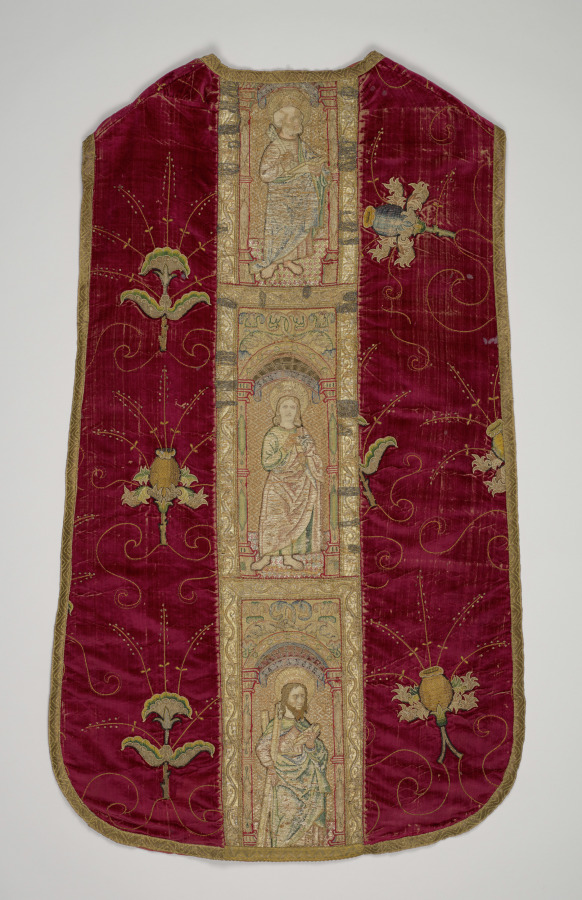
Chasuble with Orphrey Band
Cleveland Museum of Art
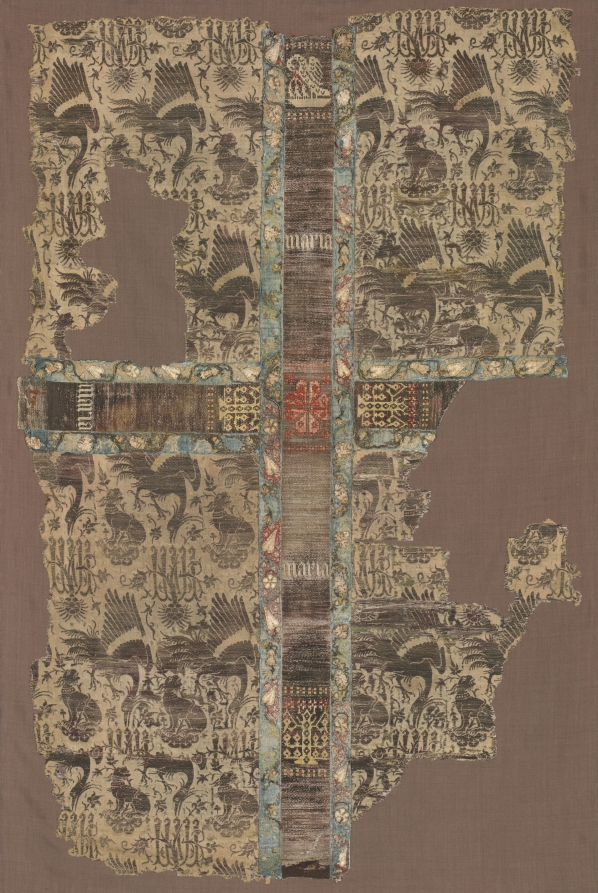
Fragmentary Chasuble with Woven Orphrey Band
Cleveland Museum of Art
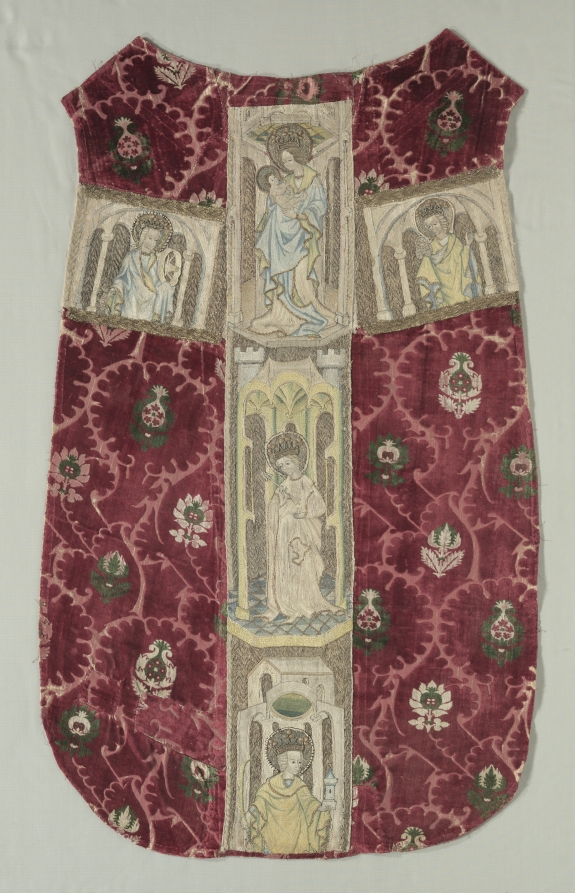
Chasuble Back with Embroidered Orphrey Band
Cleveland Museum of Art

Chasuble with Orphrey Bands
Art Institute of Chicago
Chasuble with Orphrey Bands
Art Institute of Chicago
Fragment of a Chasuble Orphrey Cross Band
Cleveland Museum of Art
Chasuble
Cleveland Museum of Art
Chasuble
Art Institute of Chicago
Chasuble
Cleveland Museum of Art
Chasuble
Cleveland Museum of Art
Chasuble
Art Institute of Chicago
Chasuble Front with Orphrey Cross
Art Institute of Chicago