Art Institute of Chicago
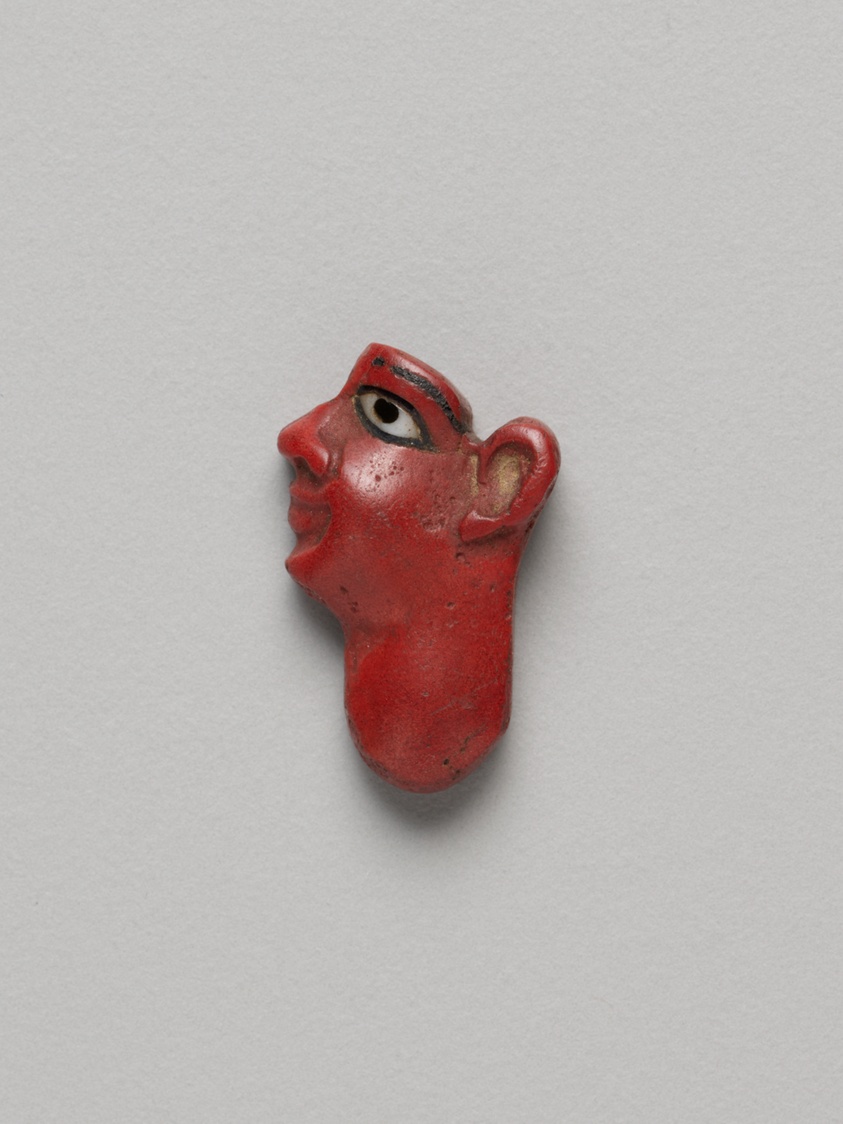
Inlay Depicting the Face of a King
EgyptianLinkedCulture matchlcp-b3f2759025d0
- Date
- Ptolemaic Period (332–30 BCE)
- Medium
- Glass
- Culture
- Egypt
- Department
- Arts of Africa
- Institution
- Art Institute of Chicago
- Object ID
- 631
From the Art Institute of Chicago record
Figures of the king or the gods made of pieces of brightly colored glass appeared about 1350 B.C. and continued to be made into the Ptolemaic period. The color follows the tradition in Egyptian art of depicting the skin of men as red.
The authoritative record is held by Art Institute of Chicago. LinkedCulture surfaces this object and its connections; it does not alter institutional metadata.
Get printable QR codesHide QR codes
Open QR codes for this object page and the museum record. They stay collapsed until needed.
Provenance & credit
As published by the source institution. Coverage varies — not every institution's open-data feed includes ownership history.
- Credit line
- Gift of Henry H. Getty, Charles L. Hutchinson, and Norman W. Harris
- Provenance
- Émile Brugsch (1842-1930), Bulaq Museum and Egyptian Antiquities Service, Cairo; sold to the Art Institute of Chicago, 1892; price reimbursed by Henry H. Getty and Charles L. Hutchinson, 1892.
Linked open data
Authority identifiers that link this record into the wider web of cultural data — stable references you can follow to the source.
- Object type
- AAT300411641
Part of LinkedCulture topics
 Ancient Egyptian Glass Inlays
These objects are decorative glass and faience inlays from ancient Egypt, primarily from the Ptolemaic Dynasty and Roman Period, used for ornamentation in jewelry, architecture, and other decorative applications.
12 objects from 3 institutions
 Ancient Egyptian Personal Objects
These objects are cosmetic implements and grooming tools from ancient Egypt, including mirrors, palettes for grinding pigments, and decorative knives, representing daily life and personal adornment practices.
476 objects from 5 institutions
Related across collections
Semantically similar works from Art Institute of Chicago and other institutions.